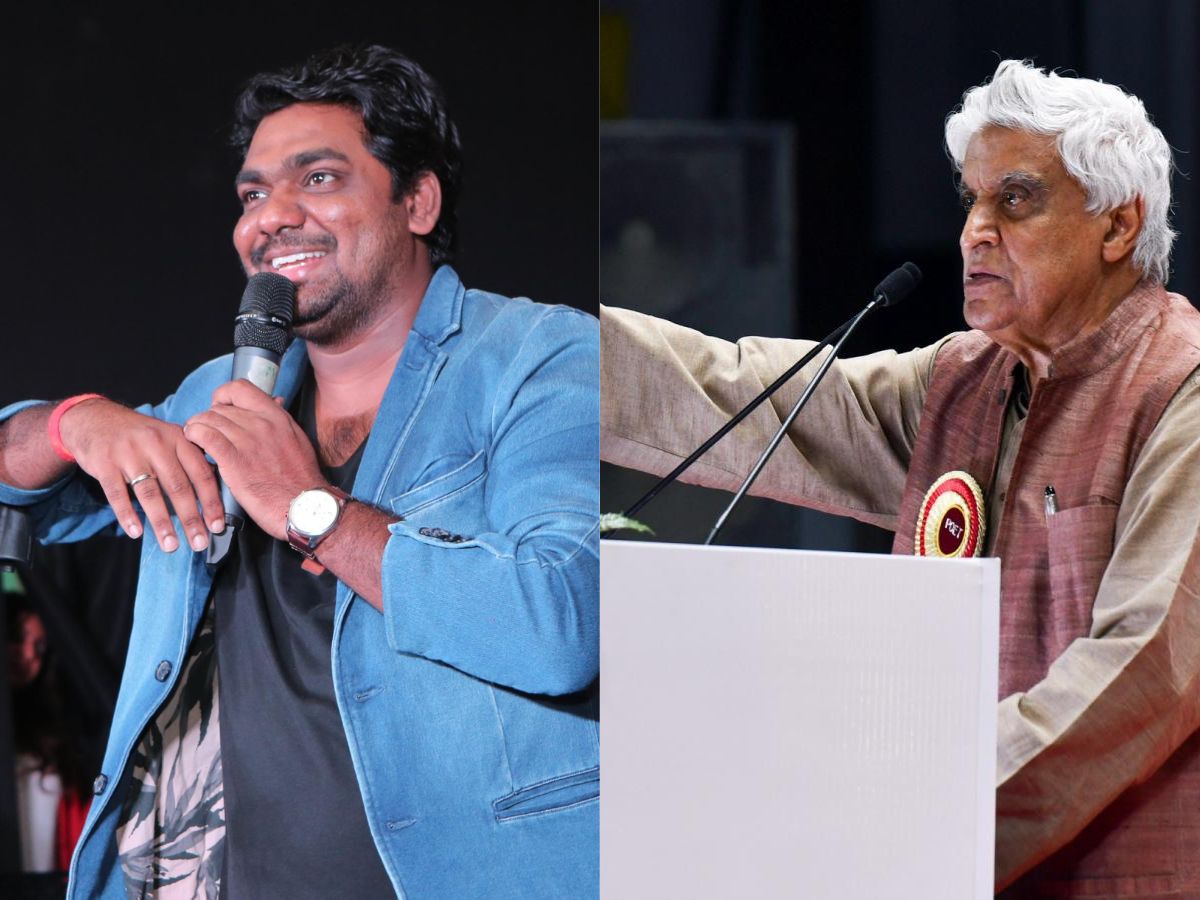
Zakir Khan Defends Comedy Amid Javed Akhtar’s Criticism of Vulgar Language (Pc: X)
A battle of ideas has occurred in the Indian entertainment scene between the iconic poet Javed Akhtar and the “Sakht Launda” of humor, Zakir Khan. The whole issue started when Akhtar went after the modern-day stand-up comedians, saying their art had gone down the drain, and they were merely using “vulgarity” and “cuss words” to draw laughter.
He painted the whole scenario in a bad light and suggested a decline in the artistry of humor. While Akhtar favors a more refined, literary approach personally, Khan, the digital era’s biggest storyteller, has taken upon himself to defend the truthfulness of the art, thus, creating a huge debate on the freedom of expression against that of traditional politeness.
The main point of Zakir Khan’s reply is that comedy is not only a refined performance on stage but rather a reflection of the streets. He maintains that to use foul language in a stand-up is not for the sake of being offensive on the contrary, it is about depicting the middle-class experience in its raw and unfiltered form.
For Zakir, the use of a swear word in a tale of little-town friendships does not denote a deficiency of vocabulary; it is a linguistic sign of closeness and truth. Whereas Akhtar perceives the stage to be a temple of high art, Khan perceives it to be a mirror to the chaotic, often profane but, nonetheless, very honest exchanges of the common man.
The discussion underscores a change in the definition of “decency” in the performing arts from one generation to another. Zakir opines that humor has a cyclic nature with the audience and current public prefers relatability to rigid linguistic structures.
Though he highly regards Akhtar’s contribution, Khan proposes that imposition of traditional censorship on contemporary mediums kills the “Sakht” spirit which is characteristic of Indian comedy today.
Choosing to remain connected to his cultural roots, Zakir claims that a joke’s potency is in its truth, no matter if the language is up to the standard of a classical poet or not.
A recent media graduate, Bhumi Vashisht is currently making a significant contribution as a committed content writer. She brings new ideas to the media sector and is an expert at creating strategic content and captivating tales, having working in the field from past four months.
Narendra Modi held a phone conversation with Masoud Pezeshkian on Thursday to discuss the worsening…
A male suspect was killed after a dramatic security confrontation at Temple Israel Synagogue in…
A controversy has surfaced around the Union Public Service Commission Civil Services Examination results after…
