
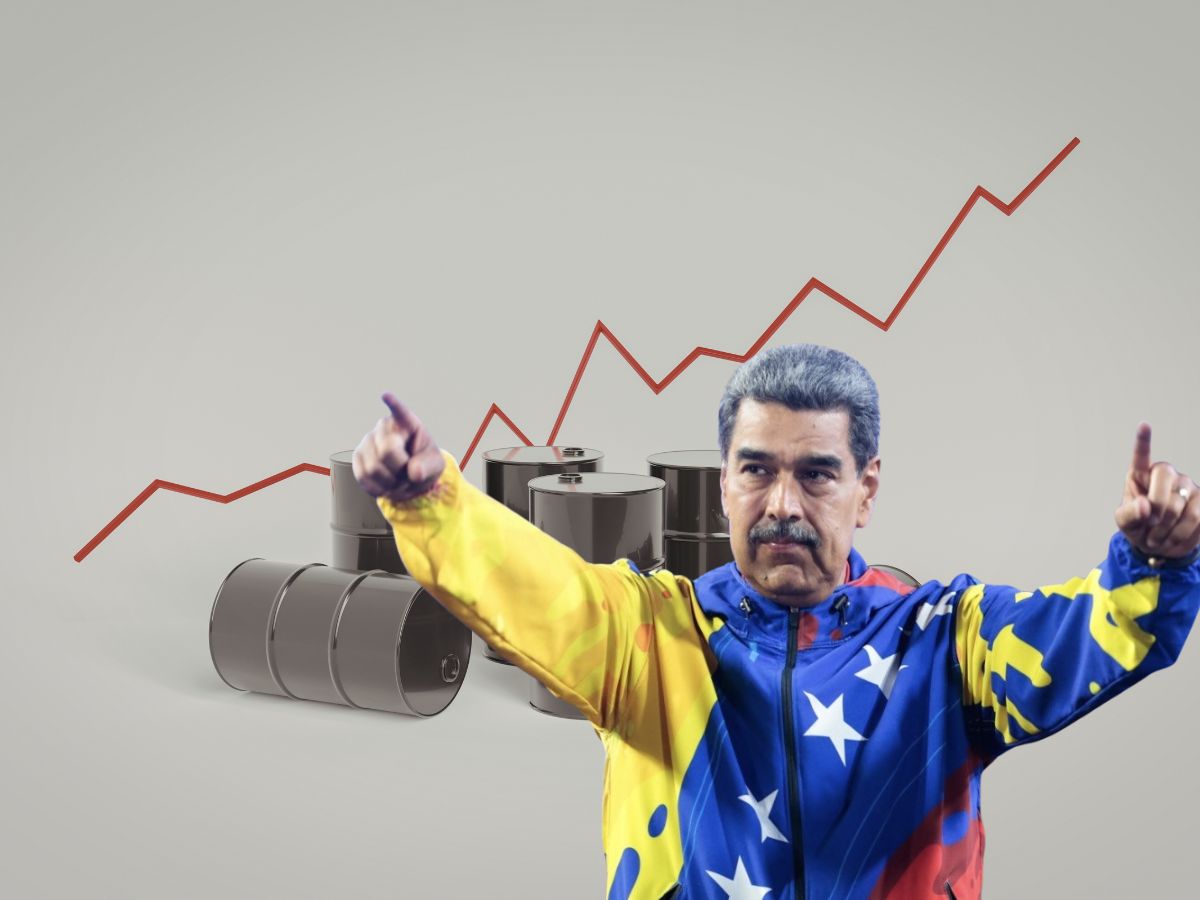

Crude oil prices are set to remain in sharp focus when global commodity markets reopen on Monday, January 5, following the United States’ military action in Venezuela and the dramatic capture of President Nicolás Maduro. While oil prices ended last week on a subdued note, market experts expect heightened volatility and a possible gap-up opening as geopolitical risk premiums return to energy markets.
The developments have renewed attention on Venezuela’s vast oil reserves, the fragile state of its production infrastructure, and the broader implications for global supply chains particularly for large importers like India.
Crude Oil Prices End Lower, But Volatility Looms
On Friday, Brent crude futures settled below the $61-a-barrel mark in thin trading, while US benchmark West Texas Intermediate (WTI) closed above $57 a barrel. Despite the muted close, analysts believe prices could open higher on Monday as markets react to the escalation in US-Venezuela tensions.
Market participants typically price in geopolitical uncertainty when conflict threatens oil-producing regions, even if actual supply disruptions have not yet materialised. Venezuela, despite years of sanctions and underinvestment, remains central to global oil geopolitics due to the sheer size of its reserves.
Experts Expect Gap-Up Opening in Crude Prices
According to commodity market experts, the US strike on Venezuela is likely to inject fresh uncertainty into global markets at the start of the week.
Anuj Gupta, Director of Ya Wealth, said the military action could trigger a risk-on move across commodities. He expects crude oil, along with gold, silver and base metals, to see a gap-up opening when markets resume trading.
Gupta added that Brent crude could test levels between $62 and $65 per barrel in the near term, depending on how geopolitical developments unfold and whether there are any disruptions to Venezuelan oil exports.
Why Venezuela’s Oil Reserves Matter to Global Markets
Venezuela holds the world’s largest proven crude oil reserves, estimated at over 303 billion barrels, accounting for roughly 17% of global reserves, according to OPEC data. This places it ahead of Saudi Arabia and far above the United States in terms of untapped oil wealth.
Most of Venezuela’s reserves are concentrated in the Orinoco Belt, a vast oil-rich region spanning approximately 21,000 square miles. However, despite this enormous resource base, the country’s oil production has fallen sharply over the past decade due to US sanctions, lack of investment, mismanagement, and infrastructure decay.
Current production hovers around 1 million barrels per day, a fraction of Venezuela’s historical output and well below its capacity.
Is Oil Supply at Risk After US Attacks?
So far, there is no immediate evidence of supply disruptions. Venezuela’s state-run energy firm PDVSA said on Saturday that oil production and refining operations were functioning normally and that key oil facilities were not damaged in the US attacks.
According to Reuters, while the port of La Guaira near Caracas sustained severe damage, it is not used for oil operations. This has helped keep international oil prices relatively subdued, despite the dramatic political developments.
However, analysts warn that further escalation, stricter sanctions, or disruptions to shipping routes could quickly change the supply outlook.
Trump Signals Strong US Role in Venezuela’s Oil Sector
US President Donald Trump has indicated that Washington will be “very strongly involved” in Venezuela’s oil industry following the operation to capture President Maduro. Speaking to Fox News, Trump said American oil companies would play a major role in managing and developing Venezuela’s oil assets.
Earlier, the US had announced a blockade on oil tankers entering or leaving Venezuela and seized two cargoes of Venezuelan crude. These moves forced PDVSA to store oil on tankers and slow deliveries, further complicating the country’s export capacity.
Why the US Action Matters for Oil Markets
Some market experts believe the US intervention is not only political but also strategic. Sandeep Pandey, Co-founder of Basav Capital, said Venezuela’s past attempts to challenge the US-dominated petrodollar system have long made it a strategic target.
According to him, Trump’s statements about controlling Venezuela’s oil reserves underline the broader geopolitical motivations behind the military action, which could influence oil market sentiment in the coming days.
How Will India Be Impacted by the US-Venezuela Conflict?
From India’s perspective, the immediate economic impact of the US-Venezuela conflict is expected to be limited. The Global Trade Research Initiative (GTRI) has said India’s exposure to Venezuelan oil remains relatively small due to years of US sanctions.
India was once a major buyer of Venezuelan crude during the 2000s and 2010s, with companies like ONGC Videsh holding upstream interests in the Orinoco Belt. However, imports fell sharply after 2019 as India halted purchases to avoid secondary sanctions.
In 2024–25, India’s total imports from Venezuela stood at $364.5 million, with crude oil accounting for $255.3 million an 81.3% decline from the previous year. India’s exports to Venezuela were also limited, led mainly by pharmaceuticals.
India’s Oil Strategy Remains Diversified
Although India briefly emerged as one of the top buyers of Venezuelan crude in late 2023, its overall energy strategy remains diversified, with supplies sourced from the Middle East, Russia, the US and Africa.
The Indian government continues to closely monitor global oil prices, as sustained increases could impact inflation, fuel prices and the current account balance.
India Calls for Peace and Stability
Following the US operation in Caracas, India expressed concern for the well-being of the Venezuelan people. The Ministry of External Affairs said New Delhi is closely monitoring the situation and called for dialogue to ensure peace and stability in the region.
The MEA also issued a travel advisory urging Indian citizens in Venezuela to remain cautious, while the Indian Embassy in Caracas remains in contact with the local Indian community.
What to Watch When Markets Open on Monday
As trading resumes, crude oil prices are likely to react first to geopolitical risk sentiment rather than actual supply changes. While immediate disruptions appear limited, the situation remains fluid.
Any escalation, sanctions tightening, or shifts in US policy towards Venezuelan oil exports could quickly push prices higher making Monday’s market opening a key moment for traders, policymakers and oil-importing countries like India.
Sofia Babu Chacko is a journalist with over five years of experience covering Indian politics, crime, human rights, gender issues, and stories about marginalized communities. She believes that every voice matters, and journalism has a vital role to play in amplifying those voices. Sofia is committed to creating impact and shedding light on stories that truly matter. Beyond her work in the newsroom, she is also a music enthusiast who enjoys singing.




