
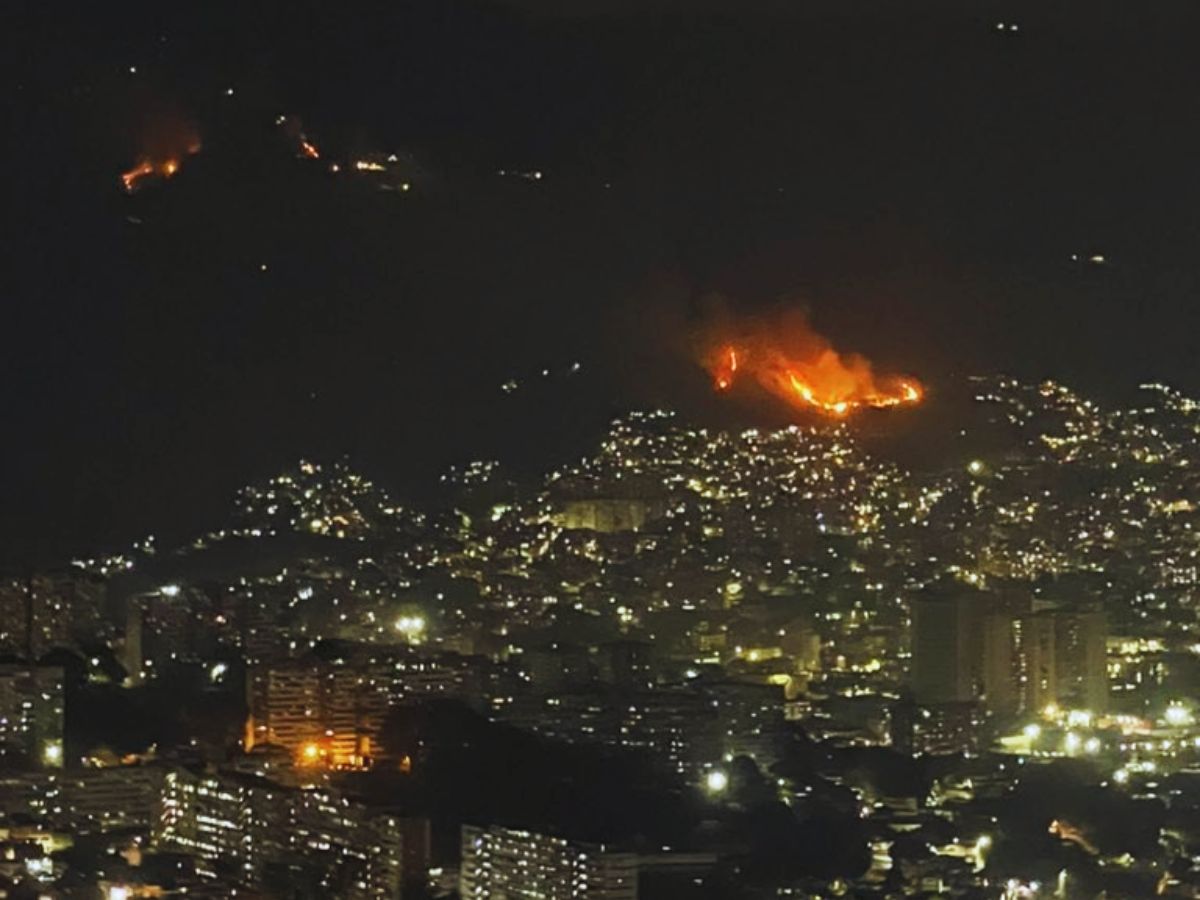

Explosions that rocked Venezuela’s capital Caracas in the early hours of Saturday have sharply escalated tensions between the United States and the Nicolás Maduro government, raising fears of a wider military confrontation between the world’s most powerful military and one of Latin America’s most isolated states.
Venezuela has accused the United States of carrying out an “extremely serious military aggression” after multiple explosions were reported around 2 am local time, accompanied by sightings of low-flying aircraft over the capital.
While the White House and Pentagon have not officially commented, US media outlets cited unnamed Trump administration officials confirming American involvement in the operation.
President Nicolás Maduro has since declared a state of emergency, while Colombia’s President Gustavo Petro has called for an emergency meeting of the United Nations, warning that the situation could destabilise the entire region.
As questions mount over whether Washington could expand its military action, a key question dominates global attention: Does Venezuela have the military capability to fight back against the United States?
What We Know About the US Strikes on Caracas
Venezuelan authorities claim that at least seven explosions were heard in Caracas and that both civilian and military installations were targeted across multiple states. The Maduro government has framed the incident as part of a long-running US pressure campaign aimed at regime change.
The strikes come amid heightened US counter-narcotics operations in the Caribbean and northern South America. President Donald Trump has previously stated that he authorised the CIA to intensify operations inside Venezuela, accusing Maduro of running a “narco-state.” Washington has also placed a $50 million bounty on Maduro’s head, accusations that the Venezuelan leader has repeatedly denied.
Major international airlines have already been warned about “potentially hazardous conditions” over Venezuelan airspace, with several carriers suspending flights. Caracas, in response, has revoked the operating licences of six international airlines.
Venezuela’s Military Strength: Numbers and Rankings
According to the 2025 Global Firepower Index, Venezuela ranks 50th out of 145 countries in overall military strength. The country has an estimated 120,000 active-duty personnel, around 100,000 reservists, and more than 220,000 members in the National Guard. Its Air Force is believed to have roughly 20,000 personnel, while the Army and Navy have approximately 115,000 and 25,500 personnel respectively.
While these numbers may appear substantial on paper, analysts caution that manpower figures do not necessarily reflect combat readiness, training standards, or equipment operability areas where Venezuela is widely seen as vulnerable.
Air Force Capabilities: Jets, Missiles and Limitations
Venezuela’s Air Force operates an estimated 80 combat aircraft, including around 24 Russian-made Sukhoi Su-30MK2 multirole fighters. These jets are capable of carrying Kh-31 “Krypton” anti-ship missiles, which could pose a threat to naval assets operating near Venezuela’s coast. The fleet also includes approximately 18 modernised F-16 Fighting Falcons acquired decades ago from the United States.
However, persistent maintenance issues, spare parts shortages due to sanctions, and limited flight hours have significantly reduced operational readiness. Military experts say only a fraction of Venezuela’s aircraft would be fully mission-capable in the event of sustained conflict.
Venezuela’s Air Defence and Missile Arsenal
Maduro has repeatedly claimed that Venezuela possesses at least 5,000 Russian-made Igla-S portable air defence systems. These shoulder-fired missiles are designed to target low-flying aircraft, helicopters, and drones, and form the backbone of Venezuela’s short-range air defence network.
In addition, the country is believed to have deployed Russian S-300VM Antey-2500 long-range surface-to-air missile systems around strategic sites, along with Buk-M2E and upgraded S-125 Pechora-2M systems. These assets could complicate US air operations in the early stages of a conflict, particularly around critical oil infrastructure and military installations.
That said, analysts note that even layered air defences would struggle against sustained US air superiority, electronic warfare, and precision strike capabilities.
Army and Naval Power: Tanks, Ships and Reality
Venezuela’s Army operates more than 700 main battle tanks, primarily Russian T-72B1 models, along with roughly 1,500 armoured fighting vehicles. The country also possesses over 600 artillery units and more than 100 multiple-launch rocket systems.
Its Navy, however, is widely considered to be in poor condition. While it includes two Type 209 submarines, six Lupo-class frigates, corvettes, and patrol vessels, experts suggest many platforms are likely inoperable due to lack of maintenance and funding. Venezuela lacks the ability to project power beyond its immediate coastline.
Bolivarian Militia and Asymmetric Warfare
Maduro has claimed that millions of civilians are part of the Bolivarian Militia, a force designed to supplement the regular military during an invasion. While official figures suggest up to eight million members, independent analysts estimate that only one to two million could be mobilised, many with limited training and outdated equipment.
In the event of a US ground operation, Venezuela’s strategy would likely focus on asymmetric warfare urban resistance, guerrilla tactics, and attempts to tie down US forces in densely populated areas, drawing comparisons to American experiences in Iraq and Afghanistan.
How Venezuela Compares to US Military Power
The imbalance between the two forces is stark. The United States fields over 1.3 million active-duty troops, operates more than 13,000 military aircraft, maintains 11 nuclear-powered aircraft carriers, and spends nearly $900 billion annually on defence. Venezuela’s defence budget is estimated at under $2 billion.
Military analysts agree that Venezuela cannot win a conventional war against the United States. Its ability to resist would depend on delaying tactics, missile deterrence, urban resistance, and possible diplomatic or indirect support from allies such as Russia, China, or Iran.
Can Venezuela Really Fight Back?
The answer, according to most experts, is nuanced. Venezuela cannot defeat the US militarily, but it can make intervention costly, prolonged, and politically risky. Any escalation would likely lead to significant civilian suffering and long-term instability rather than a clear battlefield victory for Caracas.
As tensions rise, the world is watching closely to see whether Washington will escalate further or whether diplomacy can still avert a devastating conflict.
ALSO READ: US Attacks Venezuela: Military Strikes Caught On Camera, Donald Trump Escalates Pressure On Maduro
Sofia Babu Chacko is a journalist with over five years of experience covering Indian politics, crime, human rights, gender issues, and stories about marginalized communities. She believes that every voice matters, and journalism has a vital role to play in amplifying those voices. Sofia is committed to creating impact and shedding light on stories that truly matter. Beyond her work in the newsroom, she is also a music enthusiast who enjoys singing.




