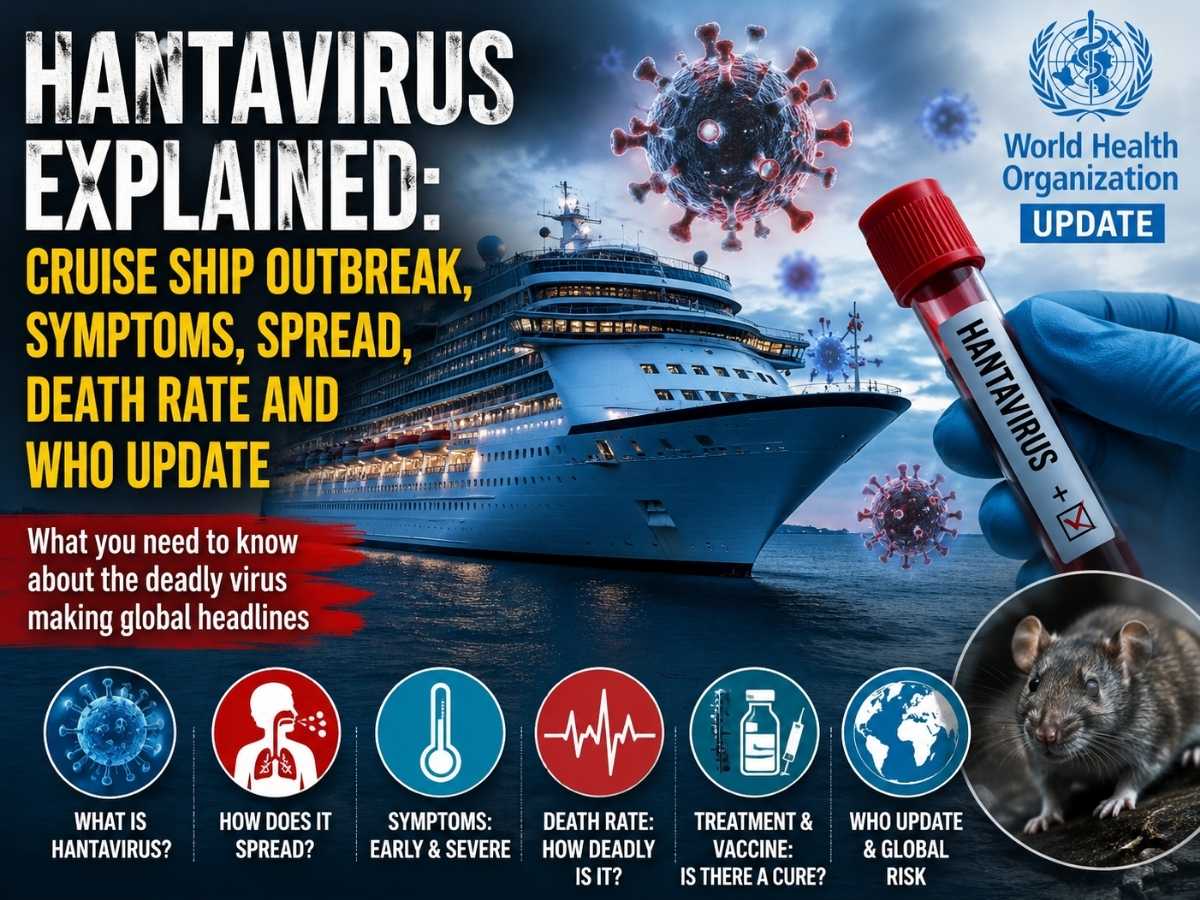
A cruise ship usually brings to mind ocean views, travel pictures and relaxing holidays.. This time the news going around is quite disturbing. There has been a hantavirus outbreak on a cruise ship and what’s got everyone’s attention is not just the infection but the specific strain thats causing it. The World Health Organization says the cases are linked to the Andes virus, a type of hantavirus that can actually spread from person to person. That detail has made a health issue into something that people all over the world are watching closely. Officials keep saying that the overall risk is still low. This situation has raised some serious questions about how fast infections can spread in closed and crowded places like ships at sea. The hantavirus outbreak and the Andes virus are now concerns, for everyone. The cruise ship and hantavirus are being closely monitored worldwide.
Hantavirus is a group of viruses. These viruses are mainly carried by rodents such as rats and mice. Humans usually get infected when they come in contact with areas contaminated by rodent urine, droppings or saliva. Hantavirus is not a human-to-human virus in most cases. This is why infections are generally rare. They are linked more to exposure than direct contact between people.
The hantavirus often spreads when a person breathes in air contaminated with particles from rodent waste. This can happen while cleaning dusty spaces where rodents have been active. In some cases infection can also occur through contaminated surfaces. It can also occur through bites but this is rare. Direct spread between humans is extremely uncommon. However there is a strain where this can happen.
In the beginning hantavirus infection often looks like a flu. People may experience fever. They may also feel tired have muscle pain, chills and headaches. Some may also feel nausea or stomach discomfort. These signs are general. This is why early detection is often difficult without evaluation. This is especially true if there is a known exposure risk to hantavirus.
As the illness progresses it can become very serious. In some cases it affects the lungs. This leads to breathing difficulty, chest tightness and fluid buildup in the lungs. In forms it can impact the kidneys. This can cause bleeding issues or organ failure. Once the disease reaches this stage urgent medical care is needed for hantavirus.
The severity of hantavirus depends on the strain. In the Americas with the Andes strain it can lead to Hantavirus Pulmonary Syndrome. This has a high fatality rate of around 30 to 40 percent. In regions the virus may cause kidney-related illness. This has a death rate, often below 15 percent. Outcomes also depend heavily on how quickly treatment’s given for hantavirus.
The WHO has stated that while the outbreak is serious and needs monitoring the overall global risk remains low. Doctors explain that hantavirus infections are still relatively rare. They usually require contact for transmission. They also emphasize that proper isolation, contact tracing and medical care are key, to controlling outbreaks effectively.
Hantavirus infections have been reported across parts of the world. These include North and South America, Europe and parts of Asia. Each region has its own rodent carriers and virus strains. This is why the pattern of illness varies from country to country.
There is currently no cure or vaccine for hantavirus. Treatment mainly focuses on supporting the patient’s breathing and organ function. In cases patients may require intensive care, oxygen support or dialysis. Early hospital care plays a role in improving survival chances for hantavirus.
In cases hantavirus does not spread from one person to another. However there is an exception with the Andes virus found in parts of South America. This strain has shown human-to-human transmission. This usually happens through prolonged contact. This makes it different from types of hantavirus.
In the incident reported by the WHO a cruise ship outbreak was linked to the Andes strain of hantavirus. This is significant because it is one of the strains capable of spreading between people. Several infections and least three deaths were reported. Initial cases were believed to have originated from passengers who boarded from Argentina. The confined environment of a cruise ship with living spaces and shared facilities likely helped the spread among passengers and crew.
There is no evidence of a hantavirus outbreak in India. Isolated cases have been rare globally. The current risk to the public in India remains low. Health experts continue to monitor the situation. However it is not considered a public health threat in the country at this time.
This outbreak stands out mainly because it is linked to the Andes strain. This strain can spread between humans unlike other hantaviruses. The setting of a cruise ship also made it more concerning. Close contact between passengers increases the chances of transmission. The combination of a strain and a confined environment is what triggered global attention.
I am a seasoned writer with 2.5 years of experience who presently works at ITV Digital. I specializes in entertainment journalism, reporting on the newest Bollywood news as well as compelling healthy lifestyle pieces. I am master at creating material around popular issues and internet buzz, bringing unique, reader-friendly viewpoints to every item i write
India’s auto sector has started FY27 strongly with rising vehicle sales, export growth, and strong…
The Mumbai Metropolitan Region Development Authority (MMRDA) has released the admit card 2026 for recruitment…
India and the EU have launched a €15.2 million initiative to develop EV battery recycling…

