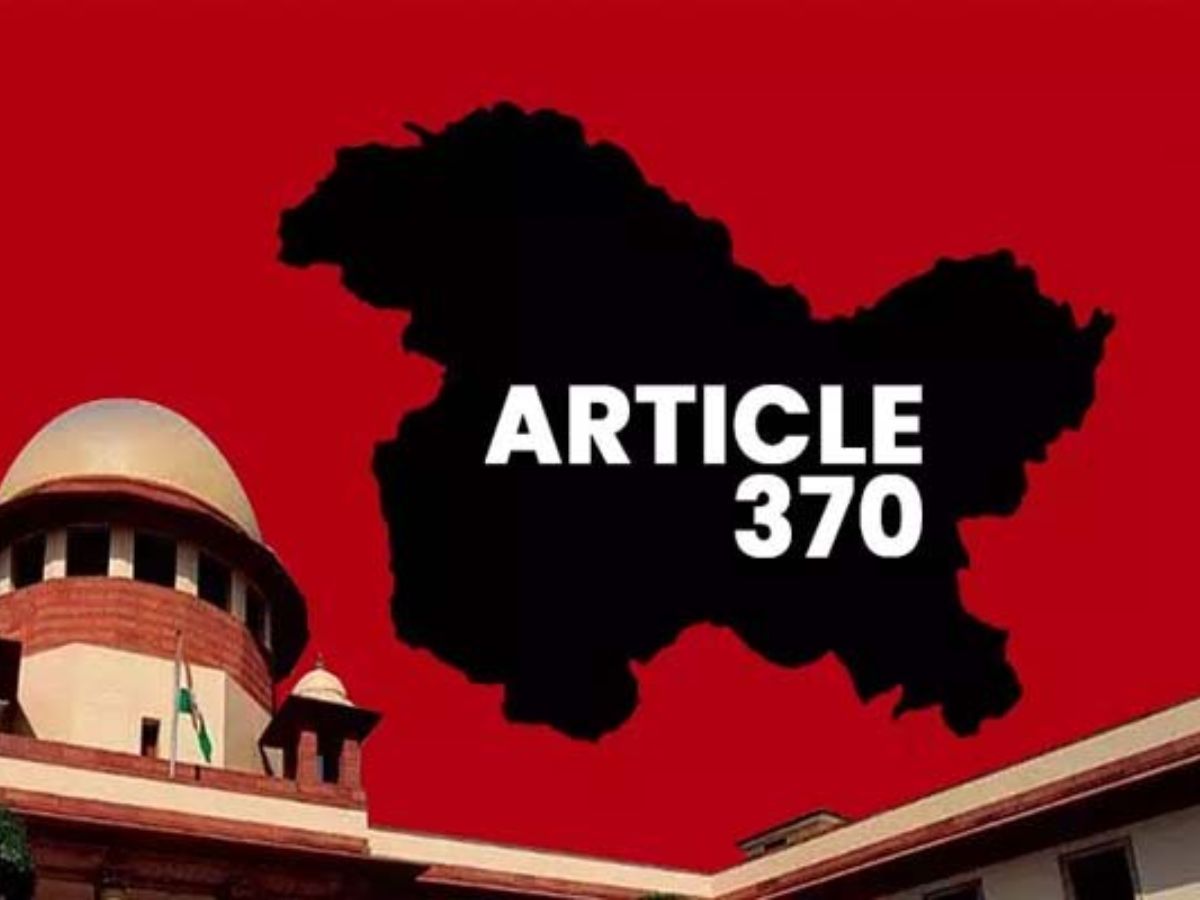
August 5 marks six years since the abrogation of Article 370. On August 5, 2019, the Central Government, led by Prime Minister Narendra Modi, revoked Article 370, ending the special status of Jammu and Kashmir. The Modi Government also bifurcated the state into two Union Territories- Jammu and Kashmir and Ladakh.
Article 370 came into effect in 1952, which gave Jammu and Kashmir a lot of freedom, including having the state’s own constitution, flag, and the power to make laws except finance, defence, foreign affairs, and communication.
On August 5, 2019, the Government of India issued a Presidential Order to replace the 1954 special order of Jammu and Kashmir and made all the provisions of the Indian Constitution apply to the state.
After the removal of Article 370, Jammu and Kashmir has driven a lot of investments and local industry growth. Following the clause of non-residents to buy properties government has focused on improving the infrastructure of the state.
Public opinion on Article 370 remains mixed. Some viewed this as a historic move by the Central Government, while others saw it as an obstacle. It was opposed by the Indian National Congress, Jammu & Kashmir National Conference, Jammu and Kashmir Peoples Democratic Party, Communist Party of India (Marxist), Communist Party of India, Trinamool Congress, and DMK. Even Pakistan condemned the move and described the move as illegal and a violation of United Nations Security Council resolutions.
The changes which we see are both positive and negative, on one hand government claims improved law and order, and then emerging attacks like the Phalagam attack increase the security concerns.
Manisha Chauhan is a passionate journalist with 3 years of experience in the media industry, covering everything from trending entertainment buzz and celebrity spotlights to thought-provoking book reviews and practical health tips. Known for blending fresh perspectives with reader-friendly writing, she creates content that informs, entertains, and inspires. When she’s not chasing the next viral story, you’ll find her diving into a good book or exploring new wellness trends.
Stock Market Today: Dalal Street opens cautiously ahead of Union Budget 2026–27. Sensex drops 400…
The Baloch Liberation Army (BLA) has claimed responsibility for a large-scale, coordinated offensive across Balochistan…
The announcement can affect the mood of investors, consumer expectation, and policy axis in various…
