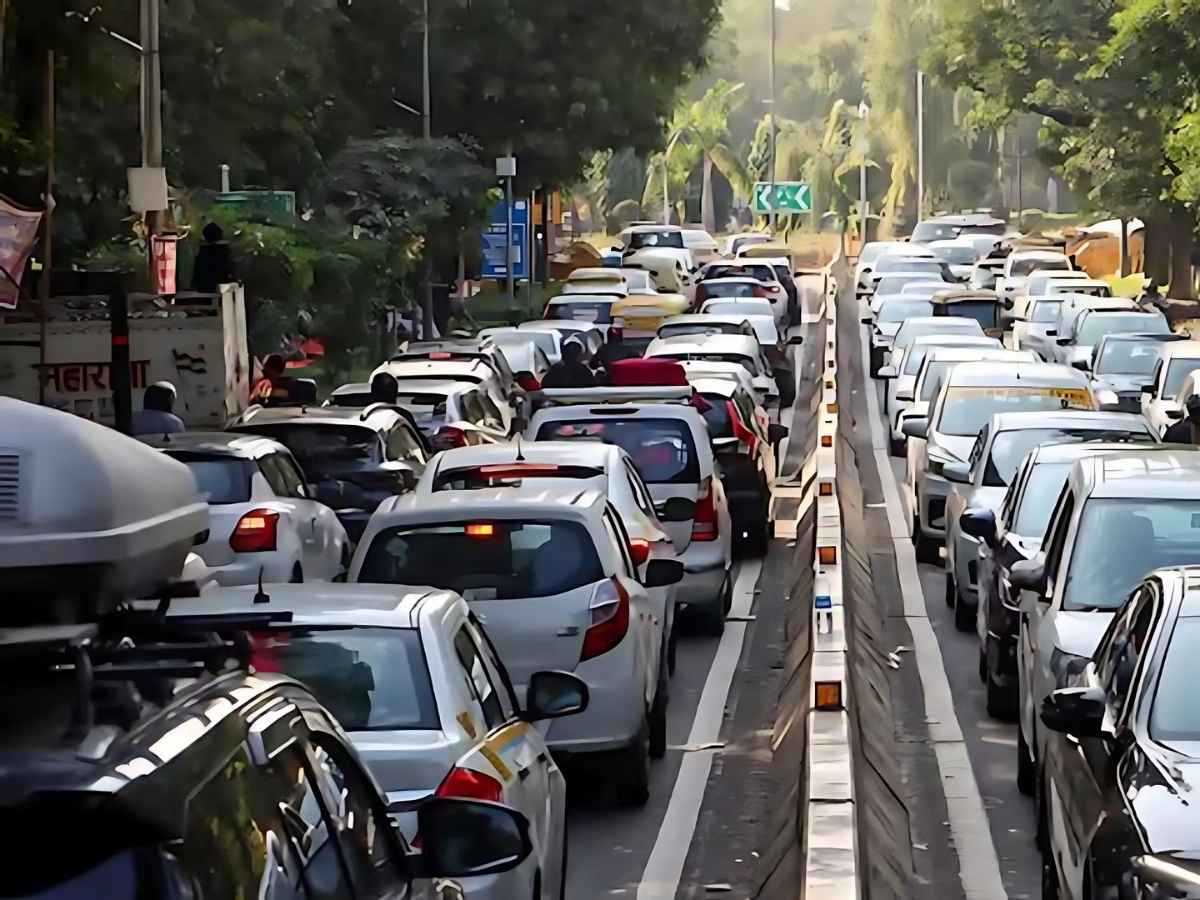
Delhi government halts ANPR-based impounding of old vehicles amid public backlash.
The Delhi government has halted the implementation of the ANPR-based impounding mechanism for ‘end of life’ vehicles (ELVs), citing overwhelming public outcry and technological difficulties. The controversial policy, mandated by the Commission for Air Quality Management (CAQM), was to come into force on July 1, 2025, targeting ELVs at fuel stations across the national capital.
The directive required fuel stations to deny petrol and diesel to ELVs detected using Automatic Number Plate Recognition (ANPR) cameras, and authorised their impounding on the spot. However, Environment Minister Manjinder Singh Sirsa, addressing the media on July 3, confirmed the Delhi government would not enforce the rule in its current form.
Speaking at a press conference, Mr. Sirsa emphasised that while the government remains committed to improving Delhi’s air quality, it refuses to support a plan that causes distress to the public. “We will clean Delhi’s environment, but will not allow Delhiites’ vehicles to be impounded. This is the resolution of our Chief Minister Rekha Guptaji, and her promise to the people,” he said.
Sirsa confirmed that he had written to CAQM, urging a hold on the order. In his letter, he cited “technological integration challenges” and a “lack of coordination with neighbouring States” as key reasons for the public’s discontent.
Chief Minister Rekha Gupta echoed the sentiment at a separate event. “The pain of Delhi people is understandable… Some people are emotionally attached to vehicles gifted by loved ones. These less-driven vehicles are more than machines—they are memories,” she said.
She assured the public that her government would make “all efforts” to resolve the issues related to the ELV ban without compromising on compassion or practicality.
While Mr. Sirsa’s office confirmed that ANPR enforcement at petrol pumps would not proceed from Friday, the government is yet to issue an official notification.
The Minister also suggested a new approach to combat vehicular pollution one that assesses the actual emissions from vehicles rather than blanket bans based on age.
On April 23, 2025, the CAQM had issued a directive requiring ANPR-based denial of fuel to ELVs across Delhi starting July 1. The same was to be extended to five NCR districts Gurugram, Faridabad, Ghaziabad, Gautam Buddha Nagar, and Sonipat starting November 1, and to the entire NCR by April 1, 2026.
The rule affects a significant number of vehicles: 62 lakh ELVs in Delhi and 44 lakh across the rest of NCR, according to CAQM data. The National Green Tribunal had already banned ELVs in NCR since 2015.
The opposition Aam Aadmi Party (AAP) claimed credit for forcing the government to reconsider. “The BJP government was hiding behind a court order. But when the people raised their voice, it had to withdraw. In a democracy, the people are supreme,” said Saurabh Bharadwaj, AAP’s Delhi president.
Meanwhile, Minister Sirsa accused the previous AAP government of corruption, alleging that former Environment Minister Gopal Rai struck deals with new car dealers and planned the ANPR system to promote vehicle replacements.
ALSO READ: 7th Muharram Procession In Srinagar, Tight Security Observed
Tsunami swing collapses at Surajkund Mela in Faridabad, killing 1 police inspector and injuring 12;…
Gujarat Class 12 latecomer slaps teacher, rants “Who are you to question me? No one…
The stunt-based reality show Khatron Ke Khiladi is returning for its 15th season after a…
