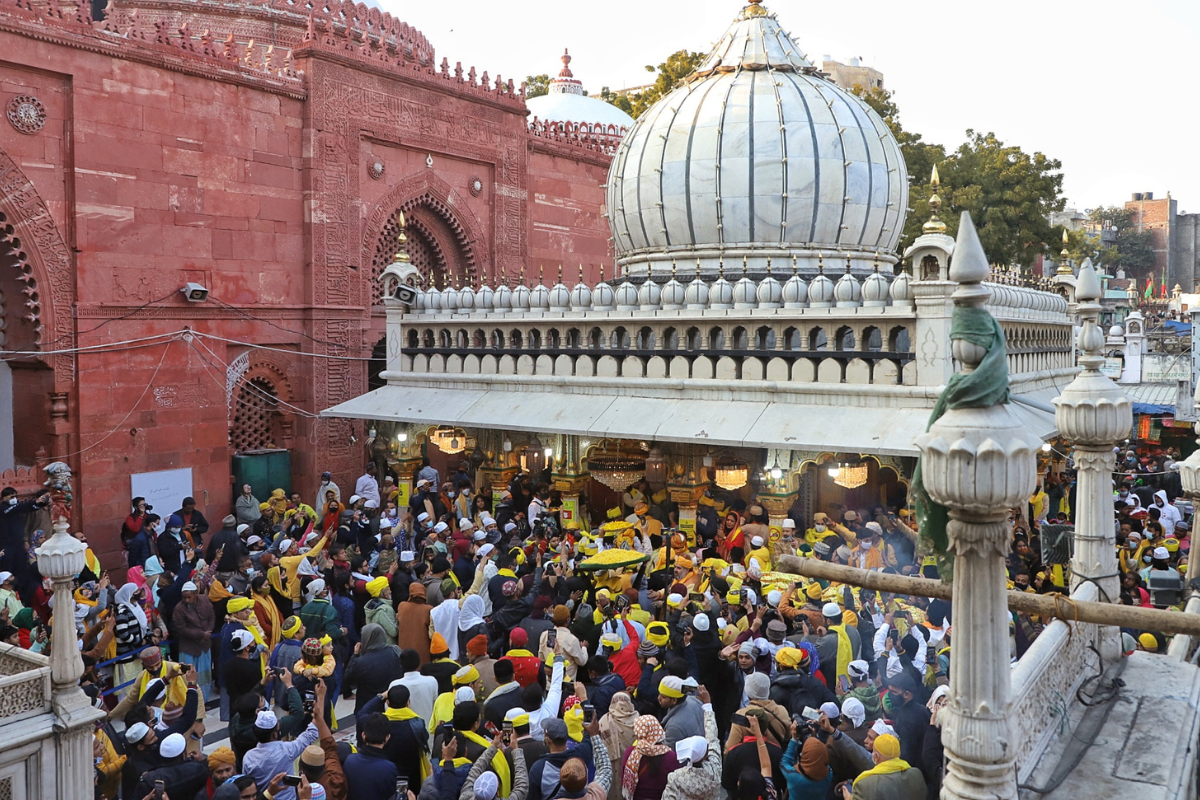
Nizamuddin Dargah celebrates Basant Panchami
India is the only country where the yellow of the mustard field finds its way into the shadowed arches of a Sufi shrine. Here, the season is not just a change in the wind, but a remedy for a broken heart. Whether it is the crescent of Eid or the saffron glow of Basant, Indian do not celebrate as ‘us’ and ‘them’ they celebrate as a people who know that joy is the only language God truly hears.
Basant Panchami is the festival of the onset of spring. The festival is celebrated with joy at Hazrat Nizamuddin Auliya’s shrine in New Delhi portraying tradition and secular values that dates back centuries.
The Basant Panchami is observed during the last week of January or beginning of February every year and it is a pivotal Hindu festival. The festival is dedicated to Goddess Saraswati, and it is basically celebrated to welcome the season of spring. One of the greatest celebrations of the festival took place at the Hazrat Nizamuddin Dargah situated in New Delhi. This year also the festive is celebrated after the Friday Namaz (Prayer) which is consider an important day to pray in Islam.
The story of celebrating a Hindu festival at a Muslim Sufi Shrine begins centuries ago, somewhere between the 12th and 14th centuries. The prominent Sufi scholar Hazrat Nizamuddin Auliya was so sad and in deep sorrow after the death of his nephew Hazrat Tajuddin Nuh. The Sufi remained in deep sorrow even after months of passing his nephew. He even refuses to have food or participate in daily affairs.
The sight of Sufi highly disturbed his most beloved disciple, poet, and Musician Amir Khusrau. Khusrau started searching the ways to make his master happy. On the day of Basant Panchami Khusrau saw villagers in the morning walking past the shrine, dressed in yellow and singing songs of spring as they were heading to celebrate the festival.
Those villagers inspired Amir Khusrau and he himself dressed in yellow, gathered blooming mustard flowers and composed verses welcoming Basan. When he sang the self-composed song, Hazrat Nizamuddin smiled for the first time in a long time. The moment of solace and spiritual connection became the base of Basant Panchami tradition at the Nizamuddin Shrine. The song has become so popular that even today it is played during the celebration. The first two verses of the song are
sakal ban phuul rahī sarsoñ
ban ban phuul rahī sarsoñ
This song was also used in Sanjay Leela Bhansali’s popular Netflix series Heeramandi.
In present the celebration remains one of the shrine’s greatest celebrations. The tomb turns yellow on the eve and devotees offer yellow chadars and special Basant qawwalis are composed and performed on this special day.
Syed Ziyauddin is a media and international relations enthusiast with a strong academic and professional foundation. He holds a Bachelor’s degree in Mass Media from Jamia Millia Islamia and a Master’s in International Relations (West Asia) from the same institution.
He has work with organizations like ANN Media, TV9 Bharatvarsh, NDTV and Centre for Discourse, Fusion, and Analysis (CDFA) his core interest includes Tech, Auto and global affairs.
Tweets @ZiyaIbnHameed
Wicketkeeper-batter Ishan Kishan was visibly annoyed when reporters asked him about comments made by former…
Air India Announces Fuel Surcharge Hike, Flight Fares Set To Go Up Amid US–Iran War
Air India: Air India passengers may soon have to pay more for tickets after the…
A controversy has broken out around Anurag Dobhal (UK07 Rider) after his brother Kalam Ink…
