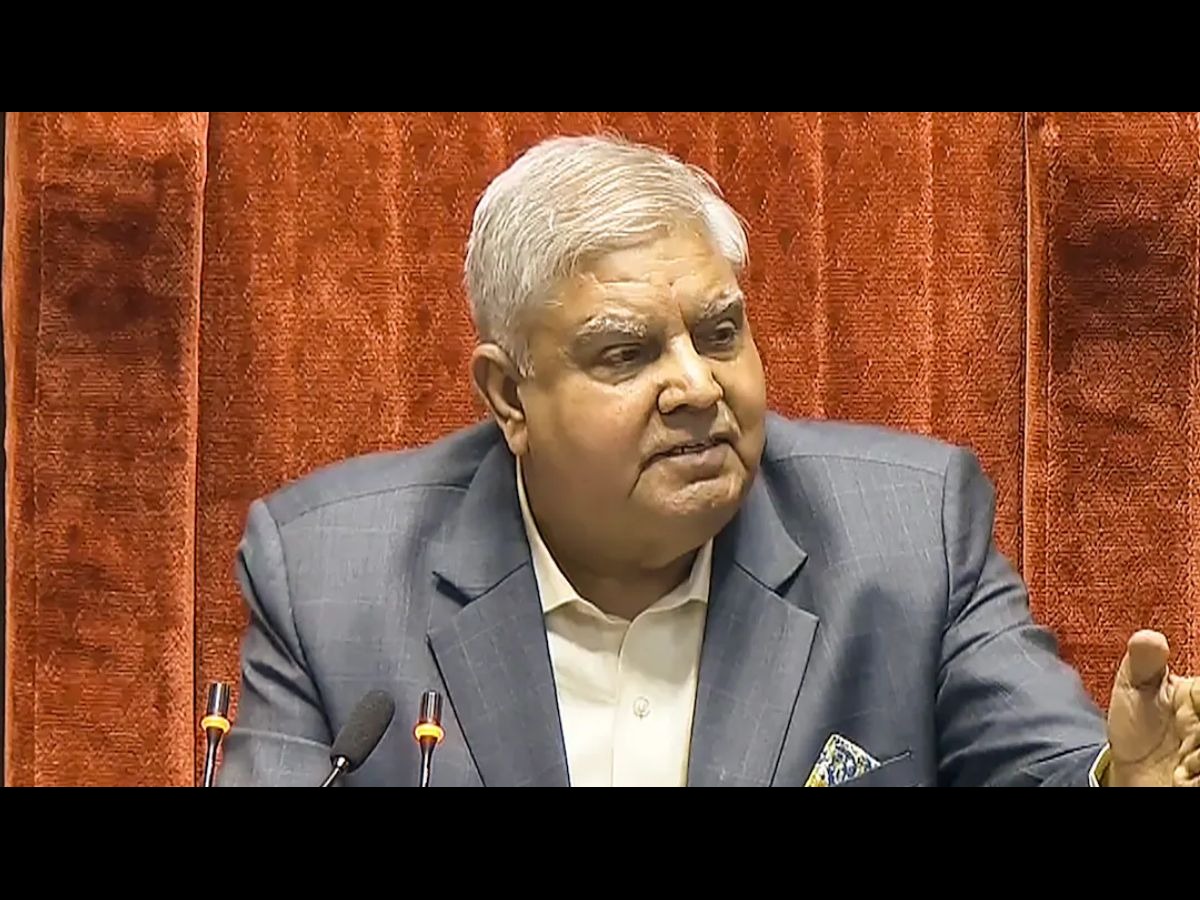
The Election Commission of India has formally issued the notification to conduct a mid‑term Vice‑Presidential election, setting in motion a process triggered by the unexpected resignation of Vice President Jagdeep Dhankhar on July 21, 2025,mention health concerns. Dhankhar’s term was originally scheduled to conclude in August 2027, but his resignation turn out a rare mid‑term vacancy in the nation’s second-highest constitutional office.
the Commission officially released the election notification. The nomination window opens immediately, with candidates required to submit their papers by August 21. Scrutiny of applications will take place on August 22, and potential contenders must confirm their intentions or withdraw by August 25.
Under Article 66(1) of the Constitution and the Presidential and Vice‑Presidential Elections Act of 1952, the Vice President is elected by an Electoral College comprising both houses of Parliament, including nominated members of the Rajya Sabha. The system employed is proportional representation by single transferable vote, and voting is conducted through a secret ballot.
Candidates must be Indian citizens aged at least 35, qualified for election to the Rajya Sabha, and must not hold an office of profit. Additionally, each nomination must be endorsed by at least twenty elected or nominated electors as proposers and another twenty as seconders, besides making a mandatory security deposit.
Currently, the effective strength of both houses is 786 MPs, with one vacancy in Lok Sabha and five in Rajya Sabha (four from Jammu and Kashmir and one from Punjab). With such size, a candidate needs to receive at least 394 votes to win, provided that all electors cast valid ballots.
The ruling National Democratic Alliance (NDA) has a solid majority in Parliament, with 293 members in Lok Sabha and 129 in Rajya Sabha, giving it an estimated strength of 422 supporting votes assuming everyone votes for the NDA nominee, which exceeds the winning margin.
This election marks the first unscheduled Vice‑Presidential poll since 1987, when Shankar Dayal Sharma was elected unanimously following a mid‑term vacancy. Unlike Sharma’s unchallenged ascent, this time a contested election is expected, with political dynamics intensified due to Dhankhar’s sudden exit and speculation within political circles about possible internal tensions.
As the clock ticks toward September 9, when polling is scheduled, all eyes in Delhi are on the emerging contest, which will govern the presiding role as ex‑officio Chairperson of the Rajya Sabha and the responsibilities of a full five‑year constitutional term.
Government reports state that Mojtaba Khamenei is in good health and yet he has not…
Chaitra Amavasya 2026: March 18 Or 19? Check Out Correct Date, Time, Rituals And Significance Inside
Chaitra Amavasya 2026: Chaitra Amavasya, an important day in the Hindu lunar calendar, is observed…
A Bhojpuri stage performance has sparked widespread outrage after a viral video allegedly showed singer…
