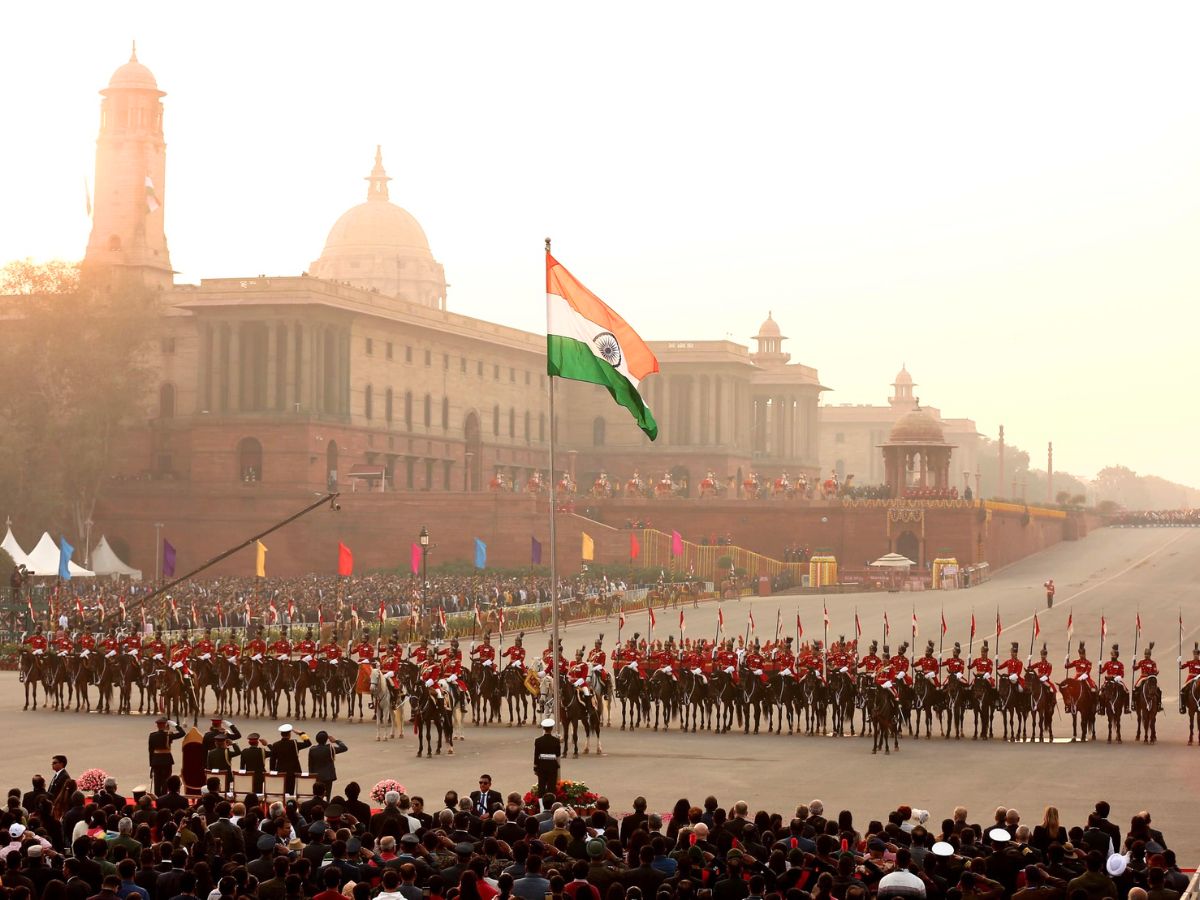
India’s 77th Republic Day Parade will debut the Phased Battle Array. (Photo: X/@adgpi)
India’s 77th Republic Day Parade, scheduled for January 26, 2026, will witness a historic debut of the Phased Battle Array format, also known as Ranbhoomi Vyuh Rachna.
This innovative display by the Indian Army will showcase its operational capabilities in a tactical, battlefield-like arrangement at Kartavya Path, New Delhi.
The Phased Battle Array is a first-of-its-kind approach in India’s military parades. Unlike traditional displays, this format arranges troops and equipment in the order they would operate on a real battlefield. It begins with intelligence gathering, moves to the main combat assault, and concludes with support and long-range strike systems.
According to the official release, the format aims to mirror real combat operations, demonstrating India’s strategic depth, technological prowess, and battlefield readiness.
The parade will begin with the Recce element, featuring the 61 Cavalry in active combat uniform, followed by India’s first indigenously designed High Mobility Reconnaissance Vehicle (Armoured Light Specialist Vehicle). Aerial support will be provided by the DHRUV Advanced Light Helicopter and its armed variant RUDRA, in Prahar formation.
The Combat Elements will include T-90 BHISHMA, Arjun Main Battle Tank, BMP-II Infantry Combat Vehicle, and Nag Missile System (Tracked) Mk-2. Air support for these units will be provided by Apache AH-64E and PRACHAND Light Combat Helicopter.
A detachment of Special Forces will follow, using Ajayketu All-Terrain Vehicles, Randhwaj Rugged Terrain Tactical Transport Systems, and Dhawansak Light Strike Vehicles.
Robotics and autonomous systems will be a highlight, featuring Robotic Dogs, Unmanned Ground Vehicles, and four autonomous unmanned systems: NIGRAHA, BHAIRAV, BHUVIRAKSHA, and KRISHNA.
India’s next-generation unmanned warhead arsenal, including SHAKTIBAAN and DIVYASTRA, will be mounted on High Mobility Vehicles (HMV 6×6). These systems include loitering munitions like HAROP, Mini HARPY, Peacekeeper, and SKY STRIKER, capable of swarm drone attacks and long-range precision strikes exceeding 1,000 km.
Additionally, artillery units like the Dhanush Gun System and Amogh Advanced Towed Artillery Gun System (ATAGS) will demonstrate India’s Aatmanirbhar Bharat vision and technological self-reliance. The BrahMos supersonic missile and SURYASTRA Universal Rocket Launcher will showcase India’s deep strike capabilities.
The Akash Weapon System and ABHRA Medium Range Surface-to-Air Missile (MRSAM) will represent India’s air defence capabilities. The Integrated Operational Centre, displayed in a glass case, will highlight Operation Sindoor, reflecting the blend of heritage, diversity, and development (Virasat, Vividhta aur Vikas) in modern military operations.
The release emphasized that the Phased Battle Array format embodies the Sudarshan Chakra vision of Prime Minister Narendra Modi, combining offensive power with strategic defence.
Sofia Babu Chacko is a journalist with over five years of experience covering Indian politics, crime, human rights, gender issues, and stories about marginalized communities. She believes that every voice matters, and journalism has a vital role to play in amplifying those voices. Sofia is committed to creating impact and shedding light on stories that truly matter. Beyond her work in the newsroom, she is also a music enthusiast who enjoys singing.
At a time of escalating US-Iran tensions, Tehran warns Washington via Enghelab Square mural: ‘If…
‘First And Foremost’, Zelenskyy Says US Security Guarantees Document ‘100% Ready’, Awaits Signing
Ukraine says a US security guarantees document is ready for signing, as Zelenskiy cites limited…
Banks may shut on Jan 27 due to a nationwide strike over a five-day work…
