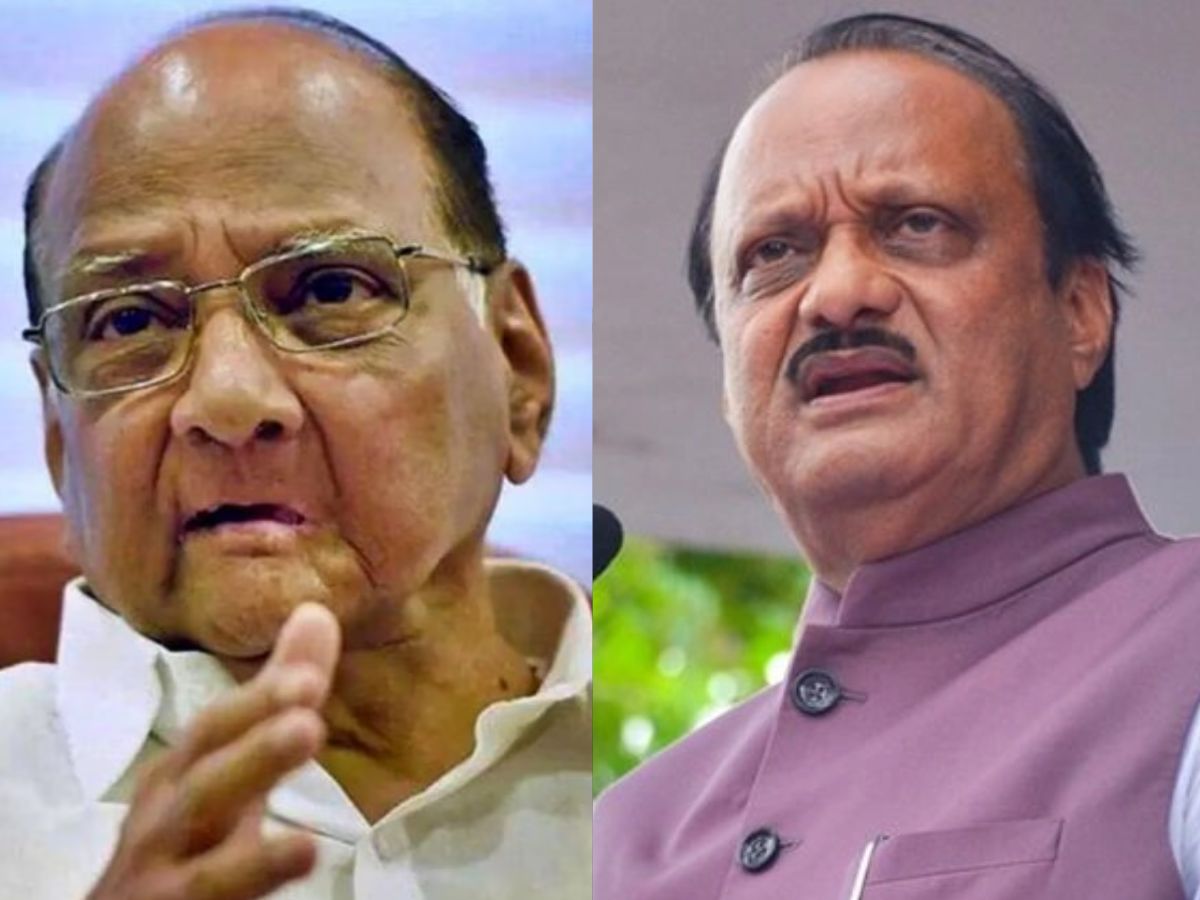
Why The Pawars’ Tactical Reunion Failed In Pune Civic Polls | Setback For NCP Unity Explained (Picture Credits: X)
The Bharatiya Janata Party (BJP) has further tightened its grip on Pimpri-Chinchwad, once considered a citadel of the Nationalist Congress Party (NCP), delivering a fresh setback to the Pawar political legacy in Maharashtra’s urban heartland.
Building on its landmark breakthrough in the 2017 civic polls, the BJP once again crossed the halfway mark in the 128-member Pimpri-Chinchwad Municipal Corporation (PCMC). This time, the party secured 87 seats, decisively outpacing the combined strength of the rival camps led by Ajit Pawar and Sharad Pawar.
The result mirrors the 2017 outcome, when the BJP had wrested control of the civic body from an undivided NCP after 15 years, winning 75 seats against the NCP’s 37. The repeat performance underscores the BJP’s sustained organisational strength and growing voter base in urban Maharashtra.
In a tactical move aimed at halting the BJP’s rise, the rival Pawar factions attempted a limited reunion during the campaign. Despite projecting a united front, the combined NCP managed to secure only 37 seats, a figure identical to its 2017 tally. Notably, the Sharad Pawar-led faction failed to win a single seat in Pimpri-Chinchwad.
Political analysts say the alliance appeared fragile beyond optics. Contrasting loyalties among party workers, lack of clarity at the ward level, and muted coordination between factions weakened the campaign’s impact.
The BJP contested independently in both Pune and Pimpri-Chinchwad, taking on its Mahayuti partners, the Ajit Pawar-led NCP and the Eknath Shinde-led Shiv Sena. The Shiv Sena (UBT) and the Congress also fielded candidates, creating a multi-cornered contest that ultimately favoured the BJP.
In Pimpri-Chinchwad, the BJP led in 84 wards, while the NCP stayed ahead in 37, further highlighting the imbalance in organisational reach and voter mobilisation.
The election campaign witnessed sharp exchanges, with Ajit Pawar targeting the BJP over alleged irregularities in the functioning of the Pune and Pimpri-Chinchwad civic bodies. However, the attacks failed to translate into electoral gains, particularly among urban voters seeking administrative stability and clear governance messaging.
The twin defeats in Pune and Pimpri-Chinchwad have reignited questions over the viability of Pawar’s unity as an electoral strategy. With elections to 29 municipal corporations held on January 15 after a prolonged gap, the results suggest that legacy alone may no longer be sufficient to counter the BJP’s expanding urban influence.
A controversy has surfaced around the Union Public Service Commission Civil Services Examination results after…
Filmmaker Sooraj Barjatya hosted a grand wedding reception for his daughter Eesha Barjatya and her…
India are scheduled to play a one-off Test and three ODIs against Afghanistan in June,…
