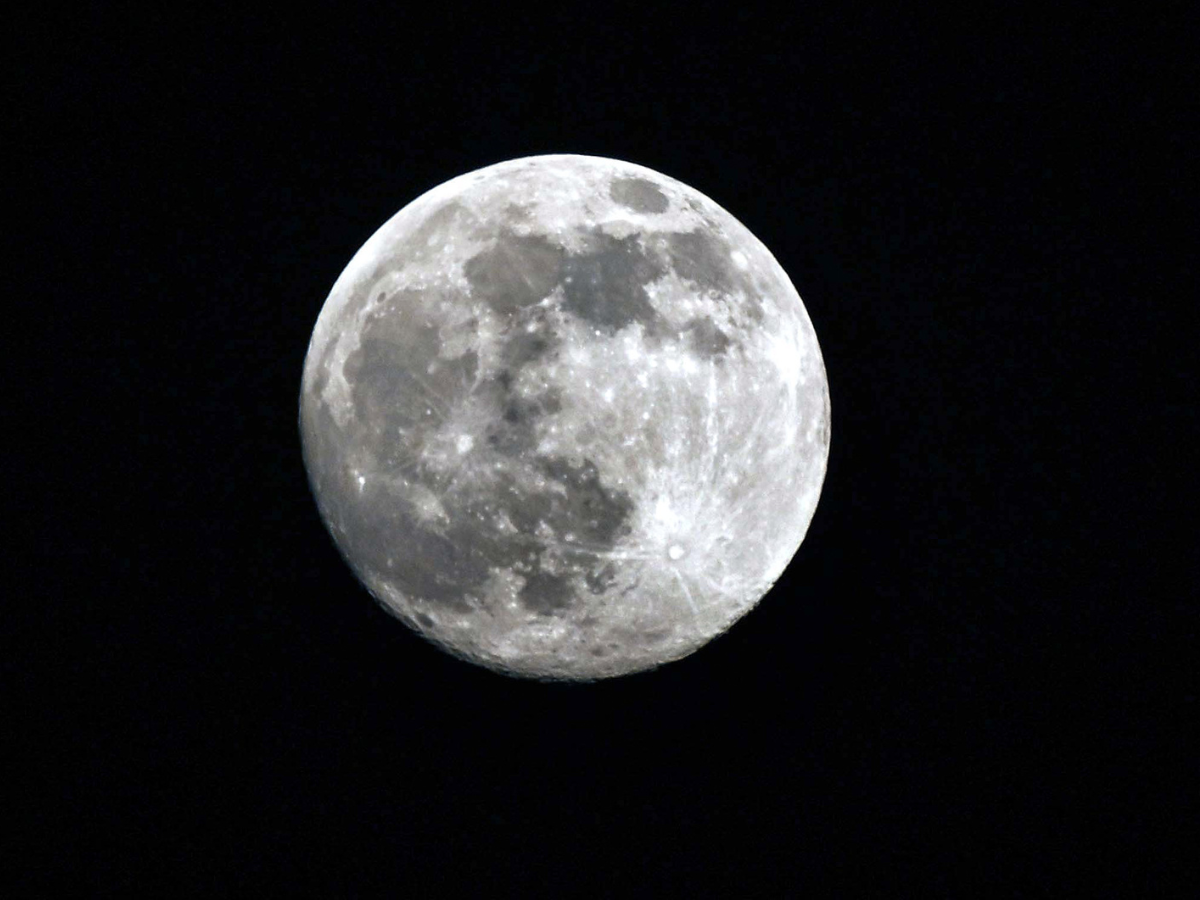
Which Planet Has the Most Moons, credit: ANI
Space has been a diverse and surprising thing. Every time scientists and experts have explored it, they have always been surprised and found new. There are 8 planets in our solar system at present including Earth. However, there are a lot of objects in our solar system including former planets, moons, and other objects.
Apart from Sun and Planets moons are the essential parts of the system. They are natural satellites.
As per NASA and other space science experts there are two types of moons
Traditional moon
Small body moon
Traditional moons are the type of moons that one probably imagines while thinking about the moon. Our moon is a traditional moon whereas the small body moon includes body such as asteroids and Kuiper Belt objects.
Some small body moons also orbit plantes rather than orbiting the sun, but there is much smaller relative size, and their orbital distances are much greater.
There are many moons in the solar system. In terms of traditional moons, Venus and Mercury don’t have any moons whereas Earth has only one moon. The most trending planet of Mars has two moons known as Phobos and Deimos.
Jupiter has 95 moons, but Saturn has more moons than Jupiter. Saturn has the greatest number of moons in the entire Solar system. It has 274 moons in which 128 moons have been recently discovered by an international team of astronomers in March 2025.
|
Planet |
Number of Known Moons |
Largest Moons (Examples) |
Key Fact |
|
Mercury |
0 |
— |
Too close to the Sun’s gravity to retain a moon. |
|
Venus |
0 |
— |
The only other major planet without a natural satellite. |
|
Earth |
1 |
The Moon (Luna) |
The Moon is exceptionally large relative to Earth’s size. |
|
Mars |
2 |
Phobos, Deimos |
Both moons are small, irregularly shaped, and may be captured asteroids. |
|
Jupiter |
95 |
Ganymede, Io, Europa, Callisto |
Ganymede is the largest moon in the Solar System. |
|
Saturn |
274 |
Titan, Rhea, Enceladus, Mimas |
Currently holds the record for the most moons. Titan is the only moon with a dense atmosphere. |
|
Uranus |
27 |
Titania, Oberon, Miranda, Ariel |
Its moons are named after characters from the works of Shakespeare and Alexander Pope. |
|
Neptune |
14 |
Triton, Nereid |
Triton is notable for orbiting Neptune backward (retrograde orbit). |
The space scientist and experts are closely observing the universe. This is very much possible that in upcoming future we may get to know about discovery of new moons or planets.
Syed Ziyauddin is a media and international relations enthusiast with a strong academic and professional foundation. He holds a Bachelor’s degree in Mass Media from Jamia Millia Islamia and a Master’s in International Relations (West Asia) from the same institution.
He has work with organizations like ANN Media, TV9 Bharatvarsh, NDTV and Centre for Discourse, Fusion, and Analysis (CDFA) his core interest includes Tech, Auto and global affairs.
Tweets @ZiyaIbnHameed
Swiggy now lets users order food, groceries, and book tables directly via AI chatbots like…
A free breakfast announcement at Shilpa Shetty’s newly opened Bandra restaurant AmmaKai has sparked a…
Mumbai (Maharashtra) [India], January 23: As the Union Budget 2026 approaches, discussions around the real estate…
