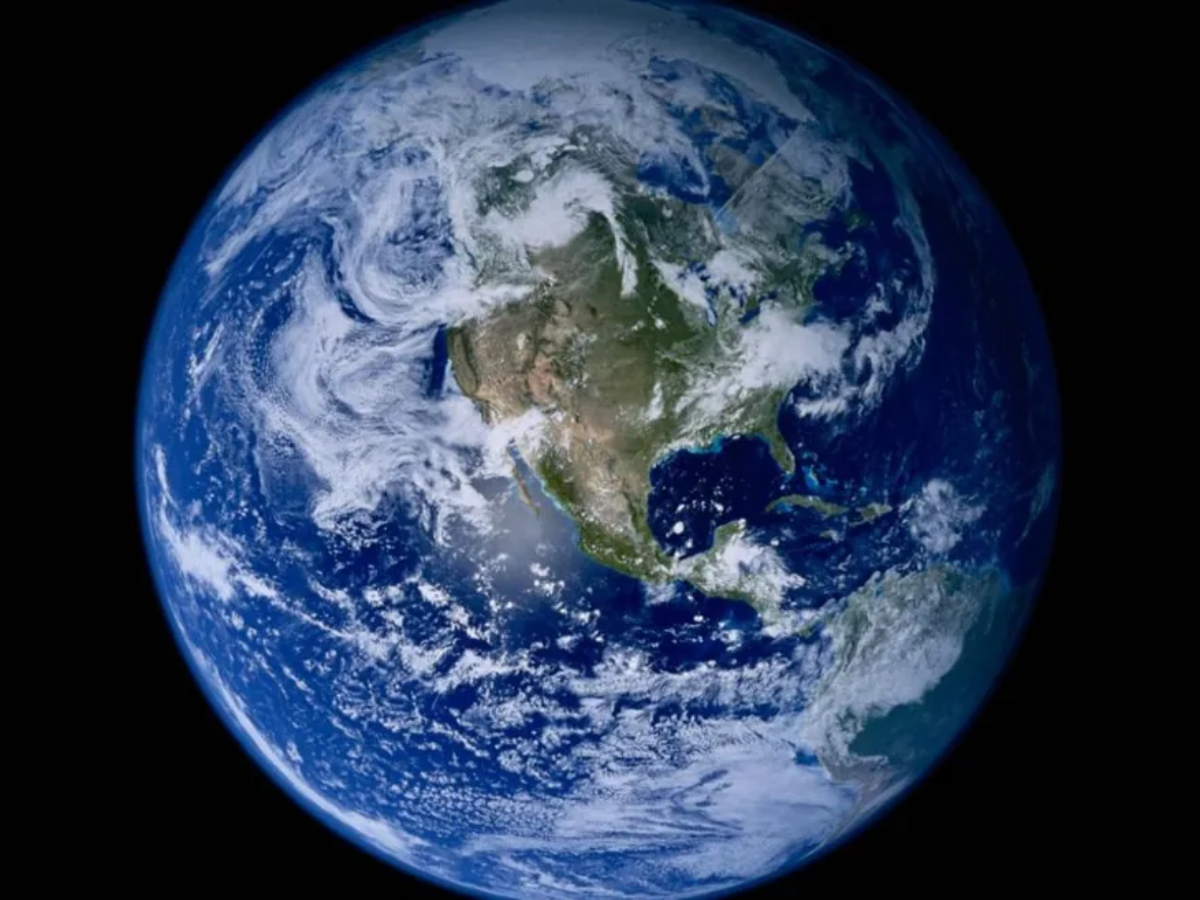
Earth's rotation is not constant and can be influenced by various factors
July 9 is about to set a new record for the shortest day Earth’s ever clocked in—at least since we started keeping track. Not just a one-off, either. July 22 and August 5, 2025, are expected to be just as brief. The culprit? The Moon’s current orbit.
It’s nudging Earth’s rotation ever so slightly, making the planet spin a bit faster and shaving off roughly 1.3 to 1.5 milliseconds from each day. It’s not much, but in the world of atomic clocks and global timekeeping, it matters.
Earth’s rotation isn’t exactly a metronome. It wobbles and shifts thanks to a mix of things: where the Sun and Moon are parked, changes in the magnetic field, and even how the planet’s mass is spread out.
All of this means the length of a day isn’t fixed. Usually, the trend’s been toward longer days—billions of years ago, a day lasted only 19 hours, since the Moon was closer and yanking harder on Earth. As the Moon drifted off, our days stretched out.
But lately, there’s been a twist. Since the 1970s, when we started measuring this stuff really precisely, scientists have noticed the Earth has, at times, started spinning faster. The record for speed was set on July 5, 2024—Earth zipped around 1.66 milliseconds quicker than the usual 24 hours.
Leonid Zotov, who really knows his stuff when it comes to how the Earth spins (he’s from the Moscow Institute of Electronics and Mathematics), told a publication that, honestly, most scientists are pinning this faster rotation on something happening deep inside the planet. The usual suspects—oceans and atmosphere—just don’t explain why the Earth suddenly picked up the pace.
So what’s going on this July and August? The Moon is hitting its farthest point from Earth’s equator, messing with how its gravity tugs on our planet’s axis. Think of Earth as a spinning top—if you push it off-centre, it picks up speed. When the Moon’s pull shifts toward the poles, Earth’s spin accelerates, and the days get a touch shorter.
Because of this, the International Earth Rotation and Reference Systems Service (IERS)—the folks who keep time for the whole planet—will eventually have to add a “negative leap second” to the clock. They’ll have to subtract a second to keep everything on track. Never happened before. They’re aiming to do this around 2029.
With 13 years on the line, Ashish Kumar Singh loves everything when it comes to movies, music, travel and pop culture. Formerly employed at ANI, Pinkvilla, India Today and HT, Ashish has interviewed some of the top celebrities of India, including Shah Rukh Khan, Aamir Khan, Ranveer Singh, Ranbir Kapoor and Hrithik Roshan, among others. Breaking news excites him and deadlines are what he chases. Interviewing comes naturally to him. Hit him up at ashish.kumar02singh@gmail.com.
Stock market outlook today, May 13: Sensex and Nifty remain under pressure after Tuesday’s massive…
Prateek Yadav, the younger son of late Samajwadi Party founder Mulayam Singh Yadav, has passed…
At the 79th Cannes Film Festival, jury member Paul Laverty criticized Hollywood for allegedly sidelining…
