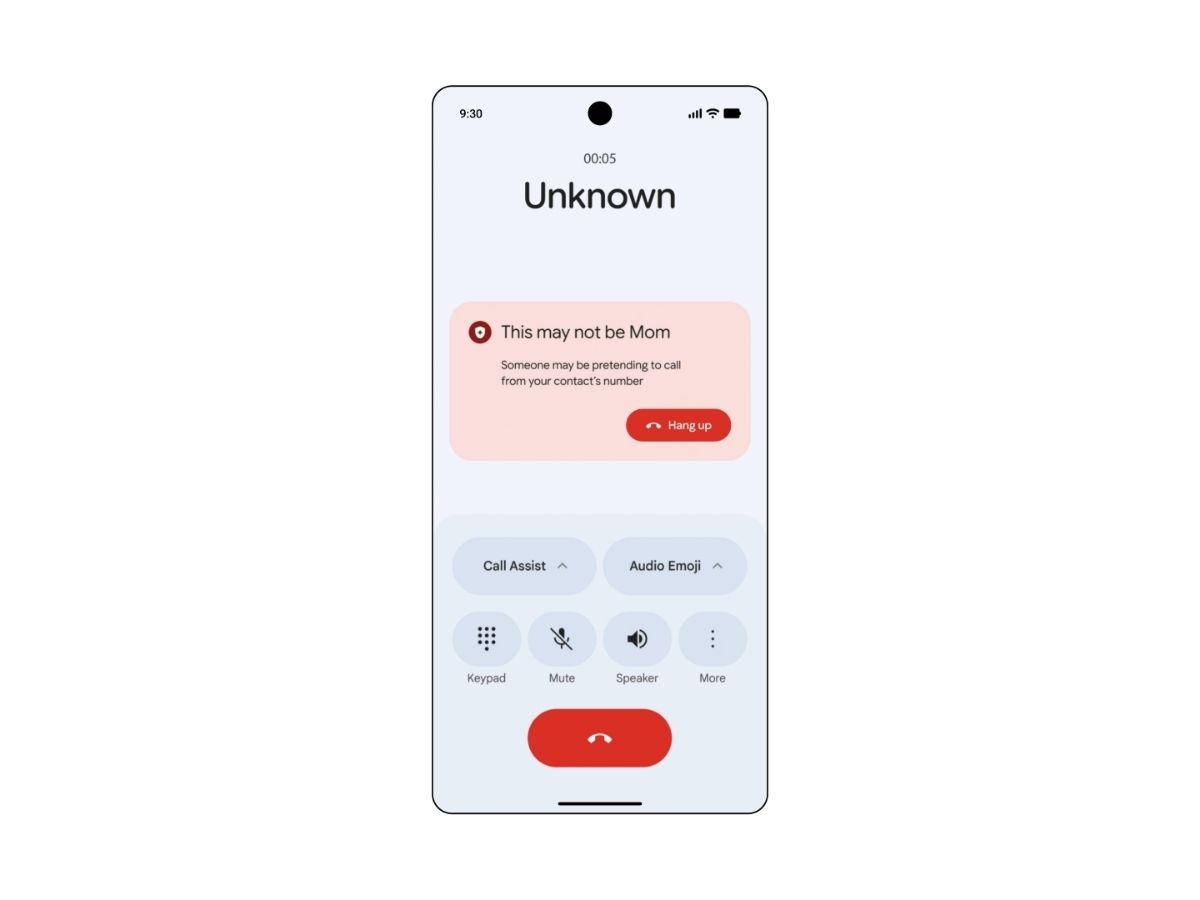
Google Fake Call Detection
US-based tech giant Google has introduced a new security feature for Android users to protect them from a rapidly growing form of fraud, i.e., AI-powered impersonation scams. The new feature is named ‘Fake Call Detection’, and it is claimed to identify and flag suspected spoofed calls where scammers use artificial intelligence to clone the voice of someone the victim knows. The company claims that the newly launched tool is first of its kind in the smartphone industry and is aimed at fighting against the rapidly growing sophisticated deepfake attacks.
Here’s what’s new in this month’s @Android Drop:
⛔ Spot suspected scammers impersonating your contacts with fake call detection
🔎 Search an entire outfit with Circle to Search, now available on more Android devices
👠 Remix your closet and try on outfits virtually with… pic.twitter.com/VjoBgrqvbN
— Google (@Google) June 2, 2026
The feature is launched as fraudsters are rapidly using AI generated voice and caller ID spoofing to trick people into believing they are speaking to a family member, friend, or a known person. In a typical scam, the fraudster mimics a person’s phone number and voice to create a fake emergency or financial request.
According to the tech giant, the new fake call detection feature works automatically when both caller and recipient use the Phone by Google app. When a legitimate call is placed, the caller’s device sends a secure verification signal to the recipient’s phone through end-to-end encrypted Rich Communication Services (RCS) technology.
The company explains the system as a digital handshake between devices. If a caller claims to be someone from your contacts but the verification signal is missing, Android checks with the actual contact device to confirm whether they are calling or not.
If the contact device confirms no call is being placed, the recipient receives an on-screen warning that the caller may be impersonating someone they know. The alerts advise users to end the call urgently.
The whole process runs silently in the background. You will not see anything happening unless there is a problem. And if a scammer is on the line pretending to be your sibling or your boss, your phone will catch the mismatch and warn you before you say or do anything you regret. The feature is turned on by default, so most users will not have to do anything to activate it.
For this to work, both the caller and the recipient need to be using the Phone by Google app, along with Google Messages and Google Contacts. It currently works on Android 12 and above and is rolling out globally starting with Pixel devices this month.
The timing of this launch is not a coincidence. Scammers have gotten very good at sounding like humans. According to INTERPOL’s March 2026 Global Financial Fraud Threat Assessment, impersonation fraud is one of the leading causes of more than $400 billion in global losses. In 2024 alone, Americans lost nearly $3 billion to impersonation scams, and the numbers have been climbing every year since.
The reason these scams work is simple. People used to rely on caller ID to know who was calling. But scammers figured out how to fake that too. Now they spoof a number from your contact list and layer an AI-generated voice on top, so the person calling you sounds exactly like your mother, or your manager, or your bank’s customer care executive.
Most people cannot tell the difference anymore. Researchers and security experts have consistently found that human ears struggle to detect high-quality AI audio. So Google decided the phone itself needed to do the checking.
Google has built this feature on top of RCS, which means other app developers and phone manufacturers can also adopt it over time. That is an important detail. If the technology stays limited to Pixel phones or only Google’s own apps, its reach will stay narrow. But if other Android manufacturers pick it up, it could become a standard layer of protection across the entire ecosystem.
For now, anyone on Android 12 or above using the Phone by Google app will start seeing the feature roll out over the coming weeks. There is no opt-in required and no complicated setup.
Syed Ziyauddin is a media and international relations enthusiast with a strong academic and professional foundation. He holds a Bachelor’s degree in Mass Media from Jamia Millia Islamia and a Master’s in International Relations (West Asia) from the same institution.
He has work with organizations like ANN Media, TV9 Bharatvarsh, NDTV and Centre for Discourse, Fusion, and Analysis (CDFA) his core interest includes Tech, Auto and global affairs.
Tweets @ZiyaIbnHameed
Lava Bold N2 5G Launched In India At Rs 11,999
Lava has launched the Bold N2 5G in India at a starting price of Rs…
UPPSC APS Result 2026: 4,240 Candidates Appeared, None Qualified; 331 Posts Remain Vacant
The Uttar Pradesh Public Service Commission (UPPSC) has announced an unprecedented outcome in the Additional…
Watch Virat Kohli's viral advice to 15-year-old IPL 2026 sensation Vaibhav Sooryavanshi after the RCB…
