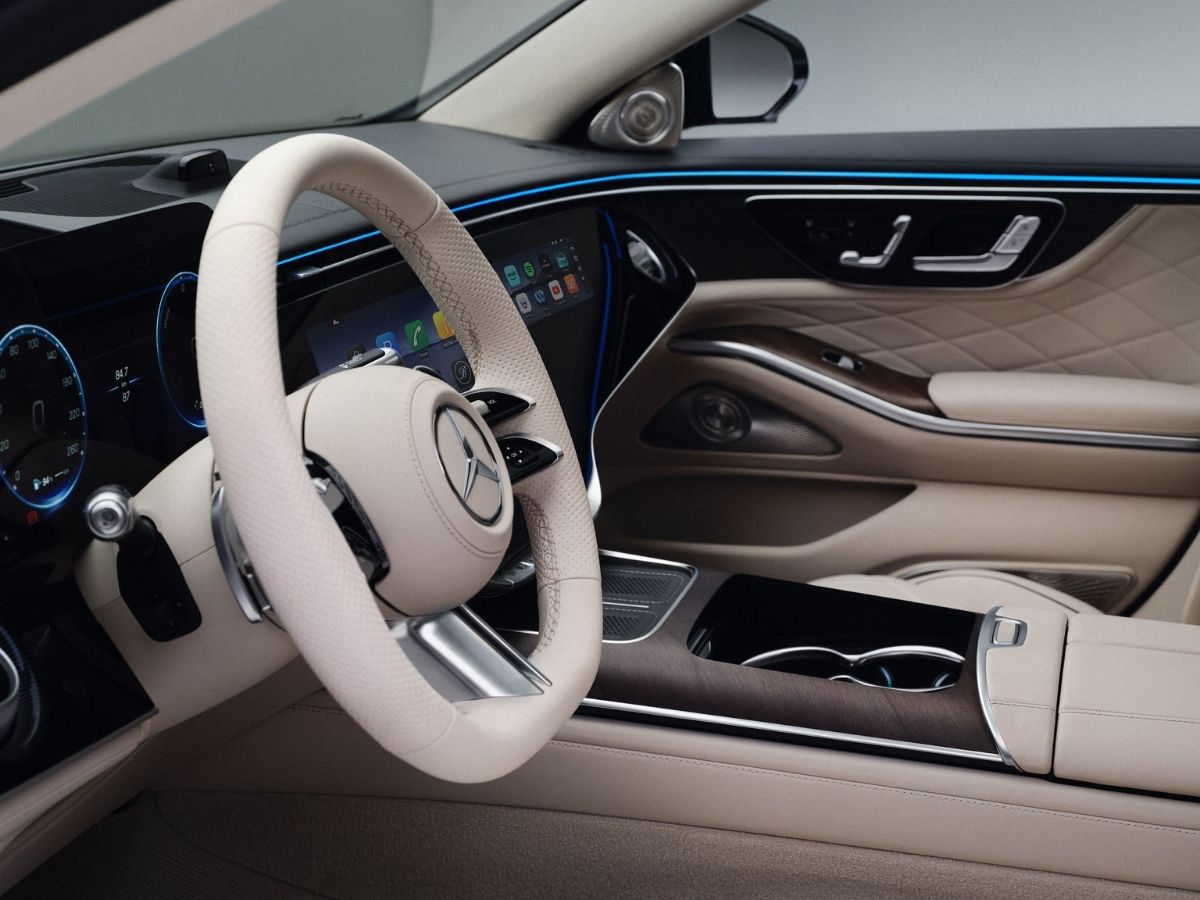
Why Do New Cars Smell Different?
If you have ever purchased a new car or sat in a newly delivered car, you must have experienced that new car smell. It is a scent so desired that it comes in bottles and air fresheners, all to help drivers recapture those first few months of new car ownership. Here the questions arise that what exactly the smell is that comes from various automotive plastics, leathers, carpet, and seat cushions, and why do owners or drivers love that smell too much? Here is the science behind the smell of a new car.
Here is something that might genuinely surprise you. That fresh, clean smell you love so much when you first sit in a new car? It has nothing to do with the leather or the fabric. It is pure chemistry doing its thing.
What owners of the new car smell is actually a complex mix of airborne chemicals known as volatile organic compounds, or VOCs. These are released by the plastics, foams, adhesives, and fabrics that are used in making the car’s interior. They evaporate slowly over time through a process called off-gassing, and together they create that unmistakable cabin scent that millions of people find strangely satisfying.
To put a number on it, that familiar smell is actually a blend of anywhere between 50 and 150 different chemical compounds. Think about everything that goes into building a car’s interior. The dashboard, the seats, the carpets, the door panels, the headliner, and the dozens of adhesives and sealants holding it all together. Most of these materials are petroleum-based, and when they are brand new, they have not fully cured or settled. So they keep releasing tiny amounts of chemicals into the air inside the cabin, and your nose picks all of it up at once and registers it as that one recognisable smell.
The specific chemicals involved are not exactly the kind of names you would want on a candle label. They include acetaldehyde, benzene, formaldehyde, hexanal, and styrene. Not what you would imagine when you close your eyes and think of that fresh new car feeling.
If you have ever got into a car that has been sitting in the sun on a hot afternoon, you know exactly what this means. The smell is almost overwhelming compared to stepping into the same car on a cool morning. That is not your imagination.
Higher temperatures speed up the rate at which VOCs evaporate, which makes the off-gassing process far more intense. The warmer the cabin, the stronger the smell. It is as simple as that.
The smell fading over time follows the same logic. As the materials inside the car slowly release their chemical compounds over weeks and months, there is simply less left to give off. Most of the smell is gone within a few months, which is exactly why people end up buying those little air fresheners shaped like pine trees, just trying to hold onto something they cannot quite explain.
It is also worth knowing that not all new car smells are the same. The chemical mix varies depending on the materials used, which is why a luxury car with real leather seats and wooden trims smells noticeably different from a budget hatchback with synthetic upholstery. When people say a premium car smells better, they are actually picking up on a genuinely different set of chemicals altogether.
This is where things get a little less comfortable to think about. A study published in the Journal of Environmental Engineering found over 60 different chemicals inside the cabins of four new vehicles, including toluene, ethylbenzene, and xylenes.
Two compounds in particular, formaldehyde and acrylonitrile, are considered highly toxic and have been detected at levels above permitted limits in very new cars. Children are at greater risk here simply because they weigh less, which means the same amount of VOCs has a more concentrated effect on their bodies.
Before you decide never to sit in a new car again, experts are quick to point out that context matters a great deal. Many of these same compounds are technically classified as carcinogens, but then again, so are sunlight and alcohol. The real issue is always the quantity of exposure, not just the presence of a chemical. A single whiff is not going to cause harm.
The practical solution is simple: open your windows. Ventilating the car regularly, especially in the first few weeks of ownership, helps flush out VOCs quickly and keeps your exposure to a manageable level.
Car manufacturers are also quietly moving in a cleaner direction. Many automobile manufacturers are moving towards recycled plastics, natural fibres, and water-based adhesives that produce far fewer VOCs. Some are even working on non-toxic scent formulas that recreate the classic smell without the chemical baggage.
So the new car smell as we know it may slowly disappear from showrooms. But for now, it remains one of the most instantly recognised scents on the planet, even if the science behind it is far more complicated than it feels when you first sink into that seat.
Syed Ziyauddin is a media and international relations enthusiast with a strong academic and professional foundation. He holds a Bachelor’s degree in Mass Media from Jamia Millia Islamia and a Master’s in International Relations (West Asia) from the same institution.
He has work with organizations like ANN Media, TV9 Bharatvarsh, NDTV and Centre for Discourse, Fusion, and Analysis (CDFA) his core interest includes Tech, Auto and global affairs.
Tweets @ZiyaIbnHameed
The Trinamool Congress is facing a deepening internal crisis as 19 MPs have been linked…
AI Debt Issuance May Hit $570 Billion In 2026 As Big Tech Ramps Up Spending
Morgan Stanley expects AI-related debt issuance to surge to $570 billion in 2026, fueled by…
Nora Fatehi’s Siir Siir Divides Fans Before FIFA World Cup 2026: ‘Leave The Game Alone’
The high-energy content of the song and the performance by Nora were much appreciated by…
