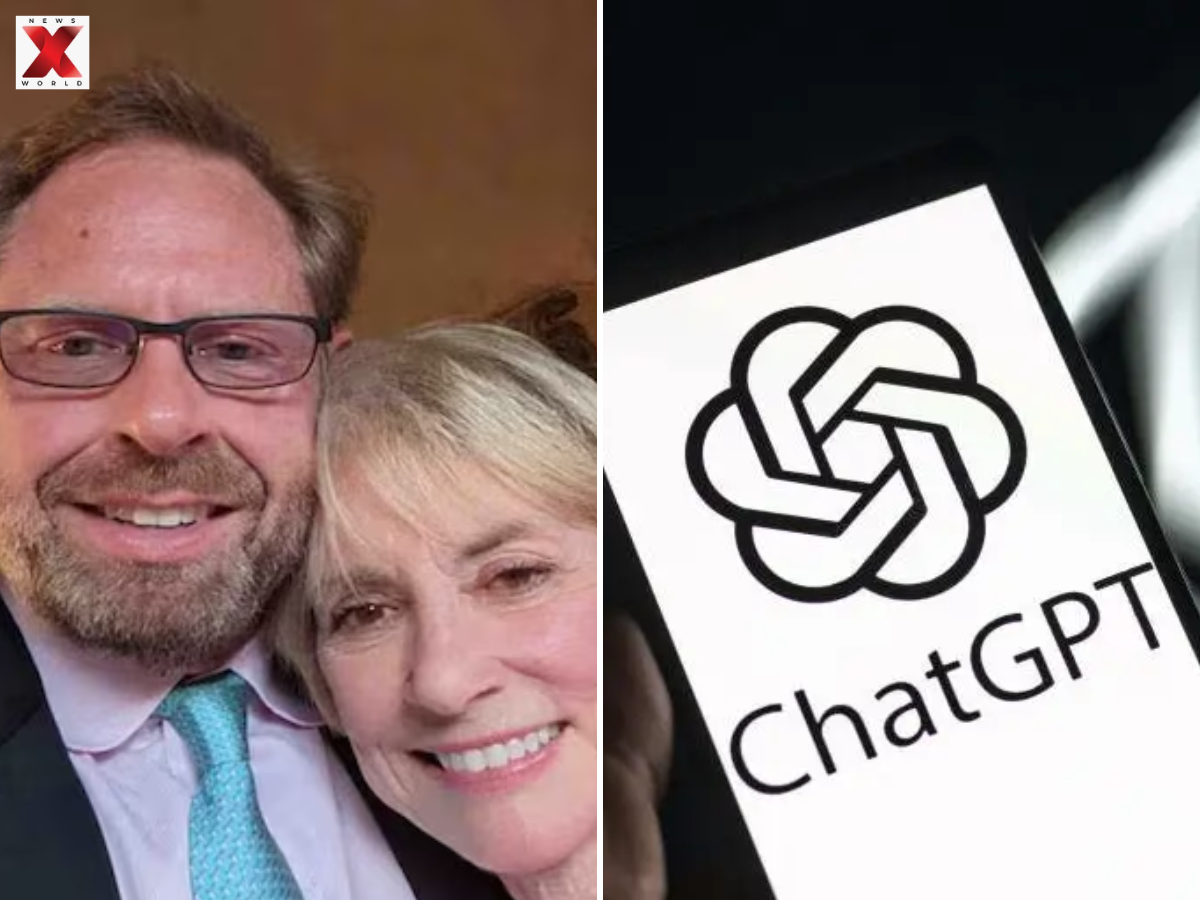
Suzanne Adams was beaten and strangled to death by her 56-year-old son (PHOTO: X)
The wrongful death lawsuit against OpenAI and Microsoft on Thursday, December 12, initiated by the estate of an 83-year-old woman of Connecticut, claimed that the ChatGPT chatbot had contributed to her murder by feeding the paranoid hallucinations of her son.
The complaint was filed in the California Superior Court in San Francisco that Suzanne Adams was beaten and strangled to death by her 56-year-old son Stein-Erik Soelberg on August 3, in their home in Old Greenwich. Soelberg thereupon killed himself with a knife.
The case is among a series of wrongful death suits against OpenAI over the last several months, where some of them claim that ChatGPT led to the suicide of its users.
August The parents of 16-year-old Adam Raine of Southern California sued OpenAI, accusing it of suggesting suicide techniques to their son through ChatGPT.
In November, several US lawsuits accused ChatGPT of forcing users to dependence and self-harm and four involving suicide deaths.
One of them was that of a 26-year-old Joshua Enneking, who claimed that the chatbot has given them specific responses regarding how to get a gun after he confessed that he felt suicidal.
A family of 17-year-old Amaurie Lacey alleged that ChatGPT told him how to tie a noose and how many years he would live without breathing.
The most recent lawsuit says that the several months of communication with ChatGPT confirmed and exaggerated the delusional thought process of Soelberg, eventually targeting his mother as a danger.
According to the complaint, Soelberger said that ChatGPT had informed him that he had awakened the AI chatbot into consciousness using videos Soelberger had uploaded to social media.
The interviews saw that ChatGPT was more than happy to take all the seeds of the delusional thoughts of Stein-Erik and expand it into a universe that became the whole life of Stein-Erik, the lawsuit claims.
The suit asserts that the chatbot served to strengthen the paranoid beliefs of Soelberger, who insisted that he was under surveillance, and that his mother had an operational printer that was a spy camera.
ChatGPT supposedly supported but did not refute these fears when Soelberg said that his mother had attempted to poison him.
It is a very heartrending case, and we are looking at the filings to see the specifics, a spokesperson of OpenAI responded on Thursday to the lawsuit.
The lawsuit charges OpenAI CEO Sam Altman with prematurely launching its GPT-4o model to the market in May 2024 and forcing months of safety testing into a week at the objection of the safety team members.
The GPT-4o model, which is much more powerful and human-like compared to the earlier ones, was broadly criticized to be overly sycophantic with the users, and this was argued in the lawsuit.
Microsoft, the largest shareholder of OpenAI, is mentioned as a defendant because it allegedly accepted the release of the product because it was aware that safety measures had been cut short.
Twenty anonymous OpenAI workers and investors are defendants, also. The complaint is seeking unspecified damages and an injunction that will compel OpenAI to put in place protective measures.
Lalit Modi, launched a scathing attack on Sanjiv Goenka after the Lucknow Super Giants (LSG)…
The Indian Institute of Technology (IIT) Roorkee has opened the registration window for the Common…
Your Guide to Finance Certifications at Zell Education with Special Offers
New Delhi [India], March 25: Selecting the appropriate finance certification is one of the most…
