
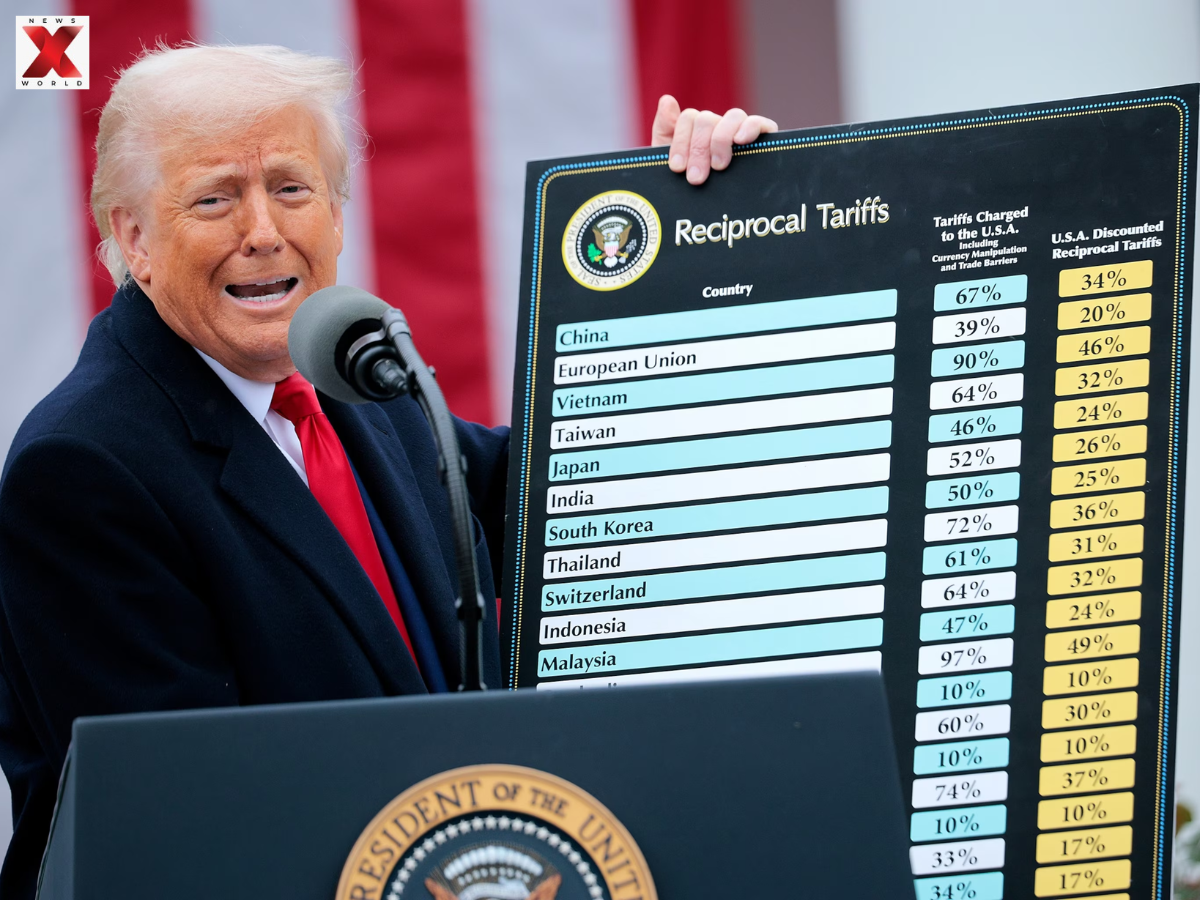

The US Supreme Court just tossed out President Donald Trump’s sweeping tariffs, the ones he put in place under a national emergency law.
This move hits hard at one of his boldest economic ideas and, honestly, shakes up the global trade war he kicked off after returning to office.
Supreme Court strikes down Trump’s tariffs
Chief Justice John Roberts wrote the 6-3 decision. The court agreed with a lower court that said Trump went too far when he used the International Emergency Economic Powers Act or IEEPA, to slap broad taxes on imports.
That law, from 1977, lets presidents regulate trade in emergencies, but it doesn’t actually say anything about allowing tariffs.
Roberts didn’t mince words. He said, “The president must point to clear congressional authorisation” before using such sweeping power to impose tariffs. And, bluntly, he can’t.
This ruling pulls the rug out from under a big part of Trump’s second-term economic plan. Tariffs, basically taxes on stuff coming into the country, have been at the core of his approach to shrinking trade deficits, squeezing other countries, and bringing in more money for the government.
But these tariffs did more than just stir up numbers on a spreadsheet. They rattled the financial markets, strained relationships with other countries, and made the global economy even more unpredictable.
What could be the economic impact, and will $130 billion in tariffs be returned?
The US Customs and Border Protection would have to cease to collect the duties, and enforcement measures linked to those tariffs would be postponed or eliminated completely.
The larger question is now refunds. The US enterprises that paid billions of wages as duties may request rebates on those tariffs that are already paid.
It is estimated that over 175 billion in revenue in tariffs could be refunded.
US Treasury Secretary Scott Bessent has indicated the Treasury Department would be in a position to pay refunds in case they are necessary, yet even the Supreme Court had warned that the procedure may be complex.
Since the tariffs that are struck are eliminated, the cost of imports of a wide variety of products, such as steel, aluminium, electronics, machinery and consumer products, are likely to go down.
Although some companies might reduce the gains and pass them on to the consumer in the form of reduced prices, according to economists, this is not certain.
But the ruling throws everything into short-term chaos. Those tariffs pulled in tens maybe even hundreds, of billions for the U.S. Treasury.
Now, if that money was collected illegally, importers (not everyday shoppers) might line up for refunds. We’re talking about claims that could top $150 billion. Still, nobody gets a refund just because the court said so.
Companies have to jump through hoops either filing claims with U.S. Customs or dragging the fight into trade court. And the Supreme Court didn’t bother to spell out exactly how any of this should work.
How did the Supreme Court announcement affect the market?
Stocks jumped on Friday after the Supreme Court shot down President Trump’s ‘Liberation Day’ tariffs, calling them illegal. The justices said Trump didn’t have the authority to slap those tariffs on.
Right after the decision, the S&P 500 and Dow Jones each climbed 0.4%. The Nasdaq shot up 0.6%. Pretty wild, considering all three indexes started the day in the red.
Over in the bond market, yields on 10-year US Treasuries ticked up 2 basis points to 4.096%. The dollar slipped a bit, down 0.2% to 97.67.
Earlier in the day, new data showed the US economy grew slower than expected at the end of last year. The government shutdown, sluggish consumer spending, and trade weighed things down. GDP grew at a 1.4% annual rate in the fourth quarter, way down from 4.4% in the previous quarter. All in all, the economy grew 2.2% last year, according to the Bureau of Economic Analysis.




