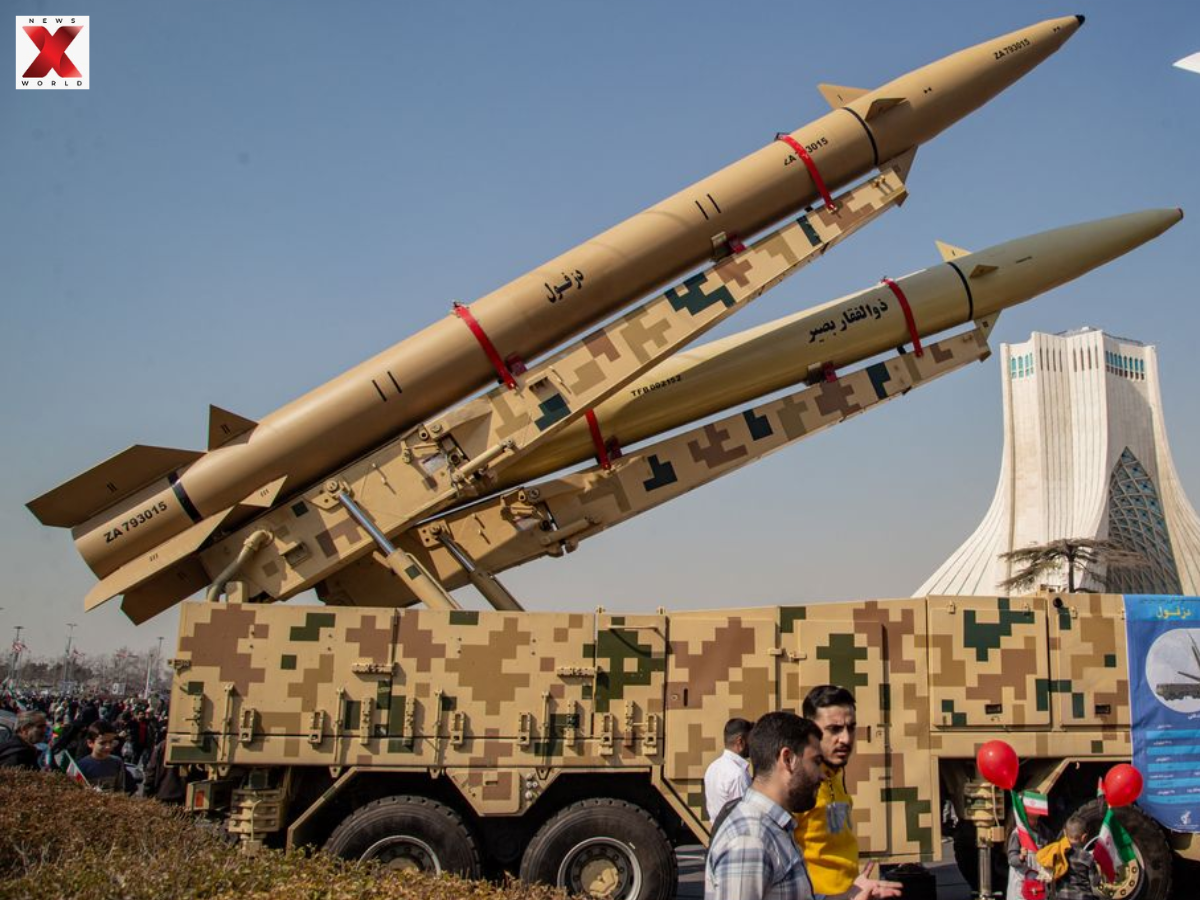
The Iran-Israel war has become a battle of stockpiles (IMAGE: X)
The war that broke out after joint US-Israel strikes on Iran quickly morphed into a grinding contest of endurance. Now, it’s less about flashy victories and more about who’s got deeper ammo reserves, who can keep shooting longest.
Some defence experts, speaking to The Guardian, cut right to the chase: this fight’s coming down to inventory. It’s not just strategy or skill, it’s straight-up math how many missiles, drones, and interceptors each side can field, and how fast they burn through them.
Take the drone war, for example. Gulf News points out that Iran keeps launching swarms of cheap Shahed drones where each one costs them about $20,000 to $50,000.
Meanwhile, the US, Israel, and Gulf allies have to fire off pricey interceptor missiles to shoot them down. A single Patriot missile? Around $4 million. THAAD interceptors?
Try $12 million each. The numbers don’t lie: Iran can flood the skies with drones on the cheap, while their opponents have to spend a fortune just to keep up.
So, who runs out first? That’s what everyone’s asking. Defence analysts say this whole thing’s turned into a “salvo competition”—both sides racing to empty each other’s stockpiles.
The point of Iran’s drone and missile barrages isn’t always to win air superiority outright; it’s to bleed their enemies’ supplies dry. And right now, defenders are firing off interceptors way faster than factories can crank out replacements.
Bloomberg summed it up: it’s a race between Iran’s launches and the US and its partners hitting back at those launch sites. The real question is, can the defenders destroy Iran’s ability to fire before they run out of expensive missiles themselves?
Because Iran’s drones are so cheap and easy to build, every wave Tehran sends forces the US and its allies to spend millions. The Economic Times called it a numbers game, and honestly, that’s exactly what it feels like.
And interceptor stocks are really starting to feel the strain. The problem isn’t just how many missiles are in the bunker right now; it’s also about how fast those can be replaced.
Modern interceptors are complicated and super expensive to make, and there just aren’t enough rolling off the assembly line. Some officials warn that the Middle East isn’t just burning through its own inventories, but also eating into reserves meant for other regions, like Europe or the Indo-Pacific.
Even US officials admit it: if this war drags on, running out of missiles could decide the whole thing.
So what happens if defenders start running dangerously low? According to The Guardian, they could end up with real gaps in their air defences. That might force them to change tactics, or even pull back on some of their military operations. Either way, it’s a reminder sometimes that wars are won not by strategy or bravado, but by simple math and logistics.
With 13 years on the line, Ashish Kumar Singh loves everything when it comes to movies, music, travel and pop culture. Formerly employed at ANI, Pinkvilla, India Today and HT, Ashish has interviewed some of the top celebrities of India, including Shah Rukh Khan, Aamir Khan, Ranveer Singh, Ranbir Kapoor and Hrithik Roshan, among others. Breaking news excites him and deadlines are what he chases. Interviewing comes naturally to him. Hit him up at ashish.kumar02singh@gmail.com.
Get the ultimate KKR vs GT Dream11 prediction for IPL 2026 Match 60. Check out…
Cooking oil prices in India surged in May 2026 due to global freight cost spikes,…
Cancer Love Horoscope Today: Emotional Bonds Deepen; Lucky Colour, Number & Relationship Advice
If you are a Cancer today can be a day if you focus on being…
