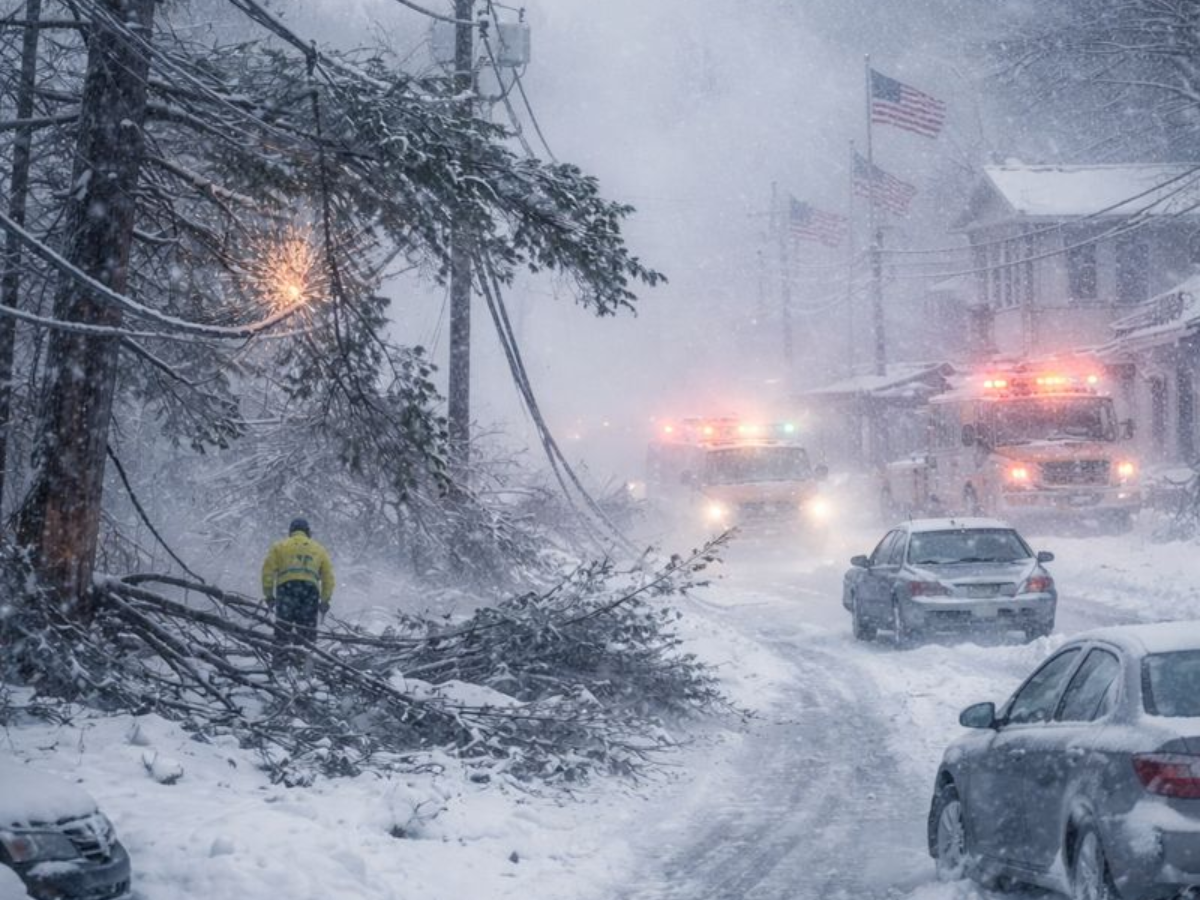
Bomb Cyclone Batters North Carolina, Southeast (Image: AI generated)
North Carolina has been hit by a powerful winter storm, they are calling it the bomb cyclone. The storm has brought heavy snow accompanied by very strong winds all over the Southeastern United States. The bomb cyclone has brought record amounts of snow in may areas that has reportedly been chaotic and damaging.
As per reports, the storm began and quickly intensified into a bomb cyclone late on Saturday, February 1, 2026. Bomb cyclones are storms that strengthen very rapidly, dropping in atmospheric pressure and creating hurricane-force winds and significant snowfall.
In parts of North Carolina, the snow fell in historic amounts. Some places recorded more than a foot of snow, with totals reaching up to 17 inches, making it one of the biggest snowstorms in decades. Winds howled, reducing visibility and creating blizzard-like conditions. Travel became extremely dangerous as roads were covered in snow and ice, according to reports.
According to reports, the storm also produced 60 mph winds that ripped through the state. The bomb cyclone reportedly caused buildings to shake and caused blowing snow that made travel even more hazardous. Dramatic videos shared on social media showed tree branches swaying fiercely and snow whipping across highways.
Reports say that during the storm occurred in Gastonia, North Carolina, a freight train collided with a semi-truck that had become stuck on snowy train tracks. A bystander’s video captured the train smashing into the truck. Fortunately, the driver had escaped before the crash and was not injured. Emergency officials warned that cleanup at the site would take time as hazardous conditions continued.
Officials said this bomb cyclone storm brought historic snowfall and dangerous travel conditions to a large part of the state. It has reminded people of other major storms from the past such as the December 1989 storm and the “Snowstorm of the Century” in March 1980. In many places, residents were urged to stay off the roads and avoid travel unless absolutely necessary.
Beyond snow, powerful winds caused outages and structural damage across the Southeast. The storm was so intense that rare snow gusts were even reported in parts of Florida.
The bomb cyclone also prompted weather alerts and warnings as dangerous conditions persisted. Meteorologists said the storm was a classic nor’easter that rapidly intensified, driven by strong temperature contrasts and Arctic air pushing down from the north.
As the storm system moved away, officials warned that additional Arctic air could bring more cold and snow later in the week, meaning the cleanup and dangerous conditions could continue for days.
Union Finance Minister Nirmala Sitharaman interacted with university students after presenting the Union Budget 2026–27,…
Vivian Wilson, daughter of Elon Musk, has spoken publicly after newly released Epstein files surfaced.…
The ICC has reacted to Pakistan’s refusal to play India in the ICC Men’s T20…
