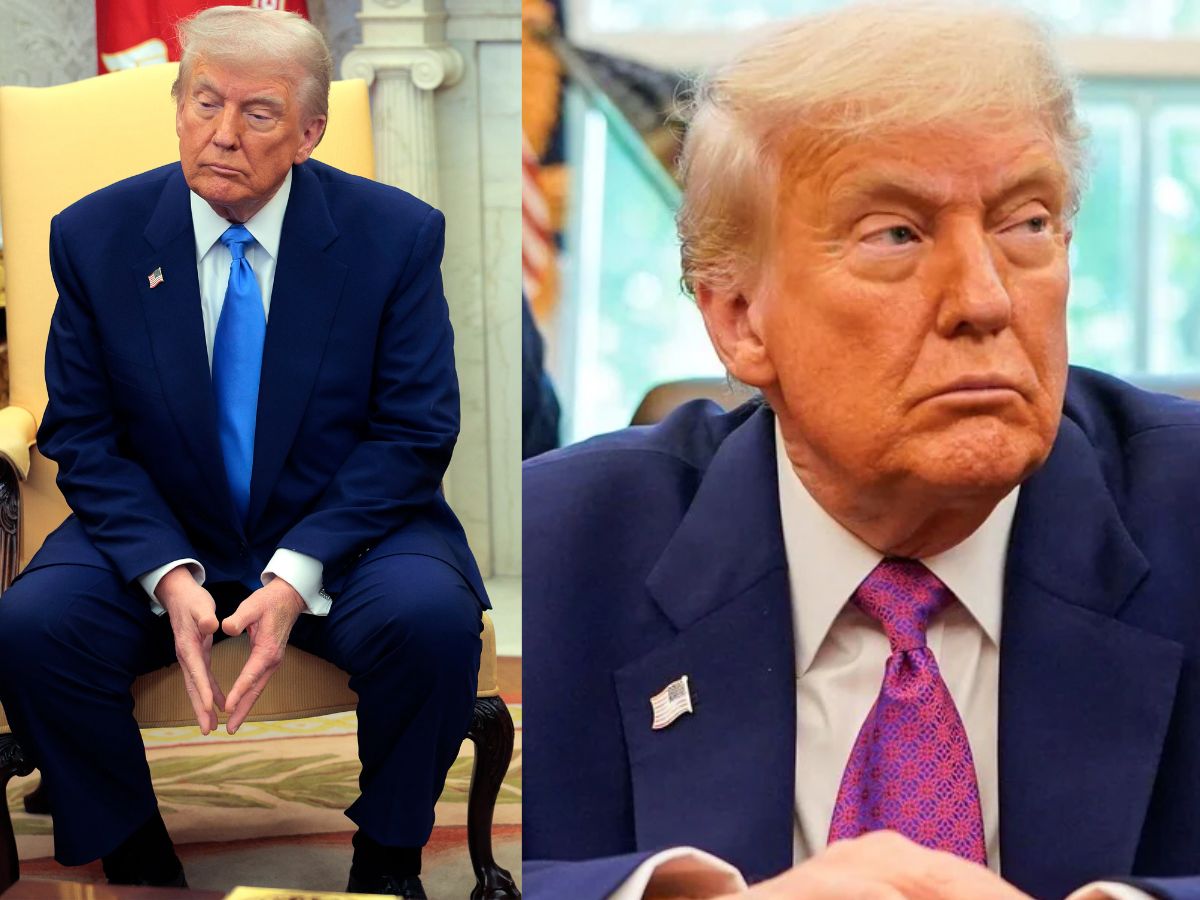
Trump’s late-night Truth Social posts spark cognitive concerns. Photos: X.
In recent weeks, Donald Trump has significantly increased his activity on the social media platform Truth Social, posting frequently on a wide range of topics. This has drawn scrutiny over his communication patterns. It follows a particularly intense time in which Trump made a series of provocative and wide-ranging posts. These included threats to “obliterate” Iran’s population, criticism of Pope Leo XVI as “weak,” and the sharing of an AI-generated image portraying himself as a divine healer. He also issued fresh warnings directed at Iranian forces and posted a cryptic video featuring Frank Sinatra’s song “My Way.”
Clinical psychologist have pointed to what they describes as a “troubling cognitive trend” in Trump’s late-night posting behavior. According to Dr Tracy King quoted by Irish Star, the nature, frequency, and structure of these posts may offer insight into how the US President processes information and makes decisions in real time.
“She has indicated the approach, frequency, and composition of his posts may provide crucial understanding of how the US President is making decisions in the moment, and it’s deeply troubling,” the assessment noted.
In her evaluation, Dr King analysed not only the content of the posts but also their speed, emotional tone, and apparent lack of deliberation. She identified a communication pattern that suggests diminished cognitive filtering during periods of stress.
“The volume, the overnight timing, and the intensity all suggest a high level of nervous system activation,” she told Irish Star.
Doctor also speak the timing of the posts, many of which appear late at night or in the early hours of the morning, raising the possibility of disrupted sleep patterns.
“These posts are appearing late at night and into the early morning, which raises the possibility of reduced or disrupted sleep,” she said.
While cautioning that posting times alone cannot confirm sleep issues, she pointed to established research on the cognitive effects of sleep deprivation.
“We do know that lack of sleep affects cognitive functioning. It is associated with greater impulsivity, faster but less considered decisions, reduced emotional regulation, and a stronger reliance on instinctive responses.”
Trump wants an agreement that would prevent further oil price rises and stock markets shocks but has insisted Iran cannot have the means to develop a nuclear weapon. Tehran hopes to leverage its control of the Strait of Hormuz to strike a deal that averts a restart of the war, eases sanctions but does not impede its nuclear program.
The Iranian official, speaking to Reuters, said Tehran was “positively reviewing” its participation in talks, despite earlier ruling them out, but stressed no decision had been made.
Pakistan has been preparing to host the talks despite uncertainty about whether they would go ahead. Nearly 20,000 security personnel have been deployed across Islamabad, officials said.
US Vice President JD Vance will travel to Pakistan on Tuesday for Iran talks, Axios reported Monday citing US sources.
Zubair Amin is a Senior Journalist at NewsX with over seven years of experience in reporting and editorial work. He has written for leading national and international publications, including Foreign Policy Magazine, Al Jazeera, The Economic Times, The Indian Express, The Wire, Article 14, Mongabay, News9, among others. His primary focus is on international affairs, with a strong interest in US politics and policy. He also writes on West Asia, Indian polity, and constitutional issues. Zubair tweets at zubaiyr.amin
Petrol, Diesel Prices Today: Will Fuel Rates Rise Again? Check City Rates
Petrol, diesel and CNG prices remain unchanged on June 7. Check latest city-wise fuel rates,…
Weather Today (7 June 2026): 14 States In India Under Thunderstorm Alert
North India Rain Alert (7 June 2026): Delhi-NCR, UP, Punjab, Haryana and Rajasthan may witness…
June 7, 2026 Horoscope Today: Daily Astrology Predictions For All Zodiac Signs
Horoscope Today, 7 June 2026: Read daily astrology predictions for all zodiac signs including love,…
