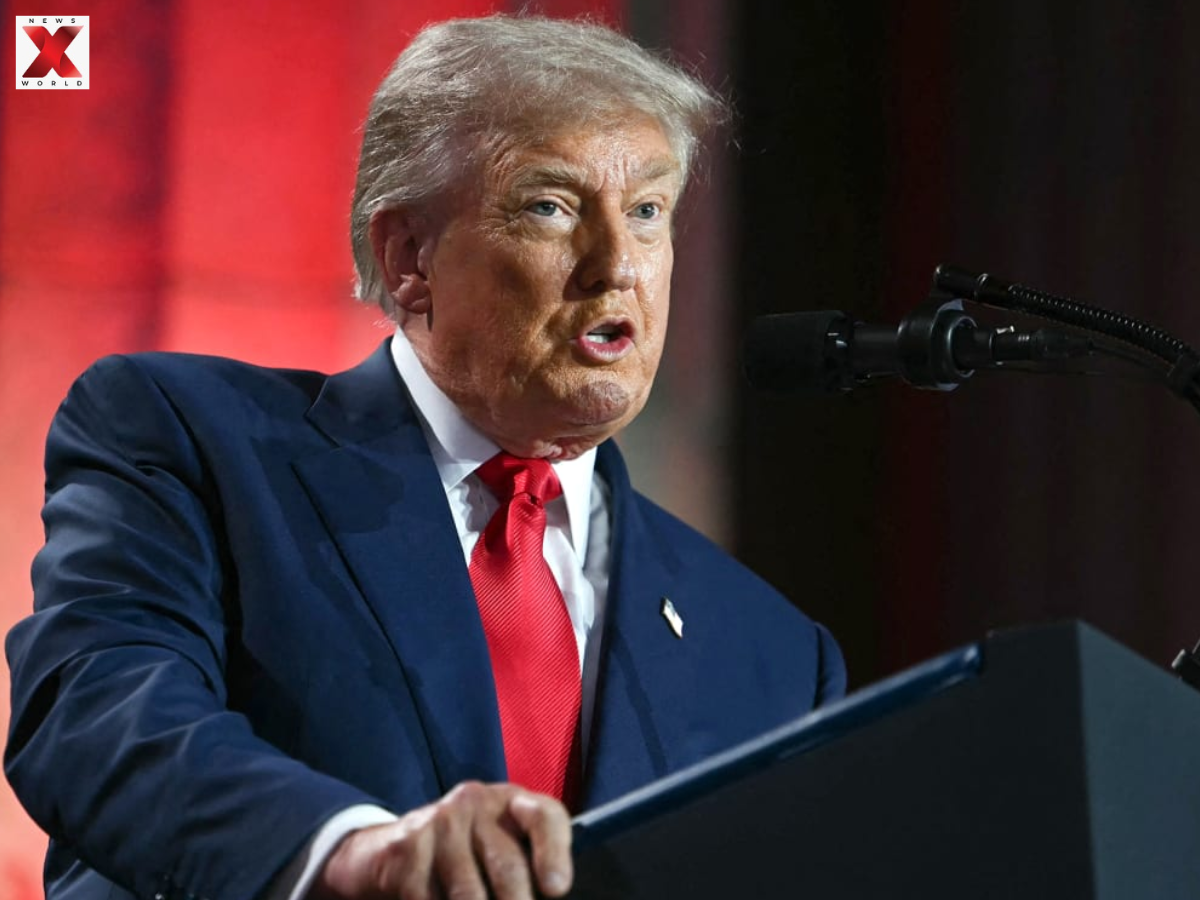
Trump To Deliver Keynote At Davos 2026: Timing, Venue, And Live Broadcast Details(PHOTO: X)
US President Donald Trump’s renewed tariff threats over Greenland have jolted European industry and financial markets, reviving fears of a transatlantic trade war just months after a fragile EU-US truce. From automakers to credit markets, the fallout could ripple across Europe’s economy.
Trump said on Saturday he would impose a 10% tariff from February 1 on imports from eight European countries unless they back his plan to buy Greenland. The levy would rise to 25% from June if no deal is reached.
The countries affected include Germany, France, the UK, Denmark, Norway, Sweden, the Netherlands and Finland. It remains unclear whether the new tariffs would stack on top of existing levies.
Trump framed the move as pressure to secure the “complete and total purchase of Greenland,” a demand European leaders have dismissed as unacceptable.
European industry leaders reacted with alarm, warning of heavy economic costs.
Hildegard Müller, president of Germany’s auto industry association VDA, said the tariffs would be “enormous” for German and European manufacturers, especially in an already weak economy. She urged Brussels to craft a “smart, strategic” response coordinated with affected countries.
The German engineering group VDMA warned that yielding to Trump would only invite further demands. “If the EU gives in here, it will only encourage the US president to make the next ludicrous demand,” said VDMA president Bertram Kawlath.
The German Chamber of Commerce and Industry (DIHK) also criticised linking political ambitions to economic sanctions, calling it “unacceptable.”
Financial markets moved swiftly after Trump’s comments.
The Stoxx Europe 600 index fell 1.1%, led by losses in automakers and luxury stocks most exposed to the US market. In contrast, defence stocks rose on rising geopolitical tensions.
European credit markets also showed stress. The iTraxx Crossover index a key gauge of junk-rated credit risk jumped as much as 8.5 basis points, while a similar index for investment-grade firms rose 1.8 basis points.
Government bonds rallied as investors sought safety, with Germany’s two-year yield dropping to 2.07%. The Swiss franc strengthened as a traditional haven currency.
Exporters are once again considering rushing goods into the US before the tariffs take effect a tactic used during Trump’s earlier “liberation day” levies.
However, executives say time is short. A senior UK auto industry figure said there was limited scope to ship more cars before February. One carmaker executive described the situation as “reaching for the same golf bag and pulling out the same clubs again,” adding that firms are in “wait and see” mode due to the lack of formal guidance.
Stephen Davies, CEO of Welsh whisky maker Penderyn, said the tariffs would push costs beyond what exporters can absorb. “It’s just not going to work,” he said, warning that brands could be forced to pull out of the US market.
European leaders are expected to meet in Brussels on Thursday for an emergency summit to discuss possible countermeasures.
France and Germany have said the EU should be ready to respond if Trump proceeds. Without EU approval of last year’s trade deal or an extension of suspended retaliatory tariffs levies on €93 billion worth of American goods could automatically kick in on February 7.
These counter-tariffs would target products ranging from livestock and whiskey to aircraft parts, risking political backlash against Trump from US exporters.
The EU’s strongest legal weapon is the Anti-Coercion Instrument (ACI), nicknamed the “trade bazooka.” It allows Brussels to respond to economic blackmail with sweeping measures, including tariffs, trade restrictions, and limits on access to EU financial markets.
However, the ACI is slow and politically risky. Investigations can take up to four months, followed by negotiations and member-state approvals meaning retaliation could take up to a year. Officials see it as a last resort due to the potential damage to Europe’s own economy.
UK Prime Minister Sir Keir Starmer has ruled out immediate retaliation, saying a tariff war is “in nobody’s interests.” He stressed the need to avoid escalation while criticising Trump for using trade threats against allies.
The UK could still respond through other measures, including raising the Digital Services Tax, which targets major US tech firms like Amazon and Meta. The tax currently stands at 2%.
Further uncertainty hangs over the legality of Trump’s tariff powers. The US Supreme Court is set to rule on whether he overstepped his authority by using the International Emergency Economic Powers Act to impose earlier tariffs.
That ruling could shape whether the Greenland-linked levies are enforceable at all.
For now, Europe is bracing for impact.
Markets are volatile, exporters are scrambling, and diplomats are racing to prevent another trade war. While analysts say the tariffs could be “absorbed” in purely economic terms, the political damage to Western unity could be far more severe.
As Brussels weighs its response and Washington doubles down, the Greenland row is rapidly becoming a test of how far the transatlantic relationship can bend before it breaks.
Sofia Babu Chacko is a journalist with over five years of experience covering Indian politics, crime, human rights, gender issues, and stories about marginalized communities. She believes that every voice matters, and journalism has a vital role to play in amplifying those voices. Sofia is committed to creating impact and shedding light on stories that truly matter. Beyond her work in the newsroom, she is also a music enthusiast who enjoys singing.
Iran’s Foreign Minister Abbas Araghchi said Tehran is prepared for a possible US ground invasion…
Stock Market Today: Indian markets brace for volatility as Sensex and Nifty 50 open lower…
The UAE has issued a safety advisory warning residents to remain indoors during missile alerts…
