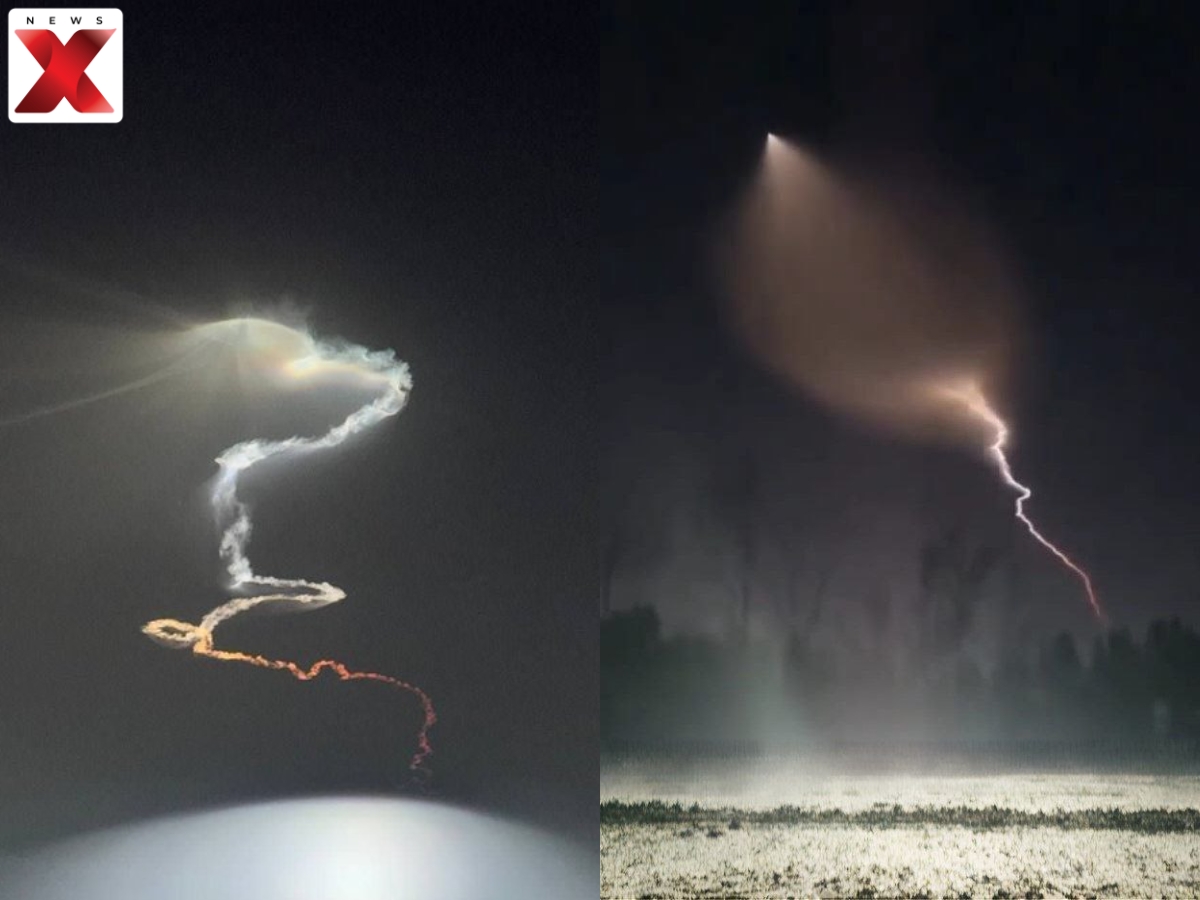
Iran fires Sejjil-2 ‘Dancing Missile’ in latest strikes on US, Israeli-linked bases; here’s range, capability and why it’s hard to intercept. Photos: X.
Iran has launched a series of advanced ballistic missiles, including the Sejjil-2, targeting Israeli and American positions in its latest wave of attacks. According to the reports, this is the first use of the missile, also known as the dancing missile, since the war began on February 28.
Iranian state-linked broadcaster PressTV reported that the missile was fired on Sunday.
According to the Islamic Revolutionary Guard Corps (IRGC), Sejjil-2 missiles were launched along with other missiles and drones targeting multiple military installations. These included Al-Harir Air Base, Ali Al-Salem Air Base, and Camp Arifjan in Kuwait.
Iran’s Sejjil-2 is a two-stage, solid-fuel medium-range ballistic missile (MRBM). The missile is believed to have an operational range of approximately 2,000 kilometres and a payload capacity of around 700 kilograms.
According to the Center for Strategic and International Studies (CSIS), the Dancing Missile measures about 18 metres in length and 1.25 metres in diameter, with a total weight of roughly 23,600 kilograms.
The weapon is also known by several other names, including Sajjil, Ashoura, and Ashura.
The missile has a solid-fuel technology, which gives it a significant operational advantage. Compared with liquid-fuel systems, solid-fuel missiles can be launched much more quickly because they require far less preparation time. This shorter launch window makes them harder for adversaries to detect or destroy before take-off.
Developed domestically within Iran, the Sejjil is classified as a medium-range ballistic missile capable of striking targets across a large geographical area.
With an estimated range of about 2,000 kilometres, the missile can reach targets throughout the Middle East, including Israel, and extend its reach into parts of Europe and Asia.
The missile weighs around 23,600 kilograms and carries a warhead weighing approximately 700 kilograms. It is designed to carry both conventional explosive payloads and nuclear warheads.
Its range effectively places most of West Asia within striking distance.
One of the most distinctive features of the Sejjil-2 missile is its highly manoeuvrable re-entry vehicle. As the missile descends toward its target at extremely high speeds, it performs a swivelling motion that helps it evade enemy radar systems and missile interceptors.
This manoeuvrability allows the missile to alter its trajectory while approaching the target, making interception significantly more difficult.
Because of its serpentine movement while evading defensive systems, the Sejjil-2 has earned the nickname “dancing missile.”
Beyond its manoeuvrability, the Sejjil-2 reportedly features an anti-radar coating that makes it extremely difficult for conventional air-defence systems to detect.
Combined with its evasive flight pattern, this capability reduces the effectiveness of sophisticated interceptor systems such as the United States’ Patriot missiles and Israel’s Arrow defence system.
The IRGC has repeatedly claimed that American air-defence systems are largely incapable of intercepting Iran’s advanced missile arsenal.
Zubair Amin is a Senior Journalist at NewsX with over seven years of experience in reporting and editorial work. He has written for leading national and international publications, including Foreign Policy Magazine, Al Jazeera, The Economic Times, The Indian Express, The Wire, Article 14, Mongabay, News9, among others. His primary focus is on international affairs, with a strong interest in US politics and policy. He also writes on West Asia, Indian polity, and constitutional issues. Zubair tweets at zubaiyr.amin
Shweta Pundir is a Delhi based content creator and digital influencer known for her lifestyle…
Pakistan lodges an official complaint against Bangladesh following a controversial DRS decision in the 3rd…
uCT 960+ is an advanced AI Powered 640-Slice CT Scanner. Collaboration between Vista Imaging, Medikabazaar…
