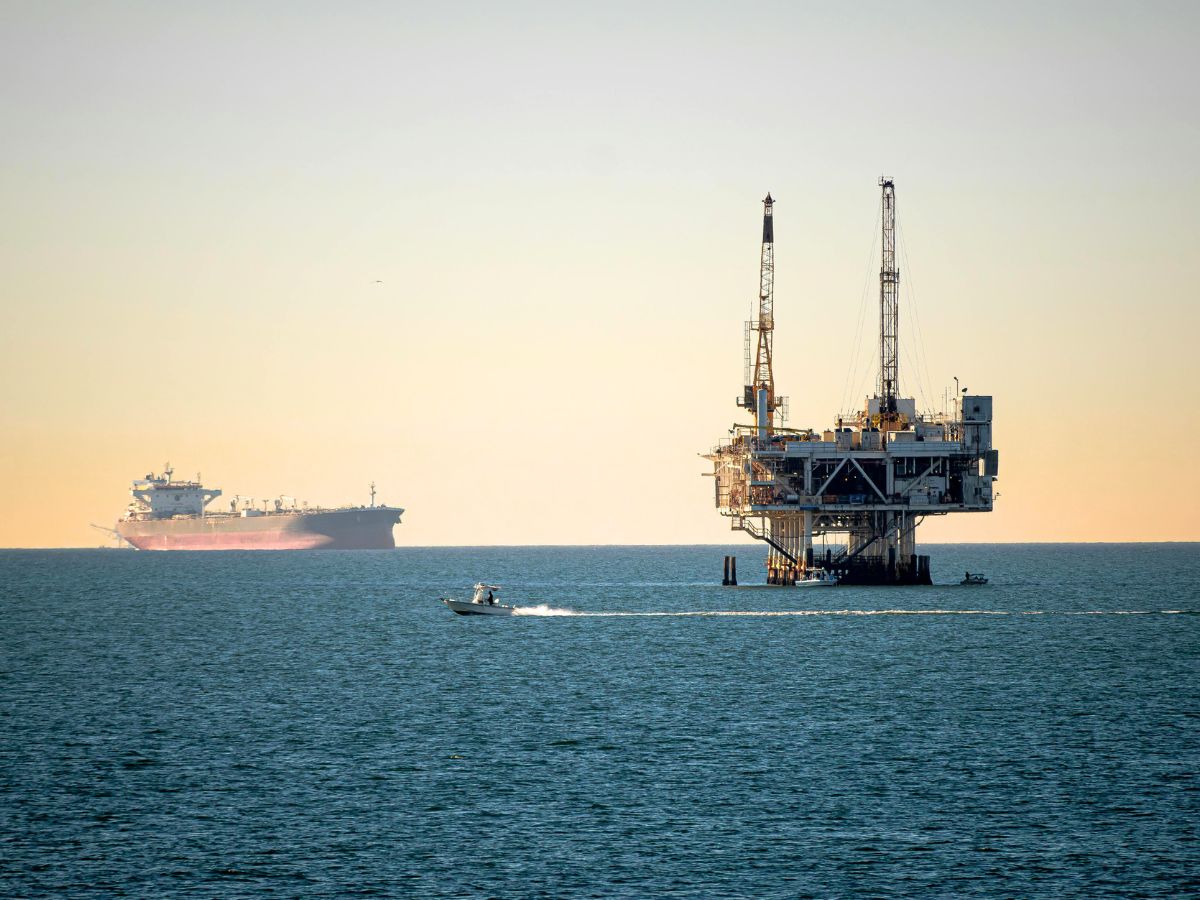
US-Israeli war with Iran disrupts Middle East oil and LNG supply.(Photo: Canva)
The ongoing U.S.-Israeli war on Iran has severely disrupted oil and natural gas exports across the Middle East, forcing several major producers to halt or reduce output.
Energy operations from Qatar to Iraq have been affected, while Kuwait recently announced production cuts and declared force majeure after exports through the Strait of Hormuz were disrupted.
Analysts warn the crisis could deepen, with the United Arab Emirates and Saudi Arabia likely to curb production soon as storage facilities fill up due to blocked shipping routes.
Kuwait force majeure: Kuwait Petroleum Corporation began cutting oil output and declared force majeure on March 7 due to the war shutting exports via the Strait of Hormuz.
United Arab Emirates output: Abu Dhabi National Oil Company (ADNOC) said on March 7 it was actively managing offshore output levels to preserve “operational flexibility”. There was also a fire caused by debris at the UAE’s Fujairah port, a key global oil storage and bunkering hub.
Iraq warns of further cuts: OPEC’s second-largest producer, Iraq, slashed almost 1.5 million barrels per day (bpd) due to lack of storage and export capacity, and officials told Reuters on March 3, that figure could rise to 3 million bpd within days if exports did not resume. Total Iraqi production was about 4.1 million bpd in January, according to a Reuters survey, equal to about 4% of world output.
On top of that, in Iraqi Kurdistan several companies have stopped output at their fields as a precaution. The region exported 200,000 bpd by pipeline to Turkey in February.
QatarEnergy LNG halted: Qatar stopped operations at its LNG facilities on March 2, affecting some of the world’s largest plants and a source that supplies about 20% of global LNG. QatarEnergy also suspended parts of downstream output a day later. It declared force majeure on LNG shipments on March 4.
Saudi disruptions: Saudi Arabia, the world’s top oil exporter, suspended output at its 550,000-bpd Ras Tanura refinery and has begun rerouting crude loadings from eastern ports to Yanbu on the Red Sea. The refinery was struck again on March 4, without sustaining damage, the Saudi defence ministry said.
Other outages: Israel also curtailed parts of its oil and gas production. Iran’s Revolutionary Guards said on March 7 they had targeted an Israeli refinery after Iran’s Tehran refinery was hit, state media reported. Air raid sirens sounded in the Haifa area, but there were no reports of damage.
Strait of Hormuz: traffic through the Strait was largely closed after Iran attacked at least five ships, with a limited number of tankers transiting, choking off a key artery accounting for about 20% of global oil and LNG supply.
Iran declares the Strait closed: A senior Iranian Revolutionary Guards official said on March 2 that the Strait of Hormuz was closed and warned that Iran would fire on any ship attempting to pass.
The Guards said on March 7 they had hit a Marshall Islands-flagged tanker in the Strait of Hormuz, Iranian state media reported, in the latest such attack.
The United Kingdom Maritime Trade Operations (UKMTO) has reported several attacks against ships in the region since March 1, including a tanker off Kuwait and a container ship in the Strait of Hormuz.
War risk insurance cancelled: Major marine insurers are cancelling war-risk coverage for vessels operating in Iranian, Gulf and adjacent waters.
US offers assurances: Trump said the U.S. Navy could escort tankers through the Strait and directed the U.S. International Development Finance Corporation to provide political‑risk insurance and financial guarantees for Gulf shipping, though shipowners and analysts doubt this will be enough.
China cuts refinery runs: Chinese refiners are shutting crude units or advancing planned maintenance due to disrupted crude flows.
India seeks alternatives: India is looking for substitute sources of crude, LPG and LNG to prepare itself if the crisis extends beyond 10–15 days, a government official said.
Indonesia shifts sourcing: Indonesia plans to increase U.S. crude imports to offset reduced Middle East supply.
Alternative supplies: Cargoes from Brazil, West Africa and the U.S. are possible but take over a month to reach Asia and are costlier amid soaring freight rates, traders said.
(With Reuters Inputs)
Sofia Babu Chacko is a journalist with over five years of experience covering Indian politics, crime, human rights, gender issues, and stories about marginalized communities. She believes that every voice matters, and journalism has a vital role to play in amplifying those voices. Sofia is committed to creating impact and shedding light on stories that truly matter. Beyond her work in the newsroom, she is also a music enthusiast who enjoys singing.
Samsung will launch the Samsung Galaxy M17e 5G in India on March 17, featuring a…
Sanju Samson's comeback into the side as an opener proved to be a masterstroke for…
UP Scholarship 2026 Phase 2 Payment on March 18: Check Verification Status Details Here
The Uttar Pradesh government is preparing to release the UP Scholarship 2026 Phase 2 payment…
