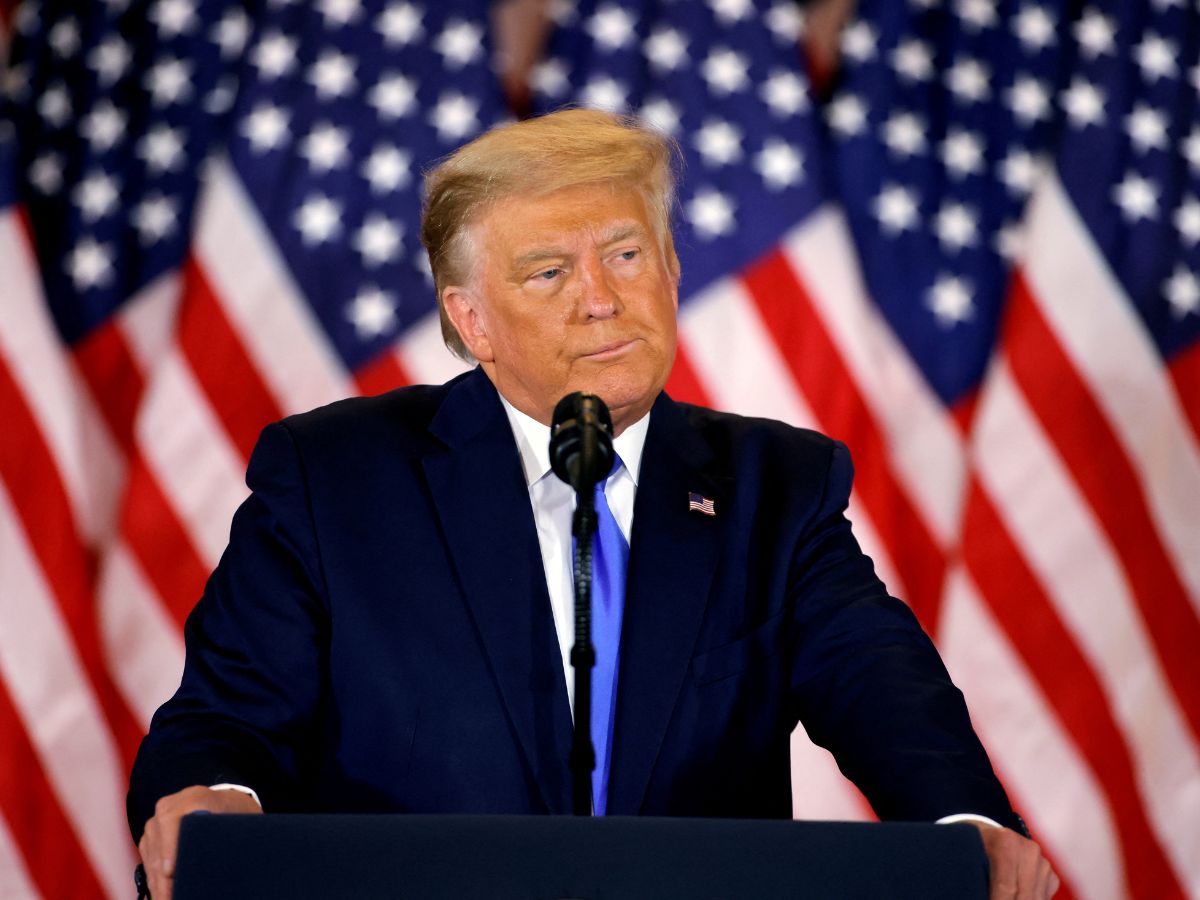

The U.S. Supreme Court on Friday struck down President Donald Trump’s sweeping tariffs, delivering a major blow to one of his most aggressive economic moves. In a 6-3 ruling written by Chief Justice John Roberts, the court said Trump went beyond his authority by using a 1977 national emergency law to impose the import taxes.
Legal Basis: IEEPA and the Major Questions Doctrine
The law in question is the International Emergency Economic Powers Act (IEEPA). The court said the Trump administration’s reading of the law would give the president powers that belong to Congress. The justices said this would violate the “major questions” doctrine. This legal principle says that actions of “vast economic and political significance” must be clearly approved by Congress.
Roberts wrote that “the president must ‘point to clear congressional authorization’ to justify his extraordinary assertion of the power to impose tariffs,” adding: “He cannot.”
Trump’s Tariffs and Global Impact
Trump had made tariffs a key part of his economic and foreign policy. After returning to office in January 2025, he expanded tariffs on nearly every U.S. trading partner, triggering a global trade war. The move strained ties with allies, shook financial markets and added to global economic uncertainty. Trump argued the tariffs were vital for national security. In November, he said that without them “the rest of the world would laugh at us because they’ve used tariffs against us for years and took advantage of us.” He also said the United States was abused by other countries including China.
Legal Challenge by States and Businesses
The case reached the Supreme Court after businesses and 12 U.S. states, most led by Democrats, challenged Trump’s use of IEEPA. They argued the Constitution gives Congress, not the president, the power to impose taxes and tariffs.
The three dissenting justices were Clarence Thomas, Samuel Alito and Brett Kavanaugh. Joining Roberts in the majority were Neil Gorsuch and Amy Coney Barrett, along with the court’s three liberal justices. The court currently has a 6-3 conservative majority and had previously backed Trump in several emergency decisions since his return to office.
Trump’s tariffs were expected to raise trillions of dollars over the next decade. Economists at the Penn-Wharton Budget Model estimated that more than $175 billion had already been collected under the IEEPA tariffs. That money may now have to be refunded.
After arguments in November, Trump said if the court ruled against him, “we’ll have to develop a ‘game two’ plan.”
(With Inputs from Reuters)