
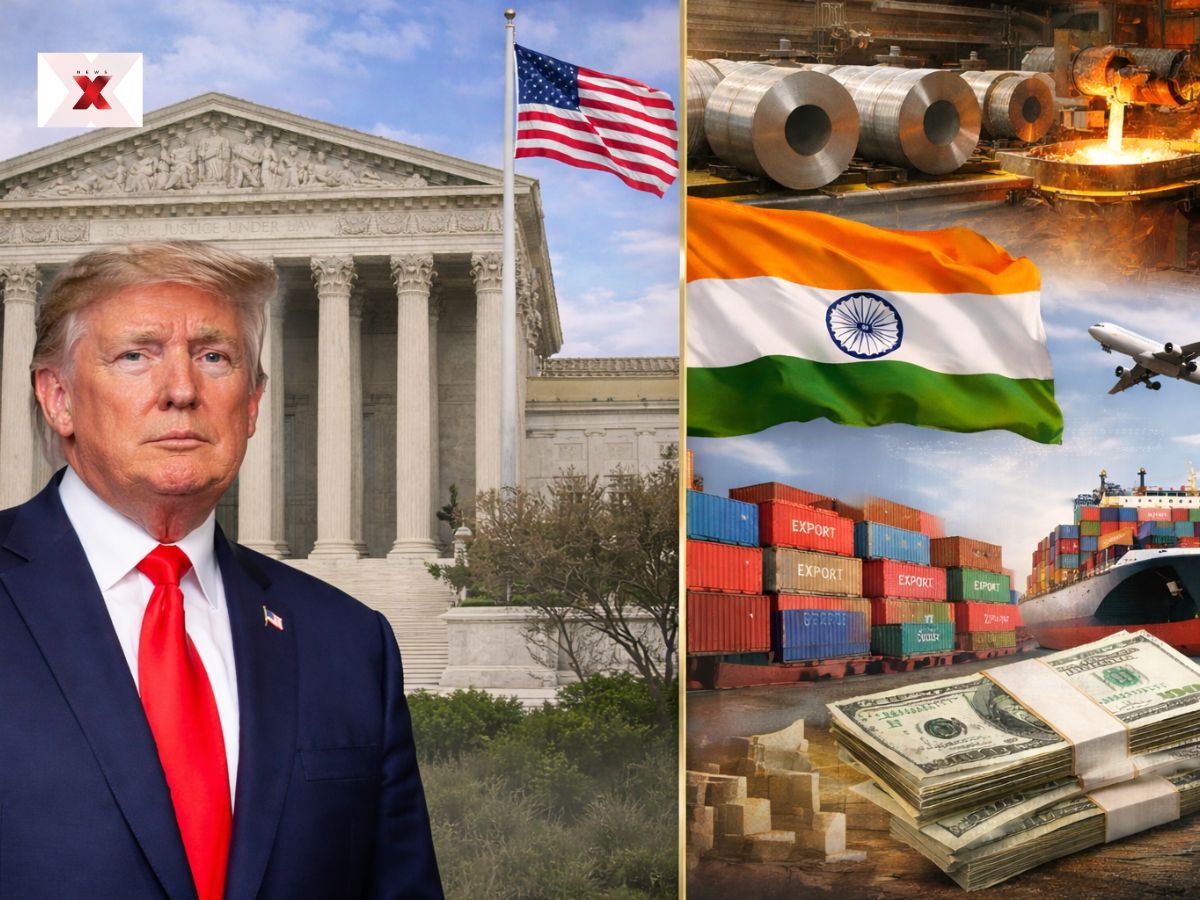

In a landmark judgment that reverberated across global markets, the United States Supreme Court on Friday invalidated most of President Donald Trump’s expansive tariff measures, marking one of the sharpest judicial setbacks of his second term.
In a 6-3 ruling, the court held that the 1977 International Emergency Economic Powers Act (IEEPA) does not grant the President the authority to impose tariffs- a decision with far-reaching consequences for US trading partners, including India.
The majority concluded that the President lacked the authority under the emergency powers statute to impose a sweeping range of import duties on products from almost all US trading partners.
Chief Justice John Roberts wrote the opinion, which was joined by the court’s three liberal justices as well as fellow conservatives Neil Gorsuch and Amy Coney Barrett. Justices Samuel Alito, Clarence Thomas, and Brett Kavanaugh dissented.
Will The Landmark 6-3 Ruling Make Tariff On India Go 0%?
The court’s ruling does not invalidate all of Trump’s tariff measures. Duties imposed on steel and aluminum under separate statutory provisions remain intact. However, the judgment overturns two major categories of tariffs: the country- specific “reciprocal
Duties, which carried a 10% base rate for most nations, and the 25% levy imposed on select imports from Canada, China, and Mexico linked to fentanyl concerns.
India had been subject to the reciprocal tariffs- initially set at 26% on Trump’s so-called “Liberation Day” in April 2025 and later revised to 18%. These levies, imposed under IEEPA, now stand invalidated, effectively removing reciprocal tariffs on most Indian exports.
In addition, India had faced a separate 18% “penalty” tariff over its imports of Russian oil, which US officials said was helping finance the war in Ukraine. That duty was withdrawn earlier this month after India and the US reached a trade agreement. As a result, the 25% penal tariff had already been scrapped, and the 18% reciprocal tariff has now fallen following the court’s decision. Under the trade framework, the reciprocal rate was expected to be reduced to 18%, but that provision is now rendered irrelevant.
Steel, Aluminum Tariffs Remain
Indian shipments of steel and aluminum- taxed under separate legal provisions- will continue to face existing duties.
As a result, US tariffs on Indian products do not fall to zero entirely. Instead, they return to pre-IEEPA baseline levels, which are generally modest for many goods under the current US tariff framework, though sector-specific levies remain in force.
What It Means For India?
New Delhi had been in the midst of trade talks with Washington, while uncertainty over tariffs had put pressure on exporters in key sectors such as textiles, pharmaceuticals, and engineering goods.
With the IEEPA-based duties now struck down, Indian businesses are poised for immediate relief.
The ruling is also likely to trigger refund claims, as companies seek to recover billions paid under the now-invalidated tariffs. Indian importers who bore those costs may also move to reclaim their dues, though exact figures are not yet known.
While the judgment curbs Trump’s authority over trade measures, the future course of US tariff policy toward India will largely depend on the next steps taken by Congress and the White House.
Manisha Chauhan is a passionate journalist with 3 years of experience in the media industry, covering everything from trending entertainment buzz and celebrity spotlights to thought-provoking book reviews and practical health tips. Known for blending fresh perspectives with reader-friendly writing, she creates content that informs, entertains, and inspires. When she’s not chasing the next viral story, you’ll find her diving into a good book or exploring new wellness trends.




