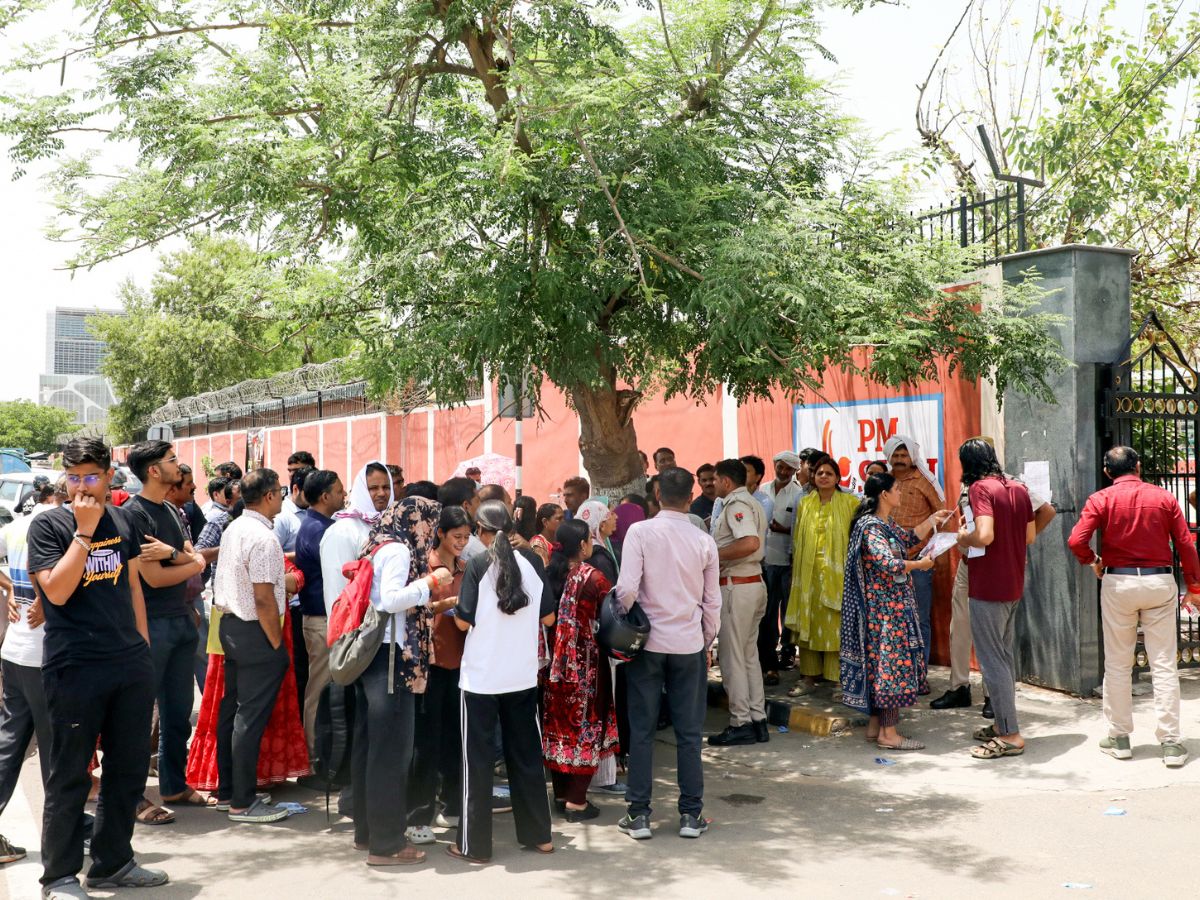
NEET 2026 biology paper analysis (Image: ANI, representative photo)
The National Testing Agency of India has conducted the NEET UG -2026 exam, where over 23 lakh students appeared for this pen-and-paper test; one of the largest medical entrance tests in India, therefore making its success very noteworthy.
Although students and experts agree that this year’s question paper was one of the more easier developed exams in the past few years, at the same time, students should not take lightly the content of this year’s exam due to both previous and current year’s level of difficulty in their respective areas. There appeared to be more emphasis placed on a mixture of both content-oriented question and ways to manage your time while preparing for this exam.
As per the Indian Express, experts also believe that the NEET -2026 exam was developed to assess the students’ ability to be disciplined in their studies. A student who is consistent and stays close to their fundamental concepts will have a greater chance of success than one who uses resources like shortcuts or guesswork while completing the test.
In summary, Ujjwal Singh, CEO of Infinity Learn by Sri Chaitanya states that the NEET Exam in 2026 was an evenly balanced paper that was slightly easier than last year; however, it tested discipline more than anything else.
According to Mr. Singh, the areas in which students did well this year were based on an understanding of their ability to work with their own time as well as staying within the NCERT framework. He sums it up by saying, “What stands out is that success this year is not about tackling a tough paper, but about managing time, staying consistent, and having strong fundamentals. Students who built their preparation steadily and stayed close to NCERT concepts would have found themselves at a clear advantage,” he added.
In conclusion, it is believed that the overall rated difficulty of the NEET 2026 exam was moderate. Physics and Chemistry needed a sound conceptual understanding to do well while Biology was easier, but had its share of challenges, one of which is due to the length of the section.
Physics was moderately challenging for students. The majority of the questions were conceptually challenging and required attention to detail in applying equations. There was a minimal amount of opportunity for students to use trial and error.
AS per reports, Chemistry had a very similar trend; questions required attention to detail and an understanding of foundational concepts. The questions also provided a reasonable distribution across topics, making completion feasible for students who spent time preparing.
As per reports, Biology was the highest-scoring subject of the exam. There were, however, differences in it. Zoology questions seemed to be direct and student-friendly, while Botany questions seemed to be long and difficult to complete in the allotted amount of time.
Students who used an inordinate amount of time on questions that required an extensive amount of time to resolve were encouraged to manage their time effectively.
As per the Indian Express, Surbhi Mishra, a Zoology Instructor for Aakash Institute and Unacademy, said, “I observed that most of the questions in the Zoology section were directly or indirectly based on NCERT. There was a noticeable change in trend this year, as no assertion reason questions were asked.”
She also pointed out that the section, while easy to moderate, required time due to the type of questions. “The paper was easy to moderate in terms of difficulty, but it was time-consuming due to lengthy statements and matching-type questions. I also noticed that some questions were similar to or repeated from previous year papers. Overall, the Zoology section is favourable for students,” she said.
The biggest change to the NEET 2026 biology paper was a shift from testing a student’s ability to solve challenging content to assessing their capacity to deal with time-limited content.
Zoology’s lack of assertion vs. reason questions was a clear indication of this change, but also demonstrated an increase in the number of lengthy statements vs matching types of questions.
Khalid Qasid is a media enthusiast with a strong interest in documentary filmmaking. He holds a Master’s degree in Convergent Journalism from AJK MCRC. He has also written extensively on esports at Sportsdunia. Currently, he covers world and general news at NewsX Digital.
Man Creates Fake Tinder Profile Of Ex-Lover, Sends 18 Men To Rape Her: ‘No Means She Wants More’
Asad Hussain was convicted after creating a fake Tinder profile of his ex-girlfriend to lure…
A festival in Nigeria turned violent as women were allegedly chased and sexually assaulted in…
iPhone 18 Pro Max is expected to launch around September 2026 with a similar price…
