
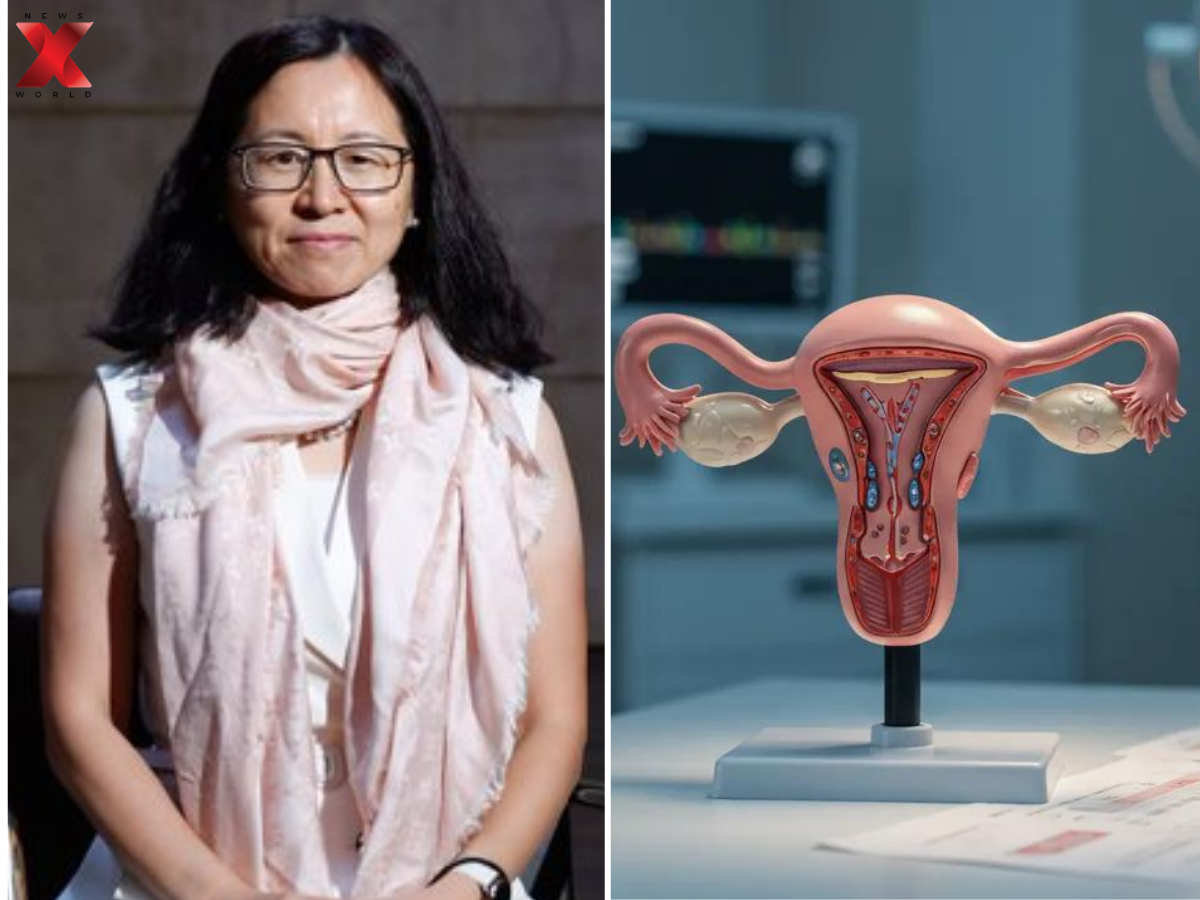

WOMEN’S MENSTRUAL CYCLE: Can the women’s menstrual cycle be delayed? And, is it possible that it occurs once every three months? A Chinese biologist named Hongmei Wang is working on the same to extend women’s fertility lifespan.
Hongmei Wang is not working with fancy tools or technology, just gritty science at the State Key Laboratory of Stem Cell and Reproductive Biology in Beijing. Her work is crucial, especially with China’s population crisis hanging over everything.
Menstrual Cycle Once Every Three Months?
One of the ideas she’s digging into is whether we can push back menopause. Her mouse studies hint it’s doable, but Wang doesn’t sugarcoat the risks. “When we stop ovulation, we save more eggs, but we also stop the body from making estrogen, and that molecule is absolutely vital for health,” she told EL PAÍS in an interview shortly after landing in Spain for a conference at Pompeu Fabra University.
Her team has already made some real breakthroughs. Last year, they injected human stem cells into the ovaries of sterile monkeys and got a baby monkey out of it. This little one is still alive and well, and it’s something Wang speaks about with obvious pride.
the fact that women in ancestral times only had about 100 periods in their entire lifetime (due to back-to-back pregnancies and years of breastfeeding) versus the 400+ we have as modern women is actually insane. Hongmei Wang is bringing us back to our evolutionary baseline. https://t.co/UzzJeyMEDH
— 千 (@BALUCIAGA) May 2, 2026
How Hongmei Wang’s Stem Cell Research Could Delay Menopause and Transform Women’s Health
As per reports, the scientists ran a small clinical trial with 63 women dealing with premature ovarian failure, a condition that makes people infertile much earlier than expected. With stem cell transplants, four of these women went on to have healthy kids, according to Wang. Her group has even patented their methods and licensed them to a private company.
Wang is also teaming up with Alfonso Martínez Arias at Pompeu Fabra University. Together, they’re building embryonic models out of human stem cells. These organoids basically mimic natural embryos and let researchers study how they develop, without running into legal problems.
Can Periods Be Delayed Safely? New Research Raises Big Questions
Wang wants to recreate three organs that are crucial for making a new human: the ovary, the embryo, and, often overlooked, the placenta. She told the publication, “Right before birth, the placenta holds around 58,000 cell nuclei and covers about 172 square feet. There’s no other organ-linked structure in the body that’s that big.”
The Science Behind Hongmei Wang’s Groundbreaking Research
Wang knows her research is still in the early stages, and results might come too late to fix China’s population decline. She also admits that some of these experiments step outside the usual boundaries of science. “It’s one thing to prove something possible in the lab, like slowing menstruation or making reproductive life longer. It’s another thing entirely for people to actually want such things in practice,” she says.
China and other countries are already getting ready to update their regulations. Soon, they might allow scientists to grow human embryos up to 20 or even 28 days, finally opening up the whole window for studying gastrulation.




