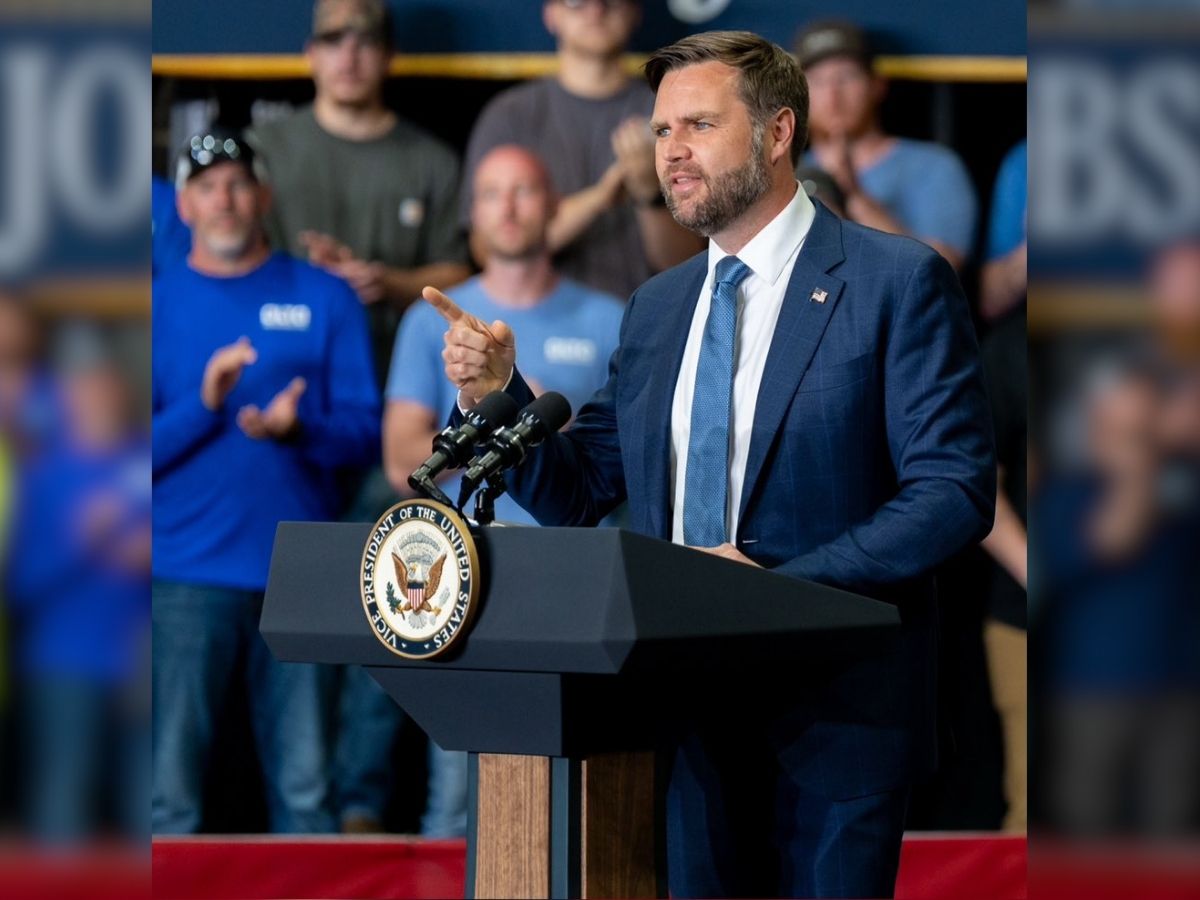
VP JD Vance has said that he's ready to step in if Donald Trump can't serve as US President. (Photo: X/@VP)
As questions swirl around President Donald Trump’s health, Vice President JD Vance made headlines recently by saying that he is prepared to take over the presidency “if, God forbid, there’s a terrible tragedy.” The remarks, delivered during an interview with USA Today, came amid growing speculation online – especially on social media – about Trump’s fitness and rather notable absence from public view.
So, how does the process actually work if a sitting US president can no longer serve? Here’s what we know.
Last month, photos of Trump’s bruised hand began circulating online. While the White House later disclosed that he had chronic venous insufficiency (CVI) – a common and non-life-threatening condition – the images fuelled more rumours.
Then came a brief pause in Trump’s public appearances earlier this this week, with the president spotted in full public view only on Saturday as he left the White House to golf over the Labor Day weekend, Newsweek reported. Still, online speculation didn’t slow down even then.
A TikTok video from user w0odada, captioned “Streets are saying Donald Trump is dead???” racked up more than 3.5 million views.
Amid the buzz, Vance reassured Americans, telling USA Today, “I feel very confident the president of the United States is in good shape, is going to serve out the remainder of his term and do great things for the American people.” He, however, added, “If, God forbid, there’s a terrible tragedy, I can’t think of better on-the-job training than what I’ve gotten over the last 200 days.”
The answer lies in the Presidential Succession Act, first passed in 1792. The legislation sets a clear line of succession: first the vice president, followed by the speaker of the House, president pro tempore of the Senate, and then members of the Cabinet – starting with the secretary of state and continuing down to the secretary of homeland security.
Reports suggest there have been 15 times in American history when a vice president has stepped in to the role of president. Eight of those were on account of the sitting presidents’ deaths, while one of those instances was on account of then sitting president – Richard Nixon – tendering his resignation in 1974.
The 25th Amendment – ratified in 1967 – outlines what to do if a president dies, resigns, is removed, or is unable to discharge duties. It became a priority after President John F. Kennedy’s assassination.
According to the report, the amendment states, “In case of the removal of the President from office or of his death or resignation, the Vice President shall become President.”
It also allows the vice president and a majority of the Cabinet members to declare the president unfit. If the president objects, Congress then subsequently decides the outcome, all while requiring a two-thirds vote in both houses.
Here are some of the key transitions:
BREAKING: Pakistan To Boycott T20 World Cup 2026 Match Against India
Pakistan will not play India in the T20 World Cup 2026 fixture scheduled for February…
Veer Pahariya celebrated his 31st birthday with a star-studded bash in Mumbai attended by Janhvi…
Mohammad Nawaz scalped a five-wicket haul against Australia in the third T20I in Lahore. Pakistan…
