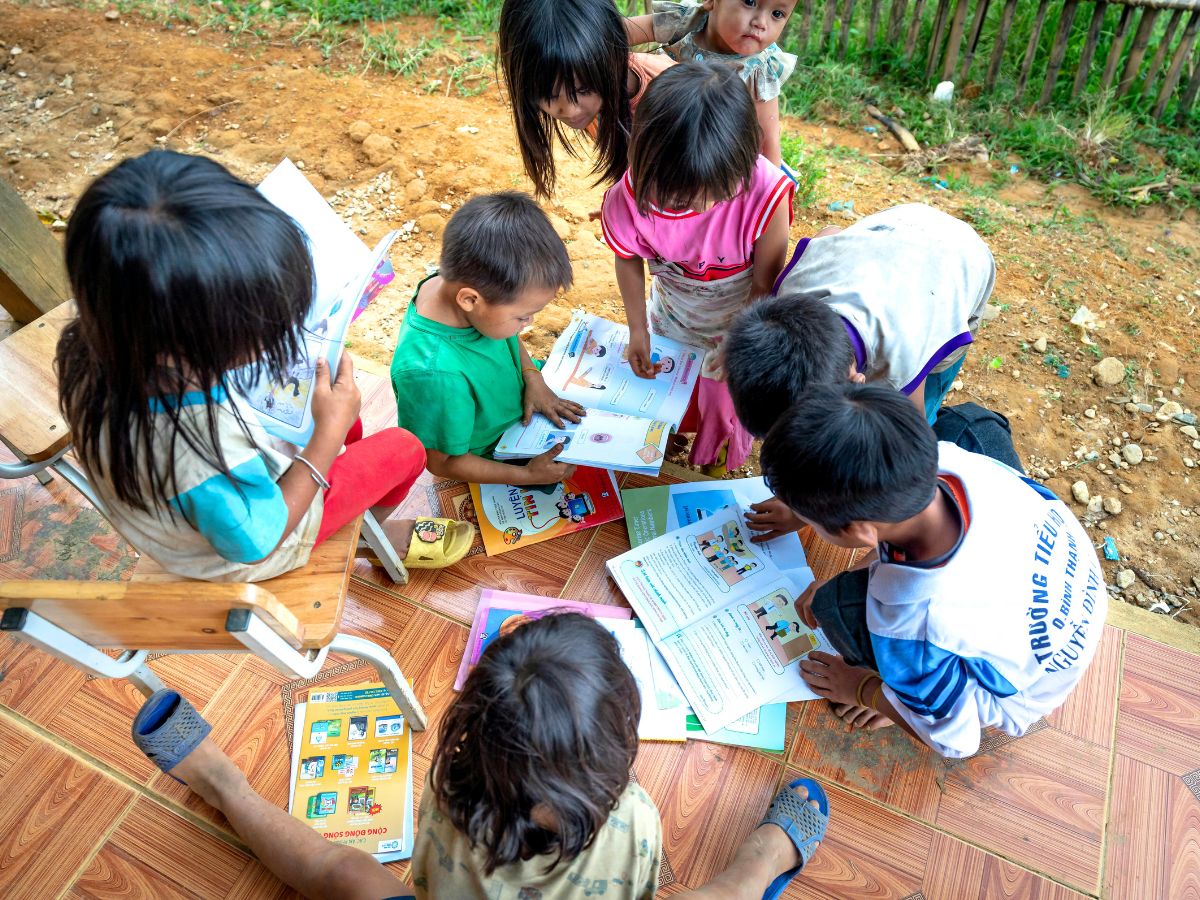
Experts stress emotional regulation, early intervention, and parental guidance to help children cope with anger. (Photo: Canva)
Panic gripped Maharashtra’s Rajgurunagar following reports that a student allegedly slit his classmate’s throat inside a private classroom while a lecture was on. The violent incident occurred this morning in front of the teacher and other students, sending ripples of chaos on the school premises.
According to police sources, the injured student was found lying in a pool of blood inside the classroom and was rushed to a nearby hospital, where his condition remains critical. The accused student has fled from the scene using a two-wheeler, and police are conducting a search operation.
The shocking nature of the attack carried out in a supposedly safe classroom environment has reignited concerns over rising aggression among school-going children and the urgent need to address emotional regulation at an early age.
This is not an isolated case. In November this year, a Class IX student in Pune’s Manjari area brutally attacked his classmate by slitting his neck with a broken glass bottle following a heated argument related to the school’s annual day function.
The incident occurred on November 19, in which the accused, a 15-year-old boy, reportedly attacked the girl from the rear and inflicted a deep gash in the neck that resulted in massive bleeding. An FIR was registered on November 20. Later, the juvenile was produced before the JJB, which sent him to an observation home till November 30.
In his complaint to the Hadapsar police under Bharatiya Nyaya Sanhita (BNS) Section 351(3), the victim, 14-year-old, had stated that accused had harboured revenge after a verbal duel over the annual day programme. The attack, police said was sudden and unprovoked.
The recurring brutal violence in school campuses brings centre-stage some uneasy questions about the way children deal with anger, frustration, and conflict. While anger is a normal human feeling, experts say, its inability to be moderated can lead to destructive behaviour, especially among adolescents.
“This is a critical time to be attending to children’s anger and self-control skills to be promoting healthy development and to give them the best chance of succeeding later in life,” said Kenneth Dodge, PhD, of Duke University, where he is a professor of psychology and neuroscience and conducts research on aggressive behavior in children.
Psychologists warn that emotional dysregulation, if unchecked, can escalate from a verbal conflict to physical violence, as seen in recent cases.
Emotional regulation describes the process by which a child develops the ability to monitor and modulate their emotional states along with their related behaviors according to the demands of the situation. It is in this sense that it provides children with the opportunities of pausing, thinking, and responding instead of impulsive action.
Without these skills, emotional distress easily escalates into aggression. According to clinical psychologist Matthew Rouse, PhD, the manifestations of emotional dysregulation may present in variable ways.
“Some kids react instantaneously with very powerful emotions and have no ability to inhibit their behaviour. Others build up distress until it explodes into an outburst,” he says.
In both cases, violent behaviour is often an ineffective response to overwhelming emotions, not an inherent tendency toward crime.
Experts underline that emotional regulation is not an innate trait but is learned. Parents and teachers tend to model calm responses and explicitly teach them.
In the case of younger children, tantrums usually happen when there is an unmet need. Parents help them practice calming down, like deep breathing.
Holding a child’s hands and breathing together while acknowledging their feelings, “You’re feeling angry right now, and that’s okay, helps them feel understood and safe.
Clinical psychologist Carolyn Webster-Stratton, PhD, advises other techniques that involve:
Teaching them positive self-talk, such as, “I can stay calm.”
Using imagery of safe or happy places
Visual aids, such as emotional thermometers, to help children recognize their anger when it starts rising.
Helping Children Find Words for Their Emotions
When kids learn to label their emotions correctly, they’re less likely to act out of frustration in aggressive ways. Mark Greenberg, PhD, emeritus professor at Penn State University, says teaching emotional vocabulary is key, from simple words like calm, frustrated, angry, and sad
Naming the emotions by parents and teachers when they manifest them is very important and should be positively validated. For example: “You’re feeling frustrated, but you’re handling it calmly. That’s hard work.”
This can help children learn more constructive ways of expressing themselves in place of physical reactions.
Discipline Without Fear, But With Consistency
Punishment is dissuaded by experts because it might worsen emotional problems and increase aggression; however, consequences need to be consistent, predictable, and clearly explained.
When kids understand the connection between an action and the consequence of that action, then they tend to reflect more and learn. On the other hand, inconsistent discipline sends mixed messages, and that jars emotional learning.
It is developmentally normal for children, especially young ones, to occasionally burst out in anger. However, if there is continued aggression observed across the environments he interacts within-home, school, and social spaces-then deeper issues might be present.
Mental health professionals indicate the need to seek help if violent behaviour persists after a few weeks or worsens. Some parent training programmes, like Family Check-Up and Incredible Years, help in enhancing the emotional and social skills of children.
It is also important to keep in mind background stressors, such as familial conflict, bereavement, or academic pressure, that may feed into emotional distress.
Parents should probably sidestep challenges for their child. Psychologists do believe in “scaffolding”: helping kids through rough emotions rather than sheltering them from life’s difficulties. Rather than shielding a child from frustrating homework, for instance, a parent can help work one problem and then slowly give the child independence to try the next.
Similarly, other transitional behaviours, such as stopping video games, can be role-played in low-stress situations to help children build tolerance and self-regulation.
“When you treat self-regulation as a skill to be taught rather than bad behaviour that needs to be punished, it really does change how children respond, say experts.
These violent classroom incidents in Maharashtra remind us that emotional education is as critical as academic learning. Schools, parents, and policymakers must make mental health support, counselling, and emotional literacy programmes a top priority to prevent such tragedies.
With incidents of student violence becoming increasingly serious, there has never been a better time to equip children with the tools they need to deal with anger and frustration. The management of emotions is no longer a nicety-it’s a necessity for safety, well-being, and the future of humanity.
ALSO READ: Jaipur Horror: Woman Molested, Husband Attacked After She Refused To Meet Nightclub Owner In Private
Sofia Babu Chacko is a journalist with over five years of experience covering Indian politics, crime, human rights, gender issues, and stories about marginalized communities. She believes that every voice matters, and journalism has a vital role to play in amplifying those voices. Sofia is committed to creating impact and shedding light on stories that truly matter. Beyond her work in the newsroom, she is also a music enthusiast who enjoys singing.
After Maduro’s Capture, Trump Orders Reopening Of Venezuela Airspace, Americans Soon Able To Travel
US President Donald Trump announced that the United States will soon reopen commercial airspace over…
Mass shooting reported near Welcome Baptist Church Road, Surry County, NC; suspect at large, multiple…
Arijit Singh, Zakir Khan and other Indian celebrities are stepping away at career peaks, sparking…
