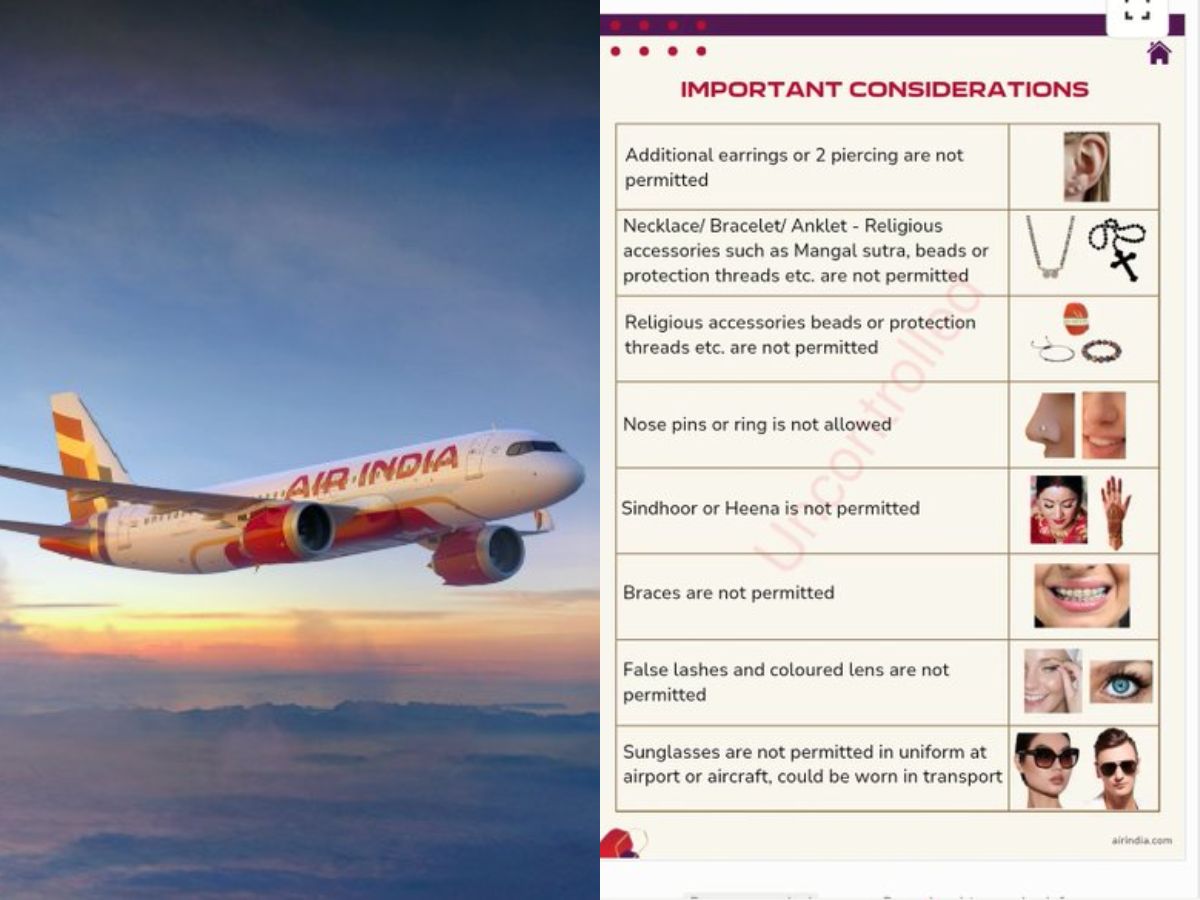
Air India cabin crew policy goes viral (Images: X)
A new controversy erupted on social media following a viral document that appeared to be a guide to grooming for Air India’s cabin crew. The document, which appeared to be a “Cabin Crew Policy”, sparked outrage among users on social media platforms, all of whom accused Air India of being discriminatory and of having unnecessary grooming stylists for its cabin crew.
This latest incident comes on the heels of a Lenskart argument over a workplace policy that began circulating online. In the case of Air India, users of social media and alleged screenshots from the Air India handbook could be found discussing the allegedly restrictive nature of the rules concerning the wearing of religious items like bindi, sindoor, or tilak while working.
According to the viral posts, the “Cabin Crew Policy” prohibits female cabin crew members from displaying visible religious markings (e.g. bindi, sindoor, tilak). Upon reading the comments made about the alleged policy, many social media users questioned why these types of cultural symbols would be prohibited in a professional employment environment.
Social media reactions were sharp and emotional. One user asked, “Why are they doing this so blatantly?” while sharing images from the supposed handbook. The debate soon turned into a wider discussion on identity, workplace rules, and cultural expression under the Cabin Crew Policy.
Airlines had previous grooming norms but they were more flexible than those of today. For example, previous grooming norms allowed women to wear small sized bindis and had specific restrictions on hairstyles and jewellery worn by women.
With today’s Cabin Crew Policy, there appears to be a shift towards stricter enforcement of these grooming norms according to multiple internet posts. This has led others to question if the airline is moving towards a uniform brand image at the expense of cultural identity.
As the posts grew in popularity, users across many platforms engaged in discussion surrounding the motivations behind the Cabin Crew Policy. Some felt that airlines implement strict grooming rules in order to create an identical and professional appearance; particularly in international markets.
Conversely, others strongly disagreed and felt that the banning of items such as the bindi or sindoor represents a violation of individual choice. For many people, these items are not simply fashion but rather significant cultural/religious symbols of identity. This significantly complicates the Cabin Crew Policy and has become a topic that has incited much discussion in all mediums of social media.
This discussion extends well beyond one airline; it encompasses a more extensive dialogue regarding global brand identity versus the need for diverse cultures within corporate settings. Critics argue that creating policies like this one may contribute to the erasure of identity under the guise of creating a uniform global workforce.
“Air India would like to clarify that its employees have the choice to wear bindi. The images being circulated online are from an older manual that is no longer in use.” – Air India Spokesperson.
Khalid Qasid is a media enthusiast with a strong interest in documentary filmmaking. He holds a Master’s degree in Convergent Journalism from AJK MCRC. He has also written extensively on esports at Sportsdunia. Currently, he covers world and general news at NewsX Digital.
Israel And Lebanon Strike Ceasefire Deal After Washington Talks
Israel and Lebanon have agreed to implement a ceasefire under U.S.-brokered talks, as wider Iran-related…
Mass Layoffs At Uber: Here’s Why New President Cut 23% Of HR Team And Denies Any AI Role
Uber cuts 23% of jobs in its People division under new president Jill Hazelbaker as…
Did Joe Biden’s Son Hunter Biden Leave Cocaine Bag At White House? Here’s What He said
A claim linking Hunter Biden to a cocaine bag found at the White House went…
