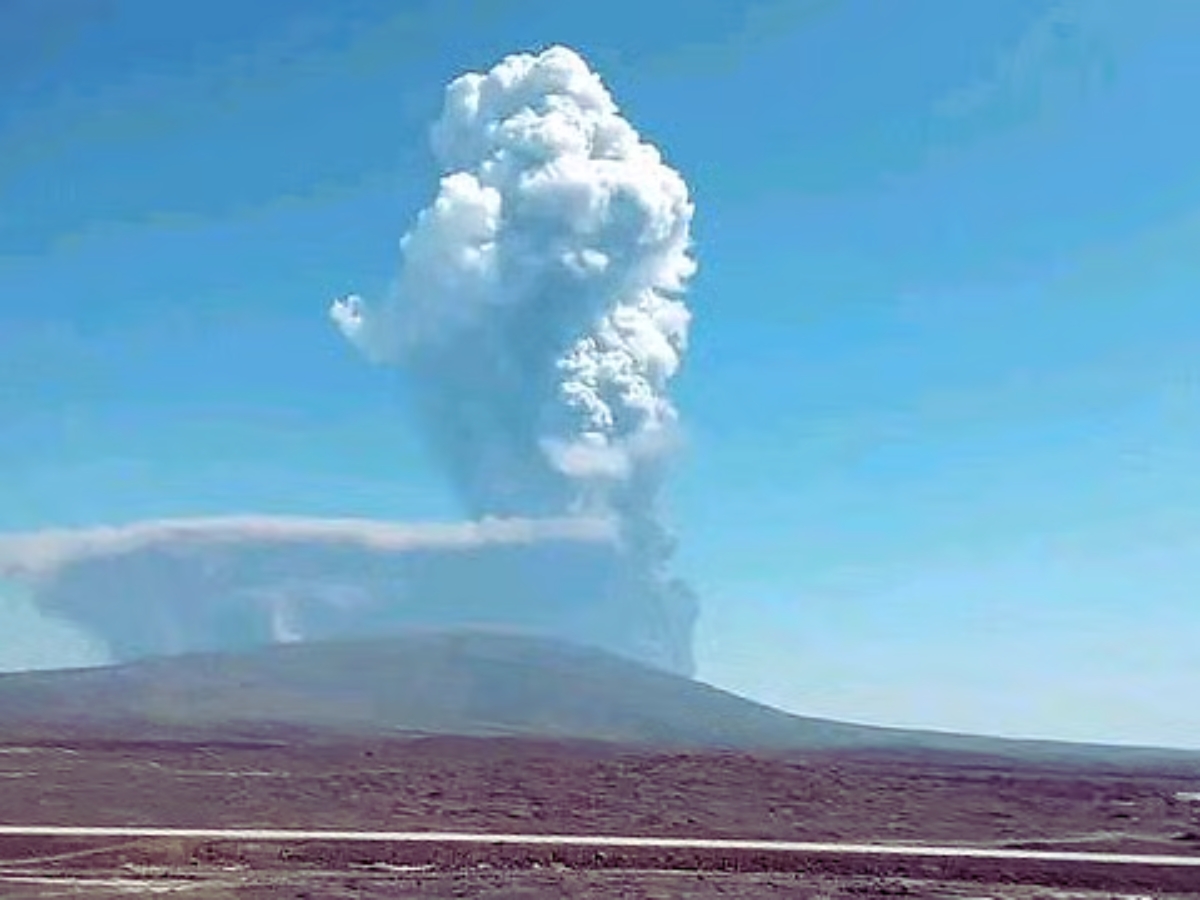
Volcanic ash from Ethiopia’s Hayli Gubbi eruption disrupts flights across India as high-altitude plume sweeps Delhi, Rajasthan and Gujarat. Photo: X.
Volcanic ash Delhi: A massive cloud of volcanic ash from Ethiopia’s Hayli Gubbi volcano, erupting for the first time in nearly 12,000 years, moved across northwestern India on Monday night, reducing visibility and severely affecting flight operations. The plume, travelling at 100–120 km per hour at altitudes above 10 km, tracked across Rajasthan, Gujarat, Maharashtra, Delhi-NCR, and Punjab before heading further east across the subcontinent.
The Hayli Gubbi volcano, located in Ethiopia’s Afar region, erupted on Sunday, sending ash columns rising up to 14 km. The Toulouse Volcanic Ash Advisory Centre (VAAC) later confirmed that while the eruption had stopped, the plume continued to drift towards India.
The ash cloud entered Indian airspace around 6:30 pm, first crossing into Rajasthan before sweeping rapidly over Gujarat, Delhi-NCR and Punjab. Skies darkened through the evening, prompting airlines to cancel or divert multiple flights.
India’s aviation regulator issued an urgent ASHTAM, a volcanic ash notification, directing carriers to avoid affected altitudes and activate volcanic-ash safety protocols.
Also Read: Delhi NCR And Mumbai Choke Under ‘Severe’ Air Quality Levels Amid Rising Health Concerns
Air travel was hit across several airports. IndiGo cancelled at least six flights, and Akasa Air suspended its services to Jeddah, Kuwait and Abu Dhabi for November 24–25. Several other flights were rerouted as the plume advanced.
International carriers began diverting over Pakistani airspace to avoid the ash. However, Indian airlines cannot operate through those routes, leading to heightened cancellations and delays.
The Directorate General of Civil Aviation (DGCA) also asked airports to prepare for immediate inspections of runways, taxiways and aprons if ashfall occurred. Operations would be suspended if any contamination was detected.
While aviation authorities warned of further disruptions if the ash descended on Tuesday, the India Meteorological Department (IMD) said the plume’s high altitude meant limited impact on surface air quality.
IMD Director General M. Mohapatra said the cloud positioned between 10–15 km was “unlikely to significantly affect surface air quality,” though it could lead to hazy skies and a slight rise in minimum temperatures.
Even before the volcanic plume entered the region, pollution levels in Delhi-NCR were already at alarming highs. Delhi recorded an AQI of 382 (‘very poor’) at 4 pm on Monday, while Ghaziabad (396) and Noida (397) hovered near ‘severe’ levels.
The ash cloud consists of volcanic ash, sulphur dioxide, and fine particles of rock and glass, materials that can darken skies and pose serious hazards to aircraft engines.
Zubair Amin is a Senior Journalist at NewsX with over seven years of experience in reporting and editorial work. He has written for leading national and international publications, including Foreign Policy Magazine, Al Jazeera, The Economic Times, The Indian Express, The Wire, Article 14, Mongabay, News9, among others. His primary focus is on international affairs, with a strong interest in US politics and policy. He also writes on West Asia, Indian polity, and constitutional issues. Zubair tweets at zubaiyr.amin
International Women’s Day 2026 Theme: Governments, organisations and communities celebrate the occasion by holding events,…
IND vs NZ: Ahmedabad Hotel Prices Cross ₹1 Lakh Ahead of ICC Men’s T20 World Cup 2026 Final
Ahmedabad prepares for the ICC Men’s T20 World Cup 2026 final between India and New…
Los Angeles Lakers vs Indiana Pacers Live Streaming: How to Watch NBA Game in India?
Stream Los Angeles Lakers vs Indiana Pacers live. Catch all the NBA action at the…
