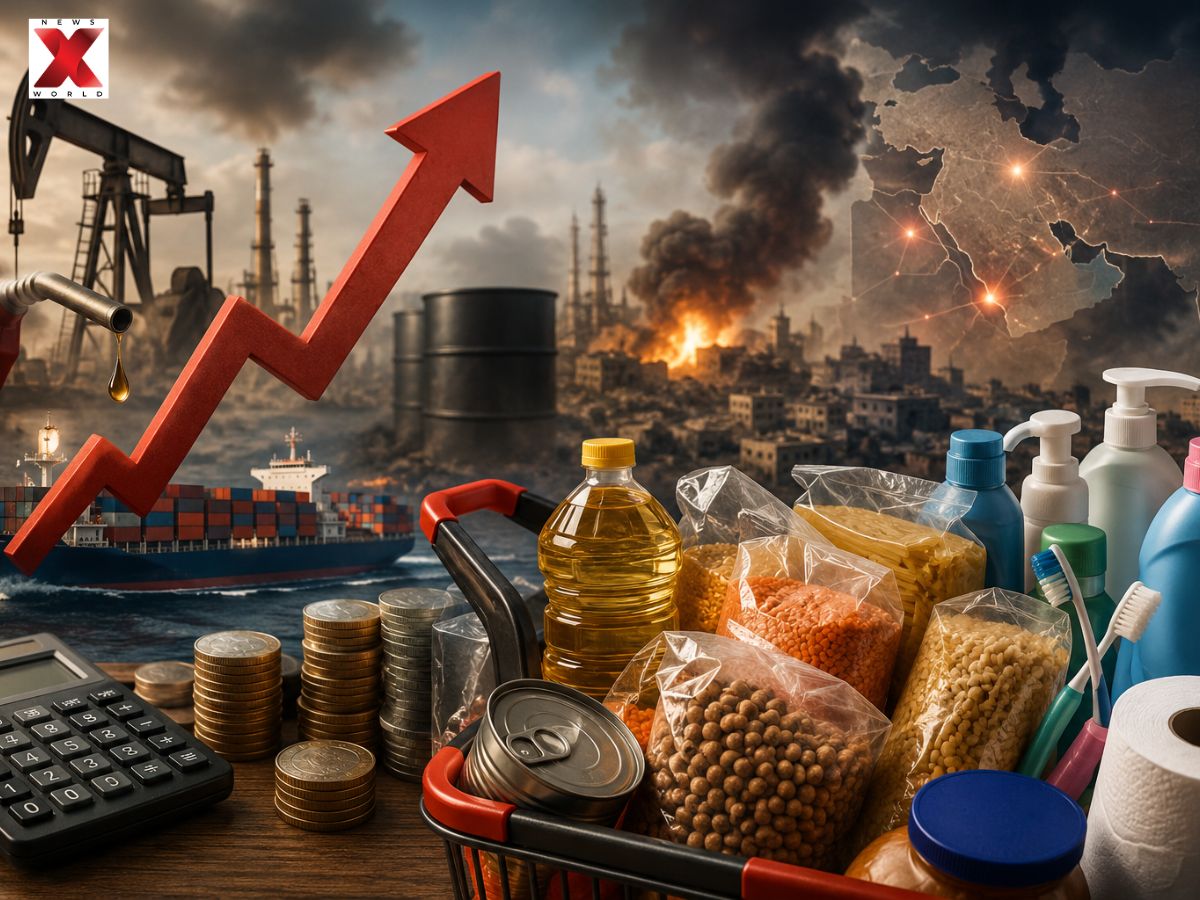
Middle east conflict is silently affecting your grocery bill
The Middle East Conflict and Your Grocery Bill: What’s Actually Going On? This whole Middle East conflict isn’t only some headline anymore, it’s kinda sneaking into your kitchen spending, after it already bumped up our travel budgets with prices that went too far up too fast. Now it’s starting to touch the stuff we use every day, kitchen stuff, laundry too, and basic necessities, like shampoo, toothpaste, soaps, detergents, and other daily essentials, but it does it in this quiet way. Crude oil prices are sitting at about, or a bit beyond, the $100 a barrel mark, and key routes like the Strait of Hormuz are getting tense. So global supply chains start looking nervous and jittery. And when oil sneezes, transport and packaging, along with a bunch of related things, somehow catch that same cold.
But it doesn’t really stop there, LPG gas, cooking fuel, electricity costs, edible oils, pulses, and even packaged foods start feeling it over time. Have you noticed how your shampoo bottle is a little smaller now, but the price is staying almost exactly the same? Or maybe dal, cooking oil, and even snacks feel “randomly” higher lately. Everyday things like travel, delivery fees, and the cost to ship groceries also creep up quietly. That’s the ripple effect right there, the kind of chain reaction you don’t fully spot at first, but then you eventually pay for it, little by little, in normal daily ways.
A rise in geopolitical tensions in the Middle East, amid US–Iran–Israel friction, is disrupting global supply chains and increasing costs across essential goods.
Inflation is kind of like a domino act rolling through the whole supply chain, and honestly your wallet is getting every little push, even if you do not see it right away. Wholesale costs are going up fast too, because manufacturers have to handle multi-year high input prices, so producing even the most basic goods is not really affordable anymore. Transport is not making it any better, with fuel and logistics costs up more than 24%, meaning every delivery feels like it’s bringing extra weight with it, and also extra cost. Then retail shelves respond in their own way: major brands are quietly nudging prices higher by about 3–7% while also shrinking the product sizes, so you pay the same amount but receive a bit less. Have you ever felt like your money is moving quicker than your groceries? Yeah, that’s not just your imagination, it’s the supply chain doing its thing.
(Disclaimer: The information above is based on publicly available sources, general market observations, and widely reported global economic trends. It is for informational purposes only and not financial advice.)
Aishwarya is a journalism graduate with over 4.5 years of experience thriving in the buzzing corporate media world. She’s got a knack for decoding business news, tracking the twists and turns of the stock market, covering the masala of the entertainment world, and sometimes her stories come with just the right sprinkle of political commentary. She has worked with several organizations, interned at ZEE and gained professional skills at TV9 and News24, And now is learning and writing at NewsX, she’s no stranger to the newsroom hustle. Her storytelling style is fast-paced, creative, and perfectly tailored to connect with both the platform and its audience. Moto: Approaching every story from the reader’s point of view, backing up her insights with solid facts.
Always bold with her opinions, she also never misses the chance to weave in expert voices, keeping things balanced and insightful. In short, Aishwarya brings a fresh, sharp, and fact-driven voice to every story she touches.
Haiti FIFA World Cup 2026 Squad Announced: Full Player List, Key Stars & Team Analysis
Learn about the Haiti national football team FIFA World Cup 2026 squad, FIFA ranking, key…
United States National Team FIFA World Cup 2026: Squad, Ranking, Key Players & Full Preview
Learn about the United States national football team FIFA World Cup 2026 squad, FIFA ranking,…
Controversy Erupts In Reasi Over Eid-ul-Adha Greeting Post Shared On Social Media By A School
Presentation Convent High School in Jammu and Kashmir’s Reasi district sparked controversy after sharing an…
