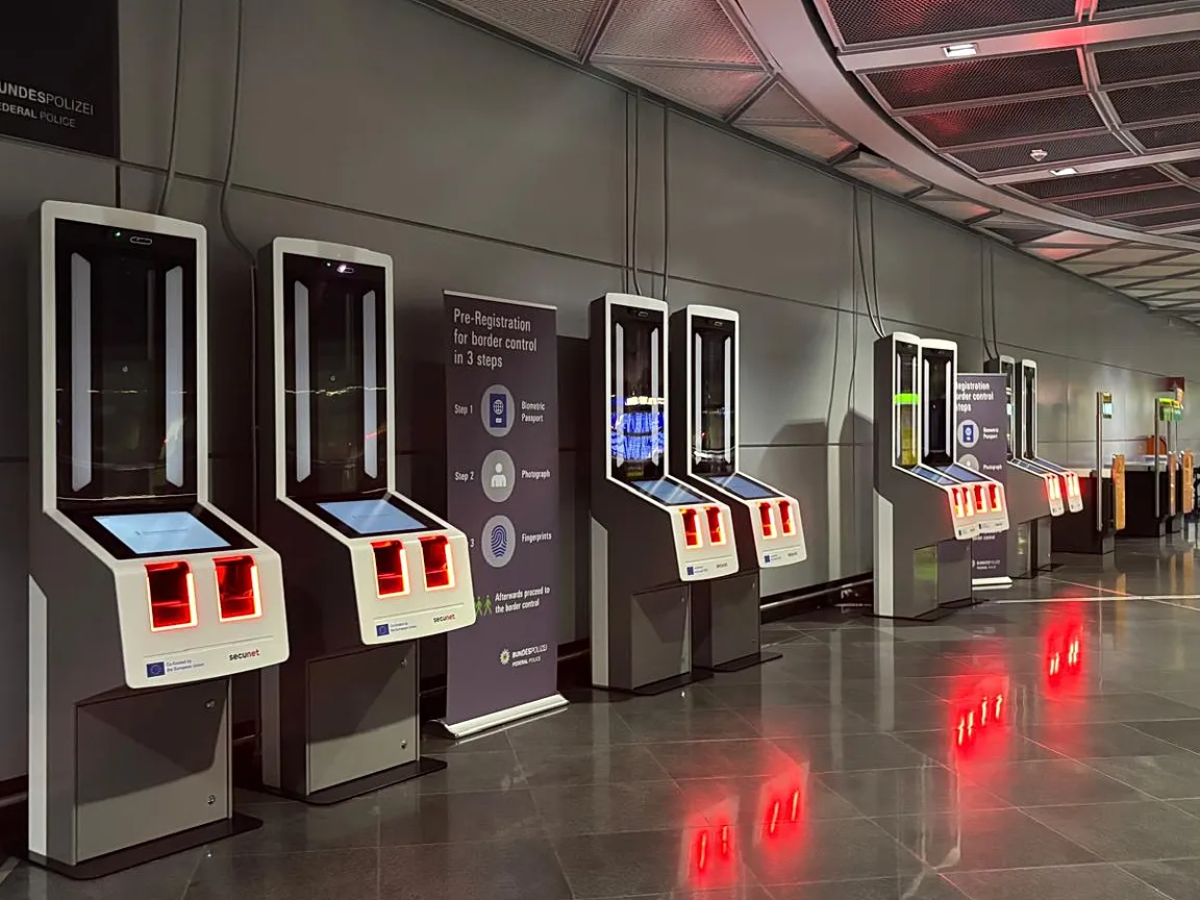
UAE travellers heading to Europe will need to get used to a drastic change in border requirements as EU sets up a new biometric system. The system will replace the old passport stamping process with a digitised version, signalling a big change in how non-EU citizens are tracked when they come into, and push out of, European countries. Airlines are already asking passengers to arrive at immigration with a longer buffer time for the early part of the rollout. The move comes as part of a wider strategy by authorities across Europe to digitise and modernise border control to increase security and make travel easier for millions of visitors each year.
The European Union has implemented a new system called the Entry/Exit System (EES), that will digitally keep track of the travel details of non-EU nationals visiting for short stays. Rather than stamping the passport, the information (including personal details, travel documents, and the time and place of entry and exit in 29 countries) will be recorded by the automated system in the EES.
The biometric data collection process will also require people visiting for the first time to have their fingerprints and face scanned, as well as their passport checked. This will be stored so that travellers need not repeat the process on future trips.
The new Electronic Travel Authorization system applies to all non-EU and non-Schengen citizens travelling to Europe for stays of up to 90 days within a 180-day period. However, EU and Schengen country citizens, as well as holders of long-term visas or residence permits, will not be subject to the new rules.
Passengers, including those flying into the UAE, have been advised by airlines to arrive earlier and allow more time for border checks. The first run may take longer as biometric information is collected and cross-checked.
Travelers are advised to pre-register their details using the “Travel to Europe” app prior to departure. This may mean they will be able to avoid the webbing queues at border controls upon arrival.
The European Digital Border Passport system will increase the border security and efficiency of the EU, with a more robust system for tracking entries and exits and the ability to automatically alert authorities of people overstaying their allowed period of stay, or who have used a false or forged document.
The new system is part of the EU’s comprehensive strategy to improve border management and security. Moving towards more automated systems and digital records is expected to help strengthen the borders while still improving the travel experience.
I am a seasoned writer with 2.5 years of experience who presently works at ITV Digital. I specializes in entertainment journalism, reporting on the newest Bollywood news as well as compelling healthy lifestyle pieces. I am master at creating material around popular issues and internet buzz, bringing unique, reader-friendly viewpoints to every item i write
OpenAI Files Confidential IPO: Here’s What It Means
OpenAI, Anthropic, and SpaceX are preparing for potential IPOs in 2026, signalling one of the…
Why Did Federal Judge Strike Down Trump’s $100,000 H-1B Visa Fee?
A US federal judge has blocked President Donald Trump’s proposed USD 100,000 H-1B visa fee…
6.2 Strong Earthquake Hits Cuba, Shaking Felt In Florida And Mexico Regions
A 6.2-magnitude earthquake struck the Gulf of Mexico on Sunday night, according to the National…
