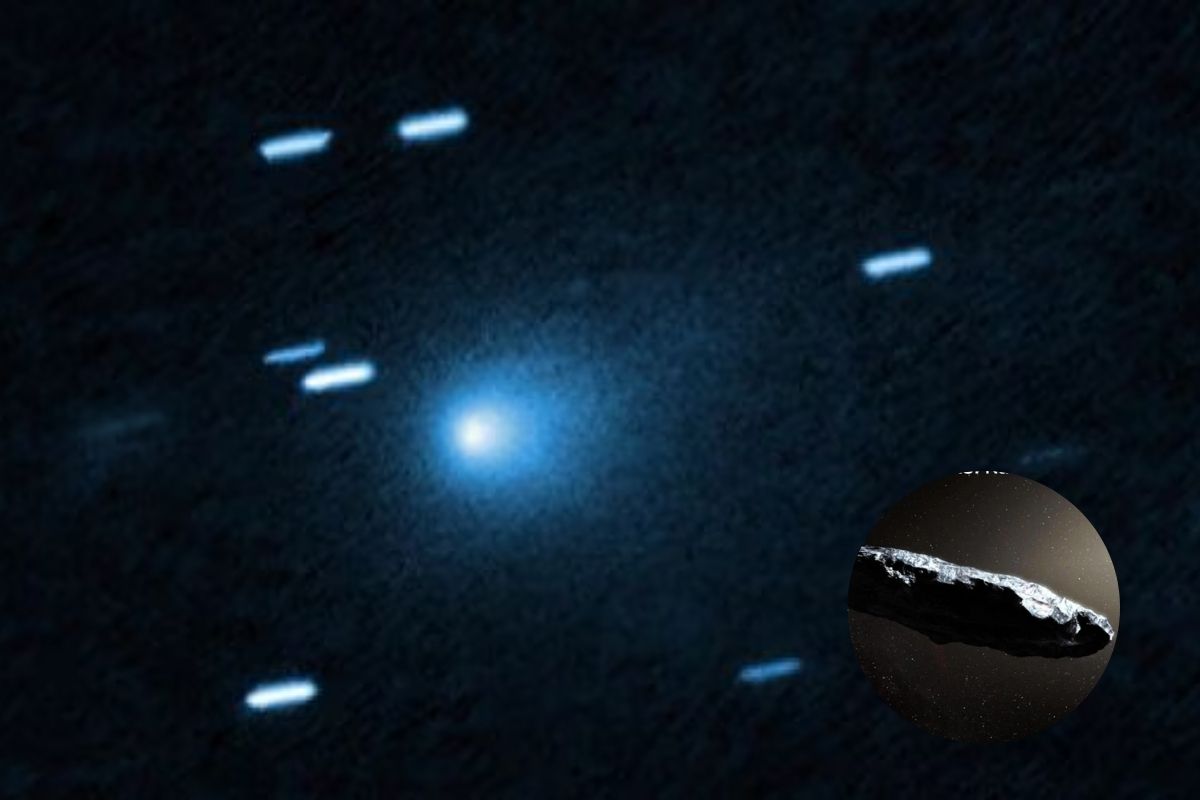
Comet 3I/ATLAS (Image Credits: X)
An interstellar comet named 3I/ATLAS has sparked global scientific curiosity as it prepares to make its closest approach to Earth on December 19, passing within 170 million miles on Friday. What has caught researchers’ attention is that the Interstellar Comet 3I/ATLAS is the rare ‘anti-tail’ phenomenon, a feature that appears to defy normal comet behaviour by pointing towards the Sun instead of away from it.
NASA has confirmed there is no threat to Earth. Scientists say the flyby offers a rare opportunity to study material from another star system, with the unusual anti-tail adding to the mystery surrounding this cosmic visitor. Social media platforms have been flooded with speculation connecting December 19 to religious symbolism and doomsday narratives.
Scientists have assured that there is no danger of an impact though the Comet 3I/ATLAS passing closest by Earth. The comet’s trajectory is well understood and will not change unexpectedly. Its orbit has been precisely mapped, and observations from both ground-based observatories and space telescopes confirm that it follows a stable and predictable path.
3I/ATLAS is no ordinary comet; it is only the third interstellar object ever discovered, following 1I/‘Oumuamua and 2I/Borisov. Unlike comets that form within our solar system, 3I/ATLAS originated around a distant star, making it a true cosmic visitor.
The object was detected in late June, racing through space at a remarkable 130,000 miles per hour (210,000 kilometers per hour). Such extreme speed means the Sun’s gravity cannot capture it, confirming that it is travelling on a hyderbolic trajectory. After its flyby, Interstellar Comet 3I/ATLAS will exit the solar system permanently, continuing its journey through interstellar space.
Researchers suggest that 3I/ATLAS may be the largest and oldest interstellar object ever recorded. Observations have revealed jets directed toward the Sun and surface characteristics shaped by extended exposure to radiation in deep space.
These findings provide a rare window into environments beyond our solar system, offering scientists valuable insights into how comets and planetary systems from around other stars.
Manisha Chauhan is a passionate journalist with 3 years of experience in the media industry, covering everything from trending entertainment buzz and celebrity spotlights to thought-provoking book reviews and practical health tips. Known for blending fresh perspectives with reader-friendly writing, she creates content that informs, entertains, and inspires. When she’s not chasing the next viral story, you’ll find her diving into a good book or exploring new wellness trends.
Veteran actor Rakesh Bedi’s viral interaction with Ananya Panday drew online criticism for being “cringeworthy”…
Shaheen Afridi will lead Lahore Qalandars in their title defence beginning on Thursday, 26 March…
Reports claim IRGC Navy Commander Alireza Tangsiri was killed in an Israeli strike on Bandar…
