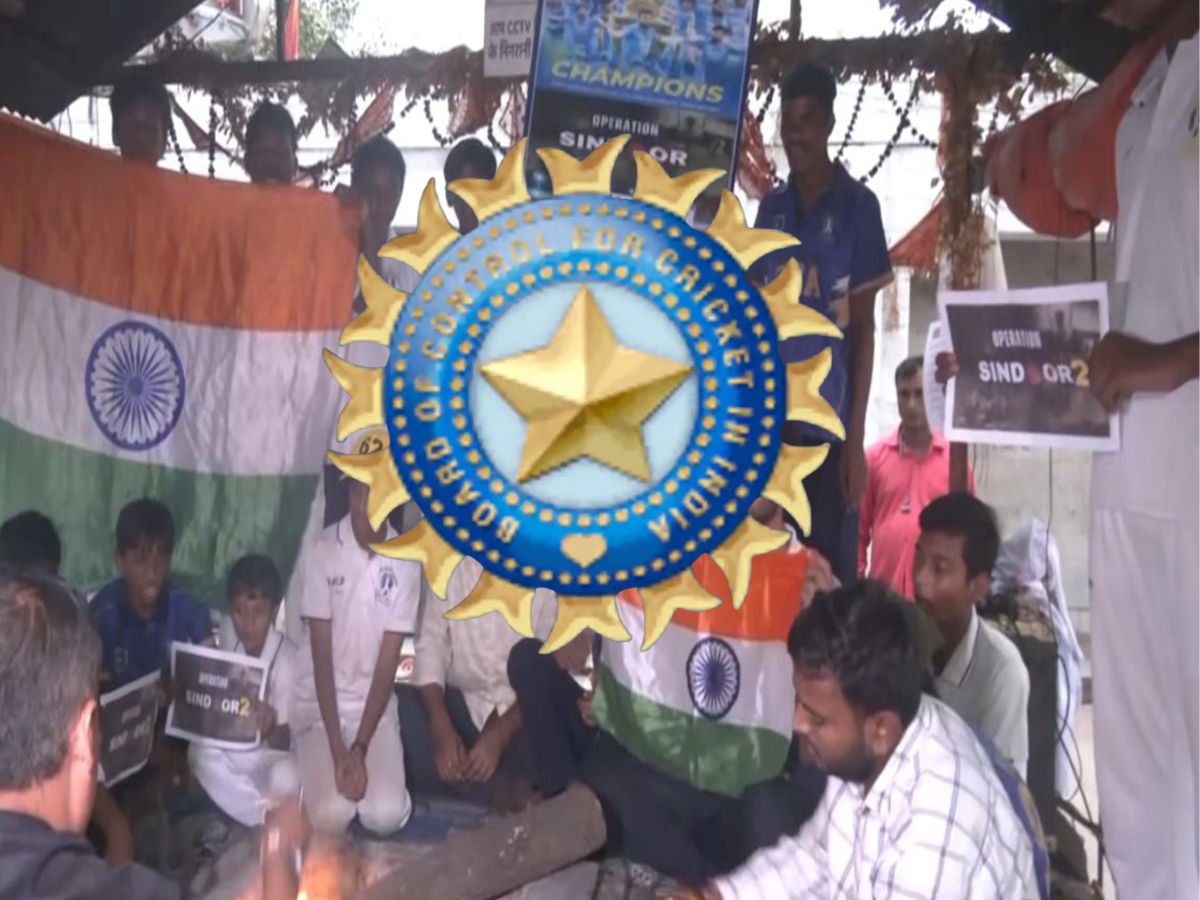
Reasons Why BCCI Can't Boycott India vs Pakistan Asia Cup 2025 Match (Image Credit - ANI)
With the upcoming Asia Cup 2025, the India vs Pakistan clash is subject to controversy. The Board of Control of Cricket in India (BCCI) is in a situation that it cannot afford to boycott this match. Secretary Devajit Saikia clarified the official position of India as fans and media criticized it increasingly.
Devajit Saikia has stressed that Asia Cup is a multinational event just like Olympics or FIFA world cup. He told Hindustan Times, “We have decided to participate in the Asia Cup because it is a multinational competition. It is just like an Olympic, any FIFA tournament, AFC tournament, or International Athletics Tournament.”
Saikia added, “So we cannot boycott the multinational tournament because if we boycott this tournament, that will bring a lot of negativity for all our future endeavours of hosting any multinational tournament in the country.”
Having such international commitments, the BCCI cannot simply decide not to play the match. The decision is not one-sided as Saikia says. Rather, it is a wider policy framework that regulates the involvement in international sports activities.
The secretary of BCCI noted the distinction between bilateral and multilateral tournaments. He commented, “Had it been a bilateral tournament, we could have always said that we would not play against any hostile country,” he remarked. Since 2012-13, India has not engaged in any bilateral series against Pakistan.
But multilateral tours such as Asia Cup 2025 or the upcoming ICC T20 World Cup has a more stringent set of rules. Saikia explained, “When it is an international tournament like last year’s T20 tournament in the West Indies and the USA, or any other tournament or maybe in February, also, there will be the ICC T20 World Cup or the present ICC tournament or the Champions Trophy, we are playing it because in those tournaments we do not have a direct call, we have to play.”
It was also made clear by the board that the unilateral decision to refuse to play jeopardized the career of players and was not an option. They should not disregard their international obligations.
Devajit Saikia also added that the decision conforms to the guidelines of central government. “The central government has laid down a guideline and a policy that, so far as bilateral tournament is concerned, India is not going to play against any hostile country. But so far as multinational, we will play.”
This policy is not limited to cricket but also in other sports, such as football, athletics, boxing, and badminton. Saikia stressed, “We follow that guideline of the central government, and we are following it because it is in the interest of the game, whether it is cricket, football, athletics, boxing, badminton and the players involved in those games.”
Social media was outraged because of the India vs Pakistan Asia Cup 2025 match, and why India should go ahead with it at all given the recent Pahalgam terror attack and the Operation Sindoor. The most common feeling was that the match is held at an opportune moment when it is a politically sensitive moment.
Saikia was adamant and said that this decision would ensure that India does not encounter future risks in ICC events or even Olympic tournaments. “If India takes the risk of boycotting the game between India vs Pakistan in Asia Cup 2025, then it will affect their future participation in ICC events and also for Olympic games,” he stated.
The BCCI knows the long term consequences of its decisions very well. Devajit Saikia emphasized that a boycott of the India vs Pakistan Asia Cup 2025 event may hurt the future of India in ICC tournaments and the Olympics 2036 bid. “It can affect our matches and our chances of hosting the Olympics,” he said.
India has been pursuing the objective of hosting 2036 Olympic Games. Saikia indicated that any political scandal or refusal to play Pakistan would dilute the Indian bid and this would threaten to kill this once in a lifetime opportunity. The BCCI seeks to remain professional relative to protecting the international sporting interests of the country.
The decision of India to play in the Asia Cup 2025 is therefore viewed not as a choice, but as a requirement to retain its position in the world of sports. The ruling of the BCCI is representative of an intricate balancing process between the national feeling and international accountability.
FM Sitharaman says Budget pushes reforms, tech and jobs, boosts Tier II–III cities, semiconductors and…
Gold Price Today: Gold and silver prices witnessed sharp selling pressure on Sunday after Union…
After filing a joint petition for divorce by mutual consent on February 5, 2025, they…
