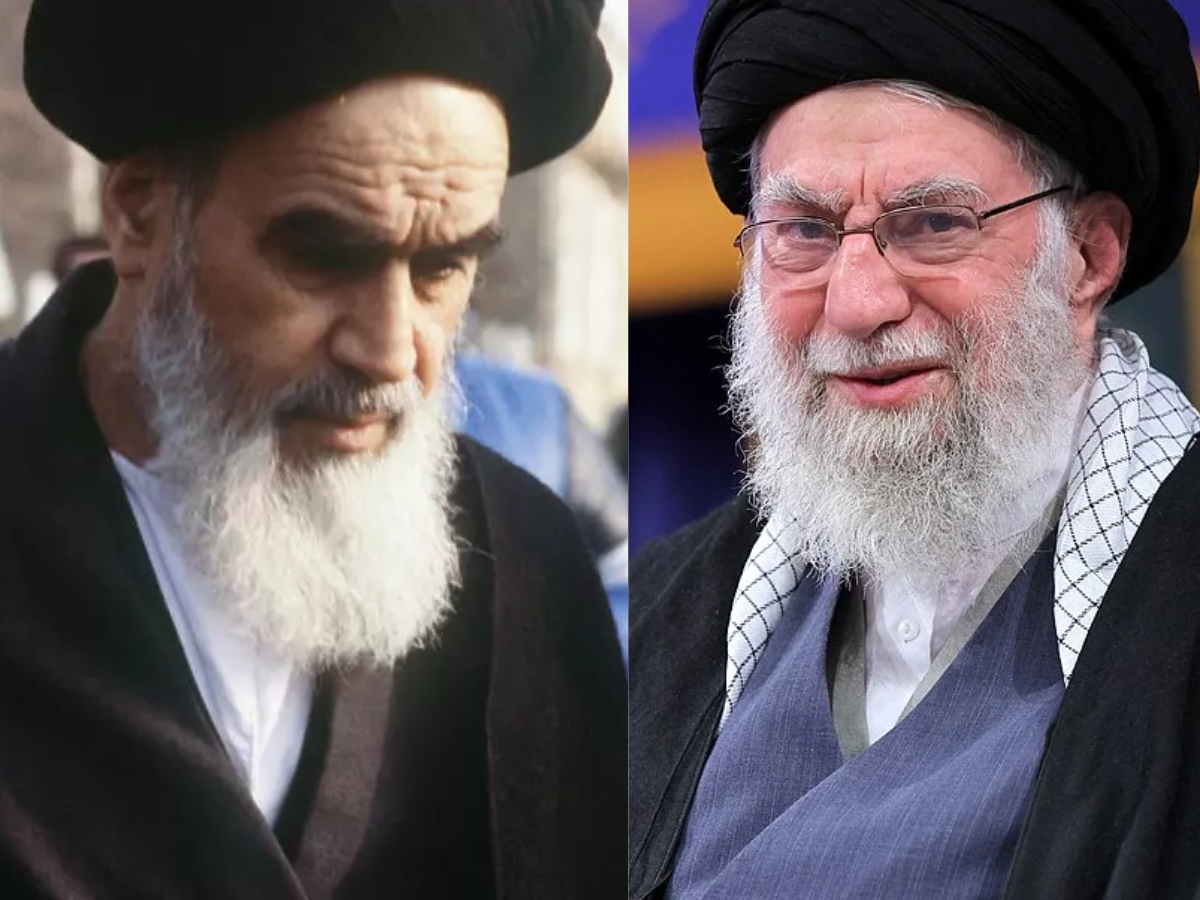
After Khamenei's death, allegations resurface that virgin female prisoners were raped before execution in 1980s Iran amid fallout. Photos: X.
The assassination of Ayatollah Ali Khamenei following joint US and Israeli airstrikes on Tehran has triggered celebrations inside and outside Iran, mostly by the women who faced the wrath of the deceased Supreme Leader. Videos on social media are going viral, showing the outpour of women on the streets to celebrate the supposed end of the repressive regime.
Women in Iran have faced systemic discrimination and violence under successive regimes. From allegations of sexual abuse in prisons to the enforcement of strict hijab laws, generations of Iranian women have borne the brunt of state repression. In this backdrop, several old charges of repression against women by successive regimes are resurfacing.
Documentation of such abuses predates Khamenei’s rule. Human rights groups have documented patterns of violence that stretch back to the early years of the Islamic Republic.
A report published by Justice For Iran, focusing on the 1980s, details what it describes as the organised rape of virgin girls awaiting execution in Iranian prisons.
According to the report, “in a six-month period between June 20, 1981 and 21 December of the same year, at least 2,241 people were executed, of which 223 were women.”
The report further states, “of these women, 34 or about 15% were under 18 years old, while 120, close to 54%, were between 18 and 29.”
These figures, rights groups say, reflect a pattern of systemic abuse targeting female political prisoners during one of the most violent phases of the regime’s consolidation of power.
In December 2000, Hossein Ali Montazeri, then 79, published memoirs that revealed internal documents related to atrocities carried out by Iran’s clerical establishment. Montazeri had served for a decade as the designated successor to Ruhollah Khomeini, the Supreme Leader of Iran’s theocratic regime.
Among the most harrowing revelations was the massacre of 30,000 political prisoners in 1988, ordered by Khomeini.
In his memoirs, he wrote, “many of those who were being arrested were girls and they were executing them on charges of waging war on God… I told the judiciary officials and Evin officials and others, quoting the Imam, that they must not execute girls from the PMOI. I told judges not to write death sentences for girls. This is what I said. But they distorted my words.”
He continued, “don’t execute girls. First marry them for one night and then execute them.”
Montazeri maintained that this latter statement was falsely attributed to him, saying his remarks had been deliberately misrepresented.
Further insight into prison practices during the 1980s came from Hussein Mortazavi Zanjani, who served as chief of Tehran’s notorious Evin Prison between 1987 and 1988.
Mortazavi described the coercion of virgin female prisoners into temporary marriages with prison guards prior to execution. According to former political prisoners, the practice was rooted in the belief that women who died as virgins would go straight to paradise.
Mortazavi recounted the words of the father of one executed woman, “what deeply pains and angers me in life is not the killing of my daughter but that they brought money and claimed it was for a marriage sanctioned by Sharia law. This act was more devastating and horrifying to me than the loss of my child.”
The former prison chief also alleged that the then president of Iran, Ebrahim Raisi, played a direct role in the execution of political prisoners. The executions were carried out under a fatwa issued by then Supreme Leader Khomeini. At the time, Raisi was serving as deputy prosecutor of Tehran.
Zubair Amin is a Senior Journalist at NewsX with over seven years of experience in reporting and editorial work. He has written for leading national and international publications, including Foreign Policy Magazine, Al Jazeera, The Economic Times, The Indian Express, The Wire, Article 14, Mongabay, News9, among others. His primary focus is on international affairs, with a strong interest in US politics and policy. He also writes on West Asia, Indian polity, and constitutional issues. Zubair tweets at zubaiyr.amin
WBSSC Group D 2026 Admit Card Out; Check Exam Date, And Steps To Download Hall Ticket Here
The West Bengal School Service Commission has released the WBSSC Group D Admit Card 2026…
PM Modi spoke to the leaders of Oman and Kuwait as India expressed deep concern…
Stock market shut on March 3 for Holi 2026 as per NSE, BSE calendar; trading…
