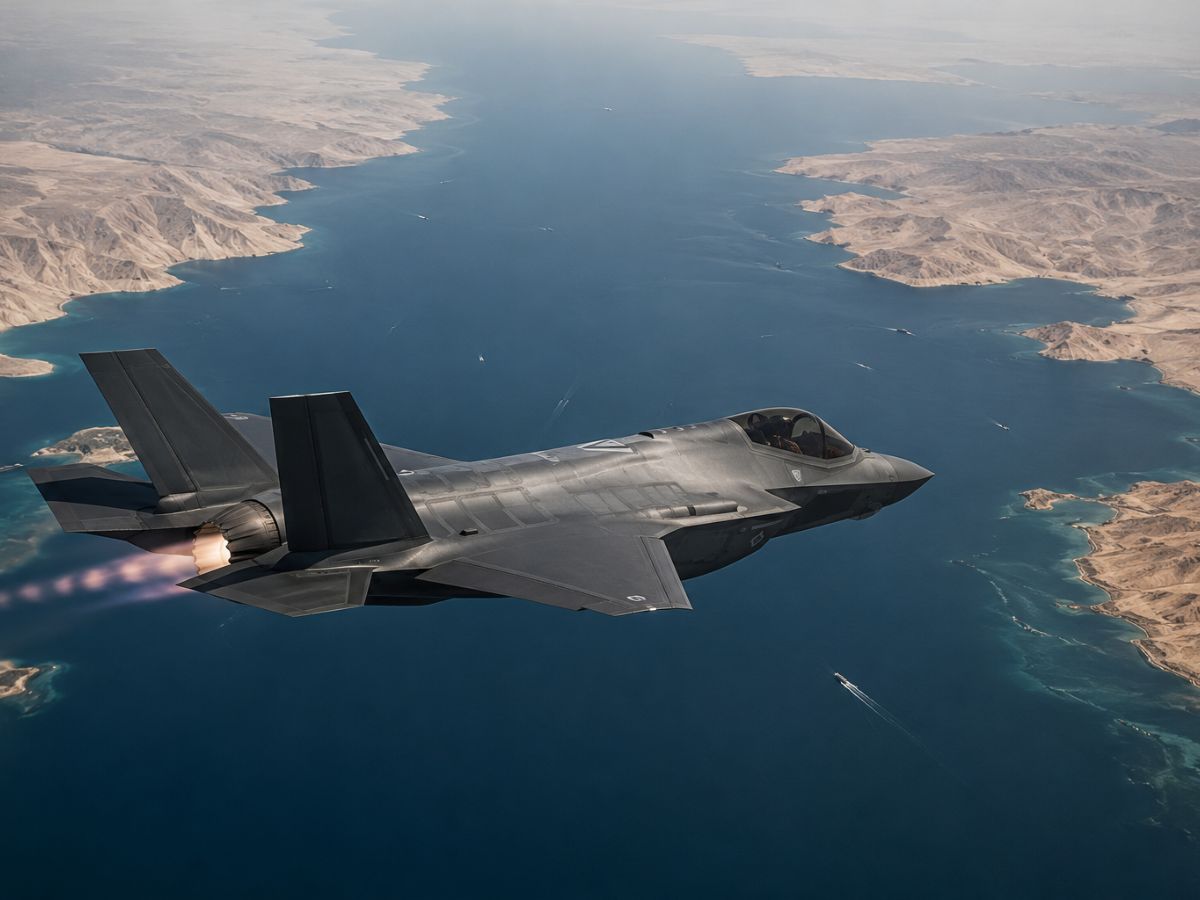
US F-35 jet sent emergency code 7700 over Strait of Hormuz. (Photo: AI)
A US military aircraft identified as a Lockheed Martin F-35 Lightning II reportedly declared an in-flight emergency while flying over the strategically sensitive Strait of Hormuz on Sunday. According to flight-tracking data, the stealth fighter transmitted squawk code 7700, an internationally recognised emergency signal used by aircraft facing urgent technical, operational, or medical situations. The jet was later seen heading towards the United Arab Emirates before its transponder signal disappeared. The incident has triggered speculation online, especially after Iranian state-linked media claimed the aircraft had been shot down. However, no independent evidence, wreckage visuals, or official confirmation from the United States has emerged so far. The episode comes amid rapidly rising tensions between Iran and the US in the Gulf region.
Squawk code 7700 is an emergency transponder signal that is transmitted worldwide by both manned and unmanned civilian and military aircraft. Once pilots enter this code into the transponder system of the aircraft, by doing so, they signal to the air traffic controllers that they have a serious emergency and need assistance.
The emergency could be anything from engine failure, communication system failure, fuel-related problems, on-board fire, medical emergencies, or other operational concerns. In general, an aircraft with the emergency code on is given priority clearance for landing or alternate routing.
There is no official statement from the US military explaining why the US F35 had the emergency code on. By analyzing the FlightRadar data, the aircraft was heading in the direction of UAE airspace and was descending to a lower altitude right after the emergency alert. Military aircraft sometimes cease transmitting publicly viewable signals once they land safely or enter sensitive operational areas. This has been contributing to the rumours regarding this incident.
Iranian media reports claimed that the fighter jet had been hit by Iranian forces. However, this report has not been verified, and the same has happened with similar claims made about Iran’s actions during previous Gulf confrontations.
The Strait of Hormuz is one of the world’s most vital maritime chokepoints, with about a quarter of the world’s seaborne oil trade and a large portion of liquefied natural gas shipping passing through the narrow waterway each year.
The UAE, Qatar, Kuwait, Bahrain and Iraq rely on the strait for their energy exports. Any disruption in the strait can immediately impact energy markets and oil prices around the world.
The incident comes amid mounting naval and military tensions between Iran and the United States. Iran’s Revolutionary Guards said they would respond by targeting American ships and bases if Iranian tankers were attacked. Clashes involving cargo ships and military aircraft in the Gulf have raised fears of increased regional tensions in the world’s most volatile geopolitical bubble.
Sofia Babu Chacko is a journalist with over five years of experience reporting on Indian politics, crime, human rights, gender issues, and stories about marginalized communities. She believes journalism plays a crucial role in amplifying unheard voices and bringing attention to issues that truly matter. Sofia has contributed articles to The New Indian Express, Youth Ki Awaaz, and Maktoob Media. She is also a recipient of the 2025 Laadli Media Awards for gender sensitivity. Beyond the newsroom, she is a music enthusiast who enjoys singing. Connect with Sofia on X: https://x.com/SBCism
India Has 60-Day Crude, LNG Reserves And 45 Days Of LPG; No Supply Concerns: Hardeep Singh Puri
Hardeep Singh Puri said the government managed the energy supply problems caused by the West…
Lawrence Bishnoi gang has claimed responsibility for the firing outside the house of singer-actor Diljit…
Can Cristiano Ronaldo finally lift the Saudi Pro League trophy? Explore the title race scenarios…
