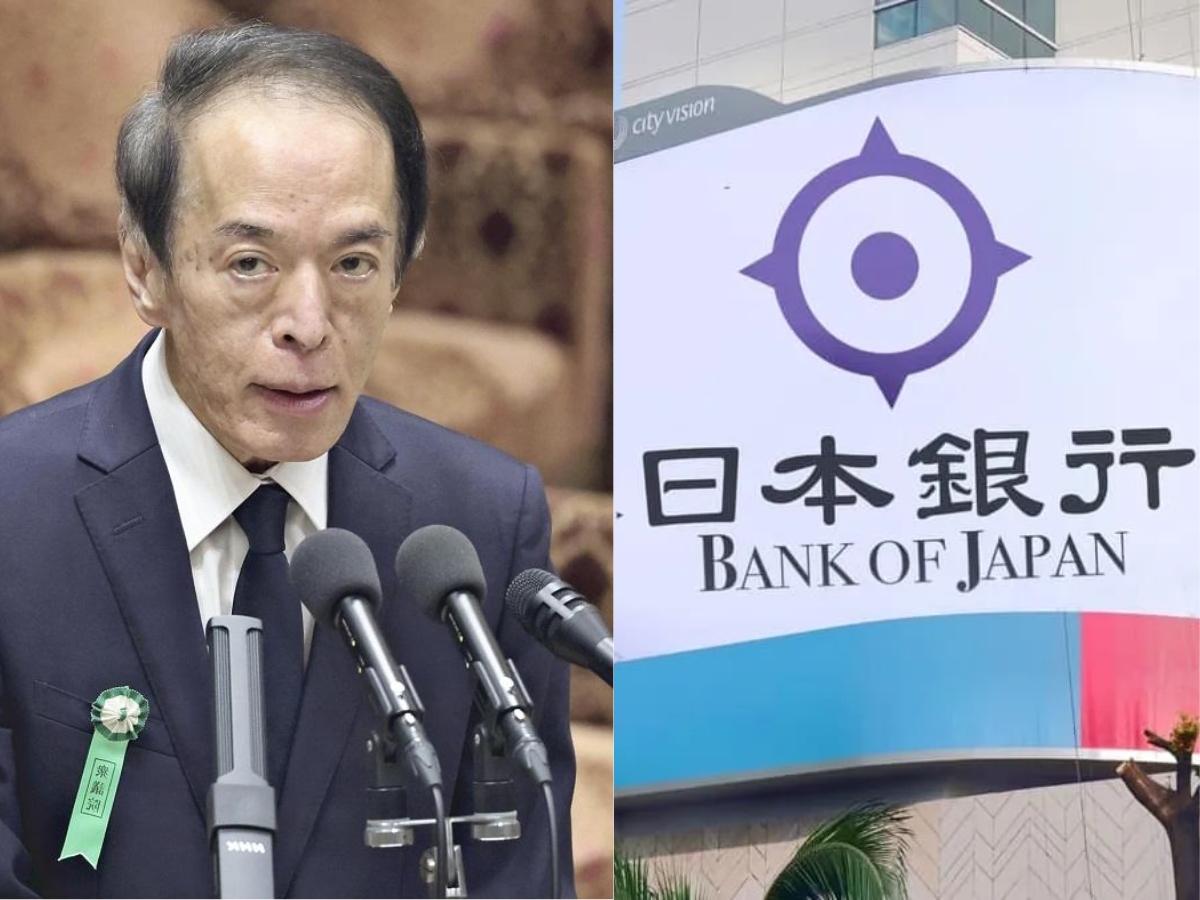
Bank of Japan hikes interest rates to 0.75%, signaling more increases; yen falls, inflation target in focus. Photos: X.
The Bank of Japan raised interest rates on Friday to levels unseen in three decades and signaled its readiness for further hikes beyond next year, taking another landmark step in ending decades of huge monetary support and near-zero borrowing costs.
The move underscored the central bank’s conviction that Japan was on course to stably hit its 2% inflation target backed by wage gains, and ready for a continued normalisation of monetary policy.
“Judging from recent data and surveys, there is a high chance the mechanism in which wages and inflation rise moderately in tandem will be sustained,” the BOJ said in a statement in explaining the rate-hike decision.
“Given that real interest rates are at significantly low levels, the BOJ will continue to raise interest rates” if its economic and price forecasts materialise, it said.
In a widely expected move, the BOJ raised short-term interest rates to 0.75% from 0.5% in the first increase since January. The decision was made by a unanimous vote.
The move takes interest rates to levels unseen since 1995, when Japan was reeling from the burst of an asset-inflated bubble that drew the BOJ into a prolonged battle with deflation.
Markets are focusing on Governor Kazuo Ueda’s post-meeting news briefing for clues on the pace and extent of future rate rises, which may have global market repercussions by altering the yen’s status as a cheap source of funding for investors.
“Having been a major funding currency for a sustained period of time, we expect the Bank of Japan to remain gradualist in its approach to normalising monetary policy and to clearly signal any future changes,” said Mel Siew, Asia credit portfolio manager at Muzinich & Co in Singapore.
The yen JPY= fell more than 0.3% at 156.02 per dollar after the policy announcement, which had largely been factored in by markets.
The benchmark 10-year Japanese government bond (JGB) yield rose 3.5 basis points to hit 2.0%, marking the highest level since May 2006.
In the statement, the BOJ maintained its view underlying inflation will converge around its 2% target in the latter half of its three-year projection period through fiscal 2027.
But hawkish board members Hajime Takata and Naoki Tamura dissented to this view. Takata said underlying inflation has already achieved the target, while Tamura said it would do so as soon as the middle of the three-year projection period.
Ueda faces a tricky communication act. Given Japan’s fragile economy, Ueda is likely to avoid pre-committing to a set pace of rate hikes. But he also faces pressure to deliver a hawkish message to avoid triggering an unwelcome yen slump that pushes up import costs and broader inflation, analysts say.
Friday’s hike to 0.75% would also bring rates closer to levels deemed neutral to the economy, which the BOJ estimates as in a range of 1% to 2.5%, and complicate the bank’s decision on how far to push up borrowing costs.
The BOJ ended a decade-long, massive stimulus last year and raised rates twice including to 0.5% from 0.25% in January on the view Japan was on the cusp of durably achieving its 2% inflation target.
With stubbornly high food costs keeping inflation above target for nearly four years, a growing number of BOJ board members have signaled their readiness to vote for a rate hike to avoid being late in addressing the risk of too-high inflation.
Data released on Friday showed core consumer inflation hit 3.0% in November, steady from the previous month and well exceeding the BOJ’s target.
Recent yen declines, which push up import costs and broader inflation, also helped the BOJ convince dovish premier Sanae Takaichi’s administration of the need for another rate increase.
The economy has shown resilience to higher U.S. tariffs. Recent central bank surveys showed business confidence hitting a four-year high and many firms on course to continue offering bumper pay next year.
Disclaimer: Except for the headline and sub-heads, all content in this article is sourced from Reuters news feed.
Zubair Amin is a Senior Journalist at NewsX with over seven years of experience in reporting and editorial work. He has written for leading national and international publications, including Foreign Policy Magazine, Al Jazeera, The Economic Times, The Indian Express, The Wire, Article 14, Mongabay, News9, among others. His primary focus is on international affairs, with a strong interest in US politics and policy. He also writes on West Asia, Indian polity, and constitutional issues. Zubair tweets at zubaiyr.amin
Shazia Iqbal makes Instagram private after backlash over her ‘sinister film’ remark widely linked to…
US President Donald Trump shared a photo of the India Gate on Truth Social, calling…
F1 Set for India Return? Government Push Underway to Revive Indian Grand Prix at Buddh Circuit
Union Minister Mansukh Mandaviya recently visited the Buddh International Circuit (BIC) in Greater Noida, signalling…
