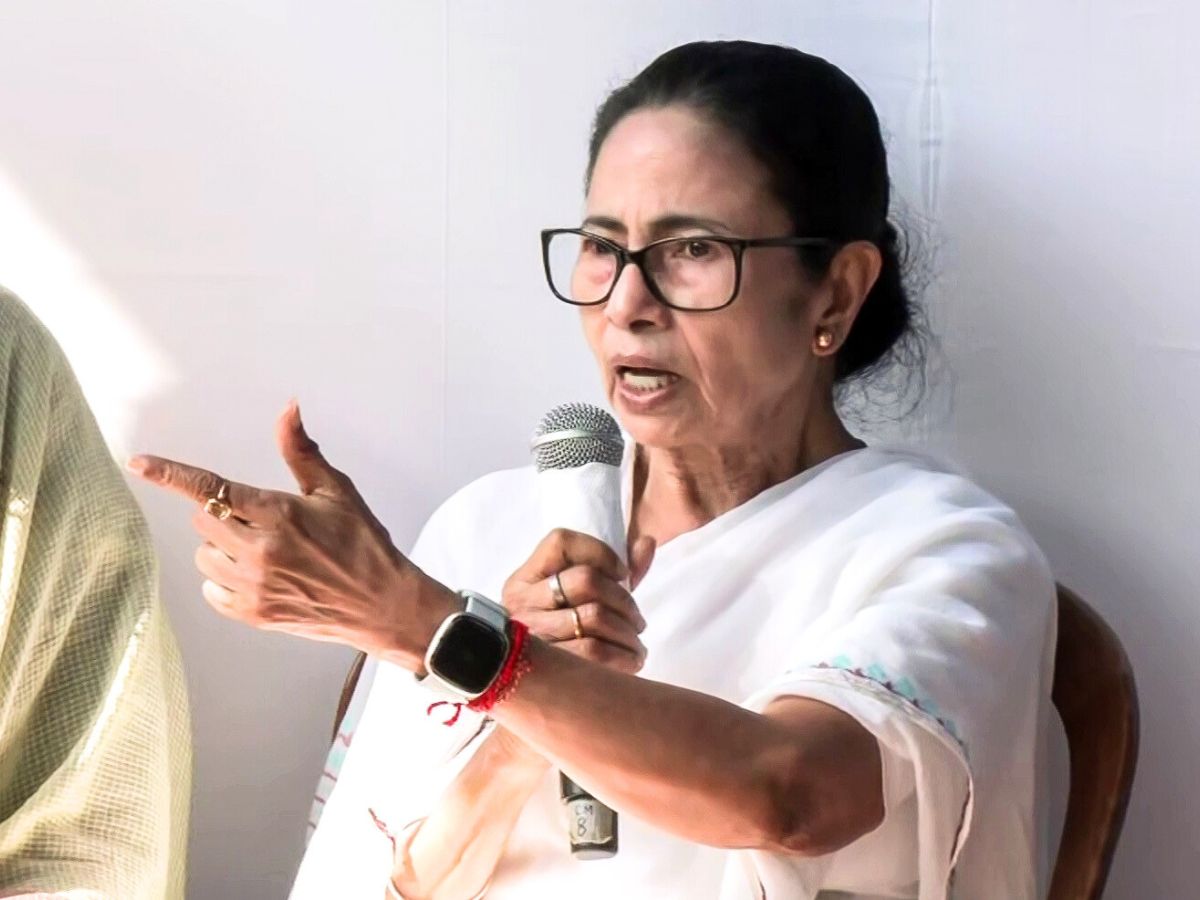
Will anti-incumbency shape Bengal polls?(Photo: ANI)
With the Assembly elections in West Bengal coming up on April 23, political atmosphere in the state has taken a sharp turn to the more charged, with the ruling Trinamool Congress (TMC) under intense scrutiny. In the last few years, a slew of high-profile controversies covering corruption scandals, administrative lapses and law and order crisis have dominated the headlines and public imagination. While the Chief Minister Mamata Banerjee leniently portrays the state of affairs as normal, the opposition, especially the BJP, is aggressively portraying them as indicative of governance failure. As voters are lined up to cast their votes, a question hangs in the air now: will these controversies trigger an anti-incumbency wave in the state?
The horrific rape and murder of a 31-year-old doctor in R. G. Kar Medical College and Hospital in August 2024 reverberated across the country. The incident produced furious clamor over safety of women and security of medical professionals at work places.
The subsequent concerns about the conduct of the investigation by Kolkata Police led to the Calcutta High Court moving the probe to the Central Bureau of Investigation and the Supreme Court of India intervened, pointed out the lapses and constituted a national task force.
Massive protests, including a 42-day strike by the junior doctors, further added to the pressure on the state government. Although the accused was eventually convicted, the ongoing criticism continued as the family of the victim and a section of society was dissatisfied with the life sentence. The case continues to be a politically sensitive issue in the elections.
The multi-crore “cash-for-jobs” scam of irregularities in the recruitment of more than 25,000 teaching and non-teaching staff remains as one of biggest corruption allegations against the TMC rule.
Both ED and CBI probes had exposed the tampering of merit lists, OMR sheets, and the alleged appointment of professors and teachers on bribes. The arrest of former minister Partha Chatterjee and recovering a huge amount of cash was a major hit to the government’s image.
The recent raids and ongoing investigations have kept the subject alive, reaffirming the opposition’s assertions of a culture of corruption.
There is a lingering effect of the past scams of Narada and Rose Valley. Narada sting operation showed some senior TMC leaders accepting bribes on camera and raised serious ethical concerns.
The multi-crore Rose Valley scam, which involved the arrests of senior leaders, added to the image of financial misdeeds in the ruling establishment.
These cases are not recent, but they are still political weapons, often used by opposition parties to question the integrity of the government.
The 2016 Vivekananda Road Flyover collapse that killed 27 people sparked impeachment proceedings over corruption and negligence in infrastructure projects.
The alleged Film City scam involving the Prayag Group has once again cast a spotlight on potential improprieties in large-scale projects, with investigations pointing to potential links to the political establishment.
Incidents like these have been part of a broader narrative of governance failures, especially given the public safety and infrastructural concerns.
The current controversy over the Indian Political Action Committee (I-PAC) has led to a political showdown.
The ED’s raids on the firm involved in a money laundering investigation in an alleged coal smuggling case sparked a direct confrontation between the Centre and state government. Mamata Banerjee was quick to accuse agencies of political vendetta, alleging that the move was to gain access to TMC’s election strategy data.
The ED, on the other hand, asserts that the probe is legitimate. The Supreme Court legal escalation has made things more complicated than just this, which has now become a debate on federalism and abuse of investigative agencies.
These controversies, on the grounds of corruption, law and order, governance and Centre-State friction have certainly posed a problem for the ruling TMC.
The BJP, on the other hand, has taken advantage of public anger by fielding the mother of RG Kar victim as a candidate, turning personal loss into a political weapon. Mamata Banerjee relies on herself and her welfare schemes to counter the negative image.
Whether public anger will translate into an anti-incumbency wave or not will ultimately be decided by the voter’s minds. But one thing is for sure, this is not just a governance election, but a test of faith, accountability and the political future of the state.
Sofia Babu Chacko is a journalist with over five years of experience reporting on Indian politics, crime, human rights, gender issues, and stories about marginalized communities. She believes journalism plays a crucial role in amplifying unheard voices and bringing attention to issues that truly matter. Sofia has contributed articles to The New Indian Express, Youth Ki Awaaz, and Maktoob Media. She is also a recipient of the 2025 Laadli Media Awards for gender sensitivity. Beyond the newsroom, she is a music enthusiast who enjoys singing. Connect with Sofia on X: https://x.com/SBCism
Gujarat Man Seeks Euthanasia Over Alleged Harassment by Wife
A Surat man has sought permission for euthanasia, alleging years of harassment by his wife…
Watch: Bihar Teacher Seen Arguing With Police After Husband's Complaint Over Alleged Affair
A viral confrontation involving a BPSC appointed teacher in Bihar's Hajipur has drawn widespread attention…
Toyota Urban Cruiser EBella Top Model Price Revealed
Toyota has launched the top-spec Urban Cruiser EBella E3 electric SUV in India at Rs…
