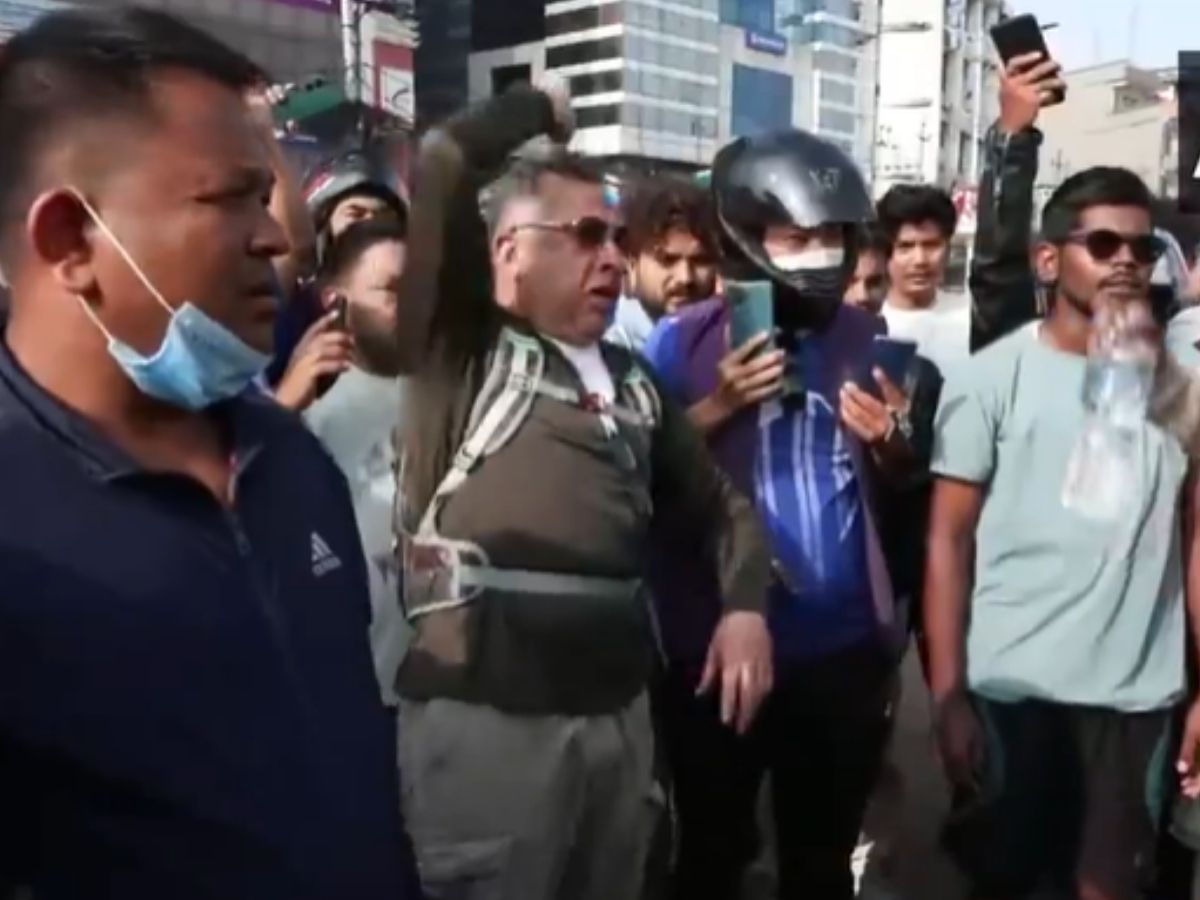
Nepal's youth protests erupted over social media bans, corruption, and economic frustration, turning deadly amid government crackdown and international concern. (Photo: X/@ANI)
The Himalayan country of Nepal with an estimated population of 30 million has been rocked by violent protests this week, led mainly by young people aged between 13 and 28 – the so-called Generation Z. The unrest was triggered after the government imposed a sweeping ban on social media platforms including Facebook, Instagram, WhatsApp, YouTube, and X, seeking to regulate misinformation and hate speech. The move, however, drew heavy criticism with demonstrators taking to streets in protests that turned not only violent but also deadly. Here is what we know so far:
By late last week, 26 social media platforms were blocked in Nepal, which in turn caused outrage and led to widespread demonstrations across multiple cities. The government said that it was enforcing rules requiring social media companies to register locally, but rights groups condemned the move as censorship.
However, organisers and protesters have said that the ban is just the spark for a much deeper frustration. High youth unemployment, pegged at 20.8% for ages 15-24, per the World Bank – rampant corruption, and growing inequality have together fuelled anger for years, as reported by CNN. The online ‘Nepo Kids’ movement, which underlines politicians’ children flaunting wealth, has intensified resentment against the country’s elite.
“All the Nepali citizens are fed up (with) corruption. Every youth (is) going outside the country. So, we want to protect our youth and make the country’s economy better,” a protester told news agency Reuters.
Nepal’s economy, reports suggest, depends heavily on remittances, which account for about a third of its GDP, underscoring the lack of local opportunities.
Tensions boiled over on Monday when thousands of young demonstrators – many wearing school or college uniforms – clashed with police near Nepal’s parliament in the capital city of Kathmandu.
Security forces responded with live ammunition, tear gas, rubber bullets, and water cannons, the report said, adding that protesters set an ambulance on fire and threw objects at police. Reuters cited a local official saying the police were firing indiscriminately.
At least 19 people were killed, including 17 in Kathmandu and two in Itahari, with over 400 injured, the report stated, citing the country’s health ministry.
International organisations, meanwhile, have condemned the crackdown, with the UN human rights office calling for a “transparent” investigation while also expressing shock at the deaths. “The use of lethal force against protesters not posing an imminent threat of death or serious injury is a grave violation of international law,” Amnesty International said, per CNN.
Following the violence, Nepal’s Home Minister Ramesh Lekhak resigned, and the government lifted the social media ban. Prime Minister KP Sharma Oli expressed sadness over the violence while blaming “infiltration by various vested interest groups” for the unrest.
Meanwhile, Nepal’s leading newspaper editorial board called on Oli to resign, arguing he “cannot sit in the PM’s chair for a minute longer” after the bloodshed.
Nepal’s social media ban reflects a global trend of governments trying to control online narratives. Aditya Vashistha, assistant professor at Cornell University, recently told The Associated Press that such crackdowns are common in neighbouring countries like Pakistan and Bangladesh.
“Governments absolutely have a valid interest in seeking to regulate social media platforms… But what we see in Nepal is that wholesale blocks… result in wildly disproportionate harms,” AP quoted Kian Vesteinsson of Freedom House as saying.
Freedom House has reported a decline in global internet freedom for the 14th year running, as governments clamp down on dissent online, according to AP.
The ban led to an 8,000% surge in signups for Proton’s VPN service in Nepal, allowing some users to bypass censorship, as reported by AP. However, experts have warned that VPNs are not a universal fix since they can be costly and slow.
Tahir Mukhtar Cause Of Death: Gaming Creator Tahirfuego Dies At 24 Due To…
Tahir Fuego, a 24-year-old Free Fire player and content creator, has died after being found…
The 50 will begin streaming on February 1 at 9 pm on JioHotstar. Based on…
BREAKING: Pakistan To Boycott T20 World Cup 2026 Match Against India
Pakistan will not play India in the T20 World Cup 2026 fixture scheduled for February…
