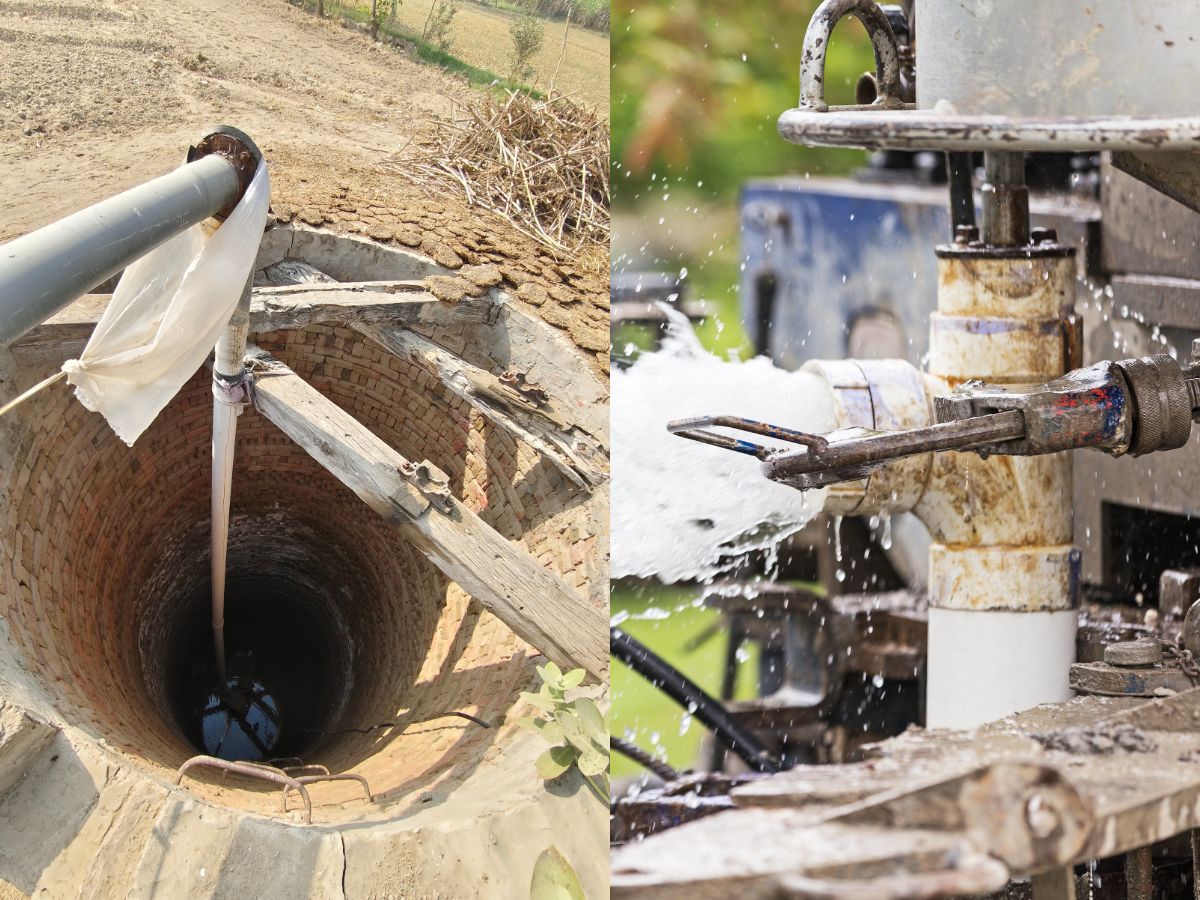
Delhi’s groundwater shows the third-highest uranium contamination in India. (Photo: Canva)
Delhi has recorded the third-highest share of uranium-contaminated groundwater samples in India in 2024, according to the Central Ground Water Board’s (CGWB) Annual Ground Water Quality Report 2025. The findings raise serious public health concerns for millions of residents who still depend on tubewells and borewells for drinking water.
Based on 3,754 groundwater samples collected across states and Union Territories, the report shows that:
15.66% of groundwater samples collected in Delhi after the monsoon exceeded the Bureau of Indian Standards (BIS) limit of 30 parts per billion (ppb) for uranium.
13.25% of samples were contaminated during the pre-monsoon period.
This places Delhi third after Punjab and Haryana in uranium contamination levels. Punjab remains the worst-affected state with 62% of samples above safe limits post-monsoon, followed by Haryana at 23.75%.
Experts warn that rapidly falling water tables and deeper drilling are exposing groundwater to uranium-bearing geological formations.
“Groundwater depletion is forcing wells deeper into rock layers that contain radioactive elements, heightening uranium presence in extracted water,” water specialist Pankaj Singh said.
Singh has written to the Delhi LG and Chief Minister, demanding urgent testing of the 450 million litres of water supplied daily through 5,500 tubewells and Ranney wells by the Delhi Jal Board.
Health experts say long-term consumption of uranium-contaminated water may cause:
Kidney damage
Chemical toxicity
Bone health deterioration
Increased risk of cancer-linked effects
While radioactive effects are less immediate, prolonged exposure is hazardous. Experts call for scientific water treatment, strict monitoring, and periodic testing in vulnerable neighbourhoods still dependent on groundwater.
Across India, groundwater contamination also saw a seasonal rise:
|
Period |
% of samples above safe uranium limit |
|
Pre-monsoon |
6.71% |
|
Post-monsoon |
7.91% |
Contamination remains limited in Gujarat, Karnataka, Maharashtra, Tamil Nadu, and northeastern states such as Nagaland, Mizoram and Manipur.
In a related development, a recent study examining breast milk samples in Bihar detected uranium levels up to 5 ppb. The study conducted by scientists at Mahavir Cancer Sansthan (Patna), Lovely Professional University, and AIIMS Delhi found uranium in all samples from 40 lactating mothers, raising public concern.
However, nuclear scientist Dr Dinesh K. Aswal, NDMA member and former BARC group director, said the findings do not pose a public health risk:
“The levels detected are well within safe limits. The WHO permissible threshold in drinking water is nearly six times higher than what has been observed.”
Although 70% of infants in the study showed potential non-carcinogenic risk indicators, researchers stressed that real-world health impact remains minimal at current levels.
Sofia Babu Chacko is a journalist with over five years of experience reporting on Indian politics, crime, human rights, gender issues, and stories about marginalized communities. She believes journalism plays a crucial role in amplifying unheard voices and bringing attention to issues that truly matter. Sofia has contributed articles to The New Indian Express, Youth Ki Awaaz, and Maktoob Media. She is also a recipient of the 2025 Laadli Media Awards for gender sensitivity. Beyond the newsroom, she is a music enthusiast who enjoys singing. Connect with Sofia on X: https://x.com/SBCism
Home Décor Expo will be Held at Jio World Convention Centre, BKC from June 13–15, 2026
Chirag Dinesh Mehta, President of the Association of Home Textile seen with Shantilal Shah, Chairman…
Arjun Sarja’s Blast continues its strong theatrical run, reaching a worldwide gross of Rs 67.69…
Despite India Women’s commanding 64-run victory over Pakistan Women in the Women’s T20 World Cup…
