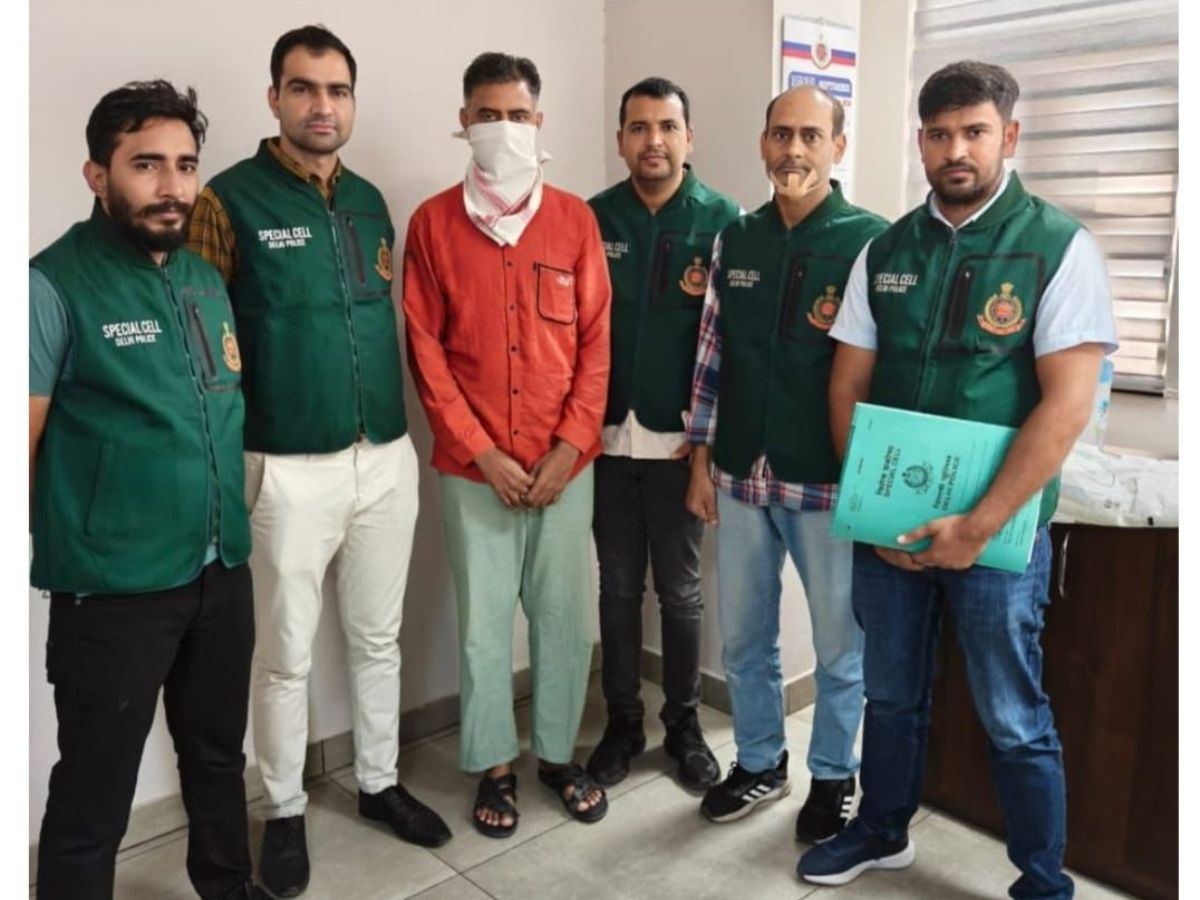
Nepali man held in Delhi for supplying SIM cards to Pakistan agents (Photo: Delhi police special cell)
The city of Delhi hummed with its usual frenetic energy on August 28, 2025. But for a team from the Delhi Police Special Cell, it was a day of quiet purpose. They had received a critical tip: a person with ties to Pakistan’s intelligence agency, the ISI, was in Laxmi Nagar. The area, a bustling maze of narrow streets and crowded markets, was the perfect place to blend in. The team moved swiftly and discreetly, their target in their sights.
His name was Prabhat Kumar Chaurasia. A 43-year-old Nepali citizen, he looked like any other man walking the streets. But beneath his ordinary facade lay a dangerous secret. When the police finally cornered and questioned him, he confessed to his role in a sinister espionage network.
Prabhat’s story began years earlier. Born in Nepal in 1982, he was a man who had seen his share of ups and downs. With a B.Sc. in IT and a diploma in computer networking, he had a seemingly promising start, working as a medical representative and area manager in the pharmaceutical sector. In 2017, he ventured into a logistics company in Kathmandu, but the business failed, leaving him with significant financial losses. It was this desperation that made him vulnerable.
In 2024, while trying to secure a visa to go abroad, Prabhat was approached by an ISI agent through a Nepalese contact. They dangled a tempting offer: a US visa, all expenses paid, in the name of journalism. The price was simple he had to provide Indian SIM cards and gather information related to the country’s defense.
Prabhat agreed. He used an Aadhar card he had obtained in Latur, Maharashtra, to purchase SIM cards from both Bihar and Maharashtra. He then smuggled these SIM cards to Nepal, where they were passed on to ISI agents. From there, they made their way to a chilling destination: Bahawalpur, a known stronghold of the terrorist organization Jaish-e-Mohammed, and Lahore in Pakistan.
The agents in Pakistan didn’t use these SIMs for simple calls. They activated them on WhatsApp, masquerading as Indians. Their goal was to contact officers in the Indian Army and extract sensitive, confidential information. They were attempting to weaponize India’s own digital infrastructure against it, all from thousands of miles away.
When Prabhat was arrested, the police recovered not only empty SIM card packets but also several digital devices containing suspicious material. His confession revealed that he had already sent 16 SIM cards, with 11 of them actively being used by ISI agents.
The Special Cell has since registered a case against Prabhat under the Indian Penal Code, and the investigation is far from over. The search for his other associates continues as the police work to dismantle the entire network connected to the ISI. This quiet arrest in a Delhi neighborhood brought a major win for India’s national security, stopping a dangerous espionage plot before it could inflict more damage.
ALSO READ: World Suicide Prevention Day 2025: Why Are More Students In India Taking Their Own Lives?
Sofia Babu Chacko is a journalist with over five years of experience reporting on Indian politics, crime, human rights, gender issues, and stories about marginalized communities. She believes journalism plays a crucial role in amplifying unheard voices and bringing attention to issues that truly matter. Sofia has contributed articles to The New Indian Express, Youth Ki Awaaz, and Maktoob Media. She is also a recipient of the 2025 Laadli Media Awards for gender sensitivity. Beyond the newsroom, she is a music enthusiast who enjoys singing. Connect with Sofia on X: https://x.com/SBCism
Boman Irani humorously questioned Donald Trump’s delayed concern for Iranians, asking “Where were you when…
Nelamangala Rural Police have now noticed the incident and are said to be enquiring with…
Ahead of IPL 2026, BCCI clarified playing condition updates, including catch legality, ball replacement, Impact…
