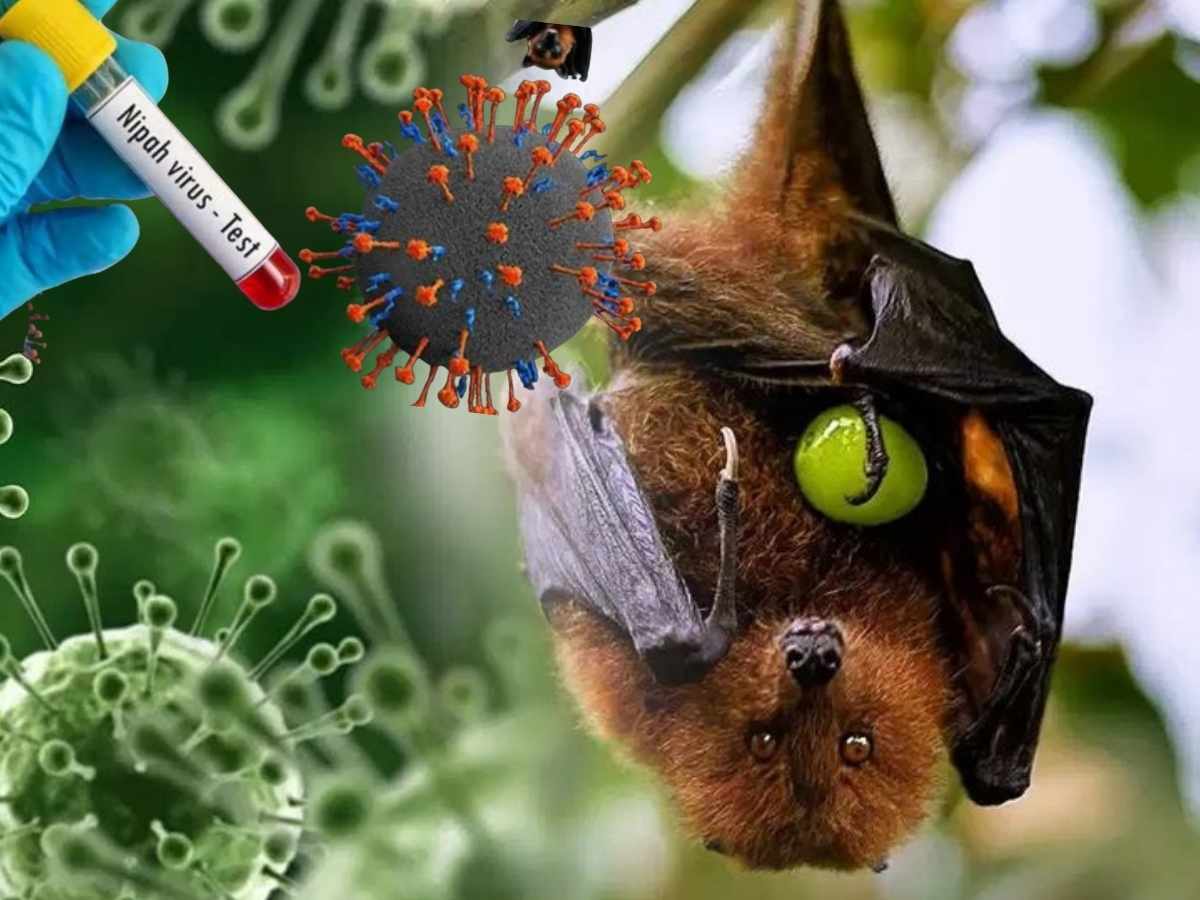
‘Risk Of Nipah Virus From India Remains Low’: WHO Clarifies No Travel Or Trade Restrictions (Picture Credits: Canva Modified)
Nipah Virus: The World Health Organization (WHO) has said the risk of the Nipah virus spreading from India remains low and does not warrant any travel or trade restrictions, even as two infections were recently confirmed in West Bengal.
The global health body said it is working closely with Indian health authorities and has found no evidence of increased human-to-human transmission linked to the current cases.
The two patients, both 25-year-old nurses working at the same private hospital in Barasat, North 24 Parganas district, developed symptoms in late December 2025 and were placed in isolation in early January. Health officials said their condition progressed to neurological complications, prompting immediate containment measures.
According to the WHO’s South-East Asia Region Epidemiological Bulletin, 196 contacts linked to the patients were identified, traced and tested. “All contacts were asymptomatic and tested negative for Nipah virus infection,” the WHO said, adding that no additional cases have been detected so far.
While the WHO considers the sub-national risk in parts of West Bengal to be moderate due to the presence of fruit bat reservoirs and the possibility of sporadic spillover, it said the risk at the national, regional and global levels remains low.
The organization also noted that the likelihood of the virus spreading to other Indian states or internationally is minimal under the current circumstances.
Following confirmation of the cases, the central government deployed an outbreak response team to West Bengal to support state authorities. Measures including enhanced surveillance, laboratory testing, infection prevention protocols and field investigations are currently underway.
The WHO said coordinated efforts between central and state health agencies enabled rapid containment and effective monitoring of the situation.
As a precautionary step, some Asian regions, including Hong Kong, Malaysia, Singapore, Thailand and Vietnam, have temporarily strengthened airport screening measures. However, the WHO reiterated that there is no evidence of international transmission linked to the Indian cases.
Nipah virus is a zoonotic infection primarily transmitted from fruit bats to humans, sometimes through contaminated food or close contact. While the virus can spread between people, such transmission is uncommon and usually requires prolonged close contact.
The WHO classifies Nipah as a priority pathogen due to its high fatality rate and the absence of licensed vaccines or treatments, though multiple vaccine candidates are under development. The organization stressed that early detection, supportive care and strong infection control measures remain key to reducing severe outcomes.
Delhi: A 12-year-old boy was brutally murdered by his stepfather in Delhi’s Shastri Park area…
A US military destroyer has docked at Israel’s Eilat port amid rising tensions with Iran,…
The Staff Selection Commission (SSC) is set to release the tentative answer key for the…
