
Union Budget 2026 Highlights: FM Nirmala Sitharaman Concludes Her Speech; Key Announcements, Major Reforms, Income Tax Changes, Sector-Wise Allocations & Policy Moves
✍️ Written by: Aishwarya Samant
Union Budget 2026 LIVE: Finance Minister Nirmala Sitharaman Concludes the Union Budget live, outlining key policy decisions, tax measures, and spending priorities as India watches closely for growth-boosting reforms and fiscal direction.
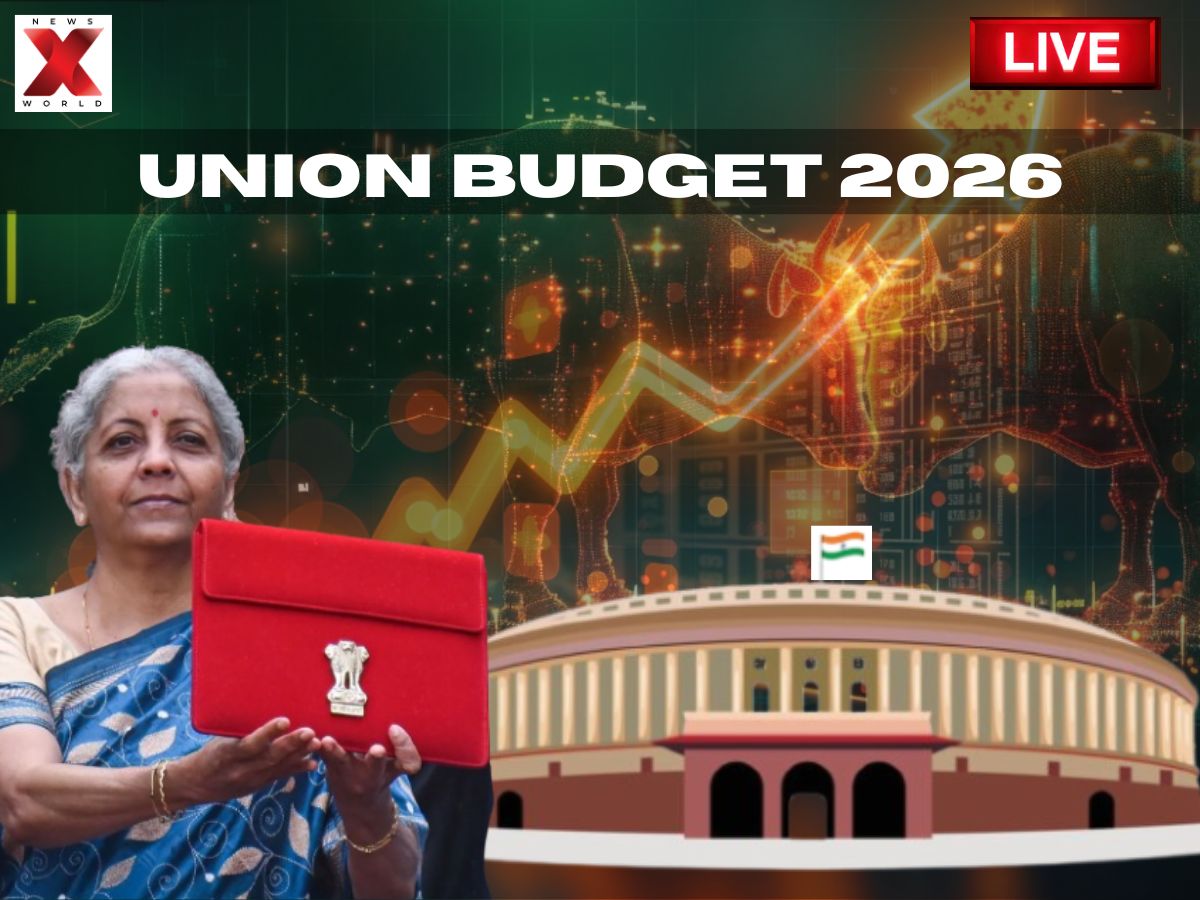
Union Budget 2026 Live Updates: India Steps Into Its Next Phase of Economic Growth
The Union Budget 2026 Live Updates will highlight the expected outcomes as India enters a new stage of economic development. The budget presented today will set the policy direction for the upcoming fiscal year, which runs from 2026 to 2027.
Finance Minister Nirmala Sitharaman presents her ninth consecutive Union Budget today, February 1, 2026, marking a historic milestone in India’s parliamentary and economic history. The first Union Budget to be presented on a Sunday in more than ten years underscores the importance of the government’s fiscal plan for the year ahead.
Watch Live FM Nirmala Sitharaman Tables Her Record Breaking 9th Budget Speech
Economic Context: A Steady Ship in Choppy Global Waters
The budget comes at a time when India’s economy remains resilient despite ongoing global economic challenges. According to the Economic Survey 2026, India’s GDP is projected to grow by 7.4% in FY26, positioning the country among the fastest-growing major economies in the world. However, risks remain, with growth expected to moderate to 6.8–7.2% in the coming year due to potential US trade tariffs, geopolitical tensions, and slowing global demand.
The government faces a familiar challenge: sustaining economic growth while safeguarding fiscal resources. The budget is expected to balance maintaining investor confidence with boosting infrastructure development, job creation, and overall economic expansion.
The focus is likely to remain on two core pillars. First, fiscal deficit control, with the government aiming to keep the deficit below 4.5% of GDP in line with its medium-term consolidation roadmap. Second, continued emphasis on high capital expenditure (capex) to support infrastructure creation, employment generation, and long-term productivity growth.
As the Finance Minister delivers her speech in Parliament, taxpayers, businesses, and markets will closely watch announcements on income tax relief, infrastructure spending, and policy direction that could shape India’s economic future.
Stay With Us: Budget Day, Decoded Live
As the Budget speech unfolds, we will bring you real-time updates, quick analysis, and key takeaways, without jargon and with clarity.
- Will taxpayers get relief?
- Does capital expenditure stay strong?
- How bold is the push for AI and manufacturing?
Stay tuned as we break down the policies that could shape India’s economic trajectory for the year ahead.
Live Updates
- 12:39 (IST) 01 Feb 2026
Union Budget 2026 LIVE: What Are The Big Announcements ?
-
Exempt basic customs duty (BCD) on raw materials imported for MRO (Maintenance, Repair, and Overhaul).
-
Reduce BCD for components and parts used in the manufacturing of civilian aircraft.
-
Propose customs duty exemption on 17 drugs related to cancer treatment.
-
BCD exemption for specified parts used in the manufacture of microwave ovens.
-
BCD exemption for the import of capital goods required for processing crucial minerals in India.
-
- 12:35 (IST) 01 Feb 2026
Union Budget 2026 LIVE: FM Sitharaman Proposes Customs Duty Exemptions to Boost Critical Minerals, Nuclear Power, and Export Sectors
The Finance Minister Nirmala Sitharaman delivered her Union Budget 2026 speech in the Lok Sabha, which included important proposals to strengthen India’s strategic and export industries. She proposed a basic customs duty exemption on capital goods imported for processing critical minerals, signaling strong support for domestic resource development. She extended the nuclear power project import exemption until 2035 while stating that all nuclear plants would receive benefits from the extension, which would promote energy security investments. Sitharaman raised the duty-free import limit for specific seafood processing materials from 1% to 3% of last year’s export value to assist exporters. The...
- 12:33 (IST) 01 Feb 2026
Union Budget 2026 LIVE: Stock Market @12; Sensex and Nifty Slip Marginally Amid Mixed Trading
-
Sensex: Down 63.41 points (-0.08%) at 82,206.37
-
Nifty: Down 57.35 points (-0.23%) at 25,263.30
-
Advances: 2,080 shares
-
Declines: 1,526 shares
-
Unchanged: 149 shares
Sensex and Nifty traded lower in mid-session, with marginal losses of 0.08% and 0.23% respectively. Market breadth showed 2,080 advancing shares, 1,526 declining, and 149 unchanged, reflecting mixed investor sentiment.
-
- 12:24 (IST) 01 Feb 2026
Union Budget 2026 LIVE: Tax Incentives and IT Sector Boost Announced
-
Tax Holiday for Cloud Services: Foreign companies providing cloud services to Indian customers to enjoy tax holiday till 2047.
-
Tax on Buybacks: Buybacks to be taxed as capital gains for all categories of shareholders.
-
Safe Harbour Limit for IT Services: Increased from Rs 300 crore to Rs 2,000 crore to ease compliance for IT companies.
-
- 12:20 (IST) 01 Feb 2026
Union Budget 2026 LIVE: Income Tax Act 2025 to Come Into Effect from April 1, Simplified Rules and Relief Measures Announced
-
Income Tax Act 2025: Comes into effect from 1 April 2026, introducing simplified rules and redesigned forms.
-
Direct Tax Reliefs: Includes lower TCS rates and new exemptions to reduce taxpayer burden and ambiguities.
-
Motor Accident Compensation: Interest awarded by Motor Accident Claims Tribunal to natural persons exempt from income tax.
-
TCS Rates Reduced: Overseas tour packages and LRS remittances for education and medical purposes now at 2%.
-
Manpower Services: Supply of manpower services included under contractor payments for TDS, eliminating ambiguity.
-
ITR Filing Dates: ITR-1 and ITR-2 deadline July 31; non-audit business entities and trusts can file by August 31.
-




