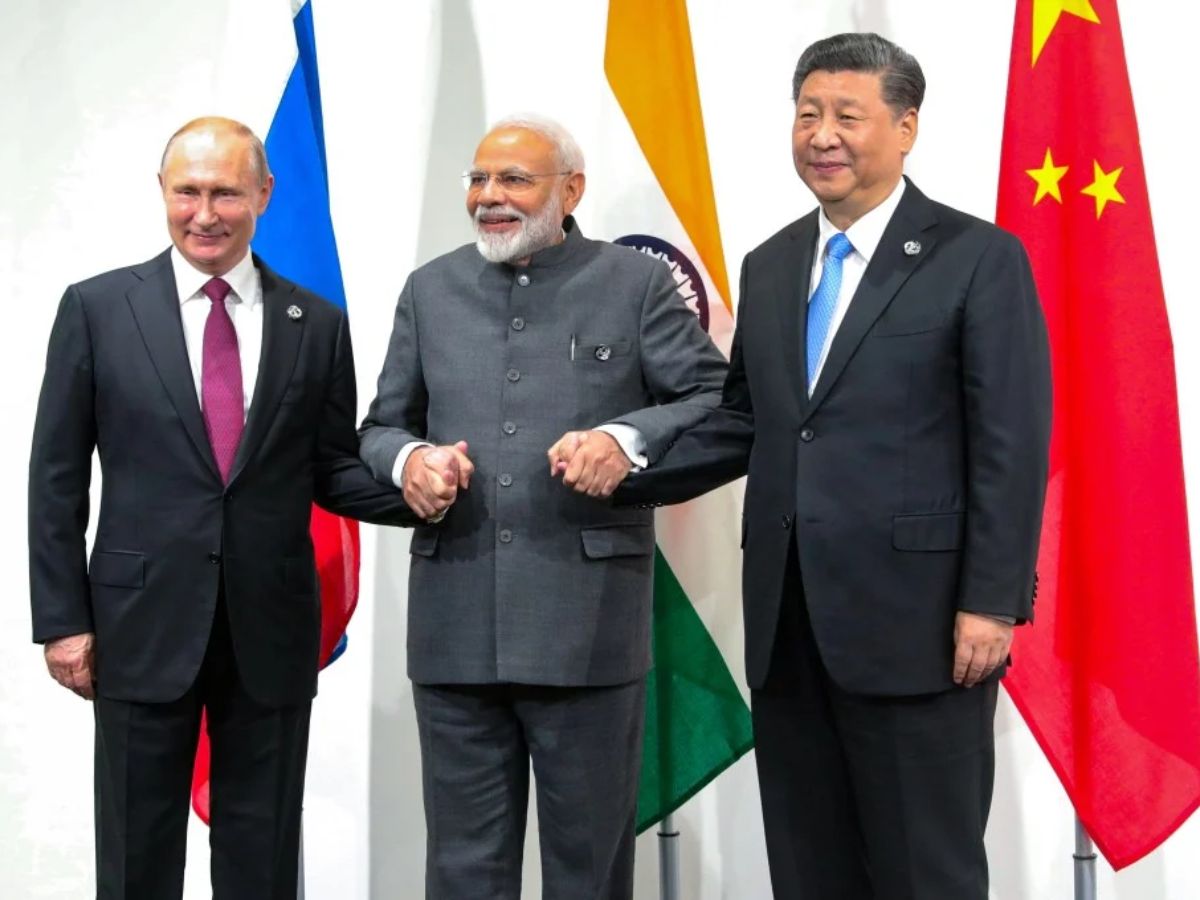
Will India revive Russia-India-China talks as PM Modi heads to SCO Summit? Photo/X.
India is testing its finely balanced diplomatic rebalancing as tensions with the West increase on the issues of energy imports and trade. The possible resurrection of its dormant trilateral talks with Russia and China, while reaffirming its pledge to alliances with the United States and its allies. Last week, India signaled that it was willing to revive the Russia-India-China (RIC) dialogue, a forum originally created in the early 2000s to promote coordination between the three Eurasian great powers.
Calling RIC as a consultative forum for sharing regional and international concerns, the Ministry of External Affairs of New Delhi stressed on July 17 that any determination to restart the negotiations would be made “in a mutually convenient way.” There was no deadline given for when the talks could resume.
The development comes after Russian Foreign Minister Sergey Lavrov voiced recently firm backing for restoring the trilateral format.
Also Read: SCO Summit China 2025: From PM Modi To Putin, Who All Will Join Xi Jinping In Tianjin?
Speaking at a conference last month, Lavrov reaffirmed Moscow’s interest, saying it aims to “confirm our genuine interest in the earliest resumption of the work within the format of the troika – Russia, India, China – which was established many years ago on the initiative of former Russian prime minister Yevgeny Primakov.”
It was in May this year that Moscow had taken proactive steps to revive RIC, indicating its interest in positioning itself at the heart of Eurasian diplomacy in the face of increasing geopolitical fragmentation, enhanced China ties, and India’s strategic hedging between West and East.
Throwing further geopolitics into the mix, Prime Minister Narendra Modi is to travel to China on August 31 to participate in the Shanghai Cooperation Organisation (SCO) Summit.
He can also meet Chinese President Xi Jinping, another principal player in the RIC triangle, during the visit.
Observers say these visits might be a sign of a wider regional realignment that seeks to immunize Eurasian powers against US-led diplomatic and economic pressures.
The RIC format was launched in the late 1990s by then-Russian Prime Minister Yevgeny Primakov as a strategic counterweight to Western predominance.
Since then, it has enabled more than 20 ministerial-level interactions, promoting foreign policy, economic, and security cooperation among the three countries. The conversation lost momentum, though, after the 2020 Galwan Valley clash, which gravely damaged India-China relations.
Even though RIC has been overshadowed by groupings such as BRICS and SCO, it still holds importance with the geopolitical clout of member states. India traditionally has taken a cautious approach to the RIC format largely because of border disputes with China. But changing global dynamics could cause New Delhi to rethink its approach to the trilateral grouping.
One of the driving forces for India’s engagement with RIC is strategic autonomy. India wants to be independent in its foreign policy and not be seen as being too close to either the United States or China. The trilateral framework enables India to take up issues with Russia and China without pledging to permanent alignment.
Both security and energy issues are also important. Russia and China are the pillars on which India’s energy needs and its dreams of a multipolar world order rest. With RIC, India is able to work on common global agendas like reform of the United Nations, strengthening international financial institutions, and fair access to climate finance and green technologies without subscribing to any single school of thought.
Also Read: SCO Summit 2025: Why PM Modi Will Visit Japan Before Heading to China
Zubair Amin is a Senior Journalist at NewsX with over seven years of experience in reporting and editorial work. He has written for leading national and international publications, including Foreign Policy Magazine, Al Jazeera, The Economic Times, The Indian Express, The Wire, Article 14, Mongabay, News9, among others. His primary focus is on international affairs, with a strong interest in US politics and policy. He also writes on West Asia, Indian polity, and constitutional issues. Zubair tweets at zubaiyr.amin
Budget 2026 sparks divide online: some hail TCS relief and growth push, others slam lack…
Union Budget 2026: Finance Minister Nirmala Sitharaman on Sunday announced a major incentive to attract global…
Mumbai’s Juhu district was shaken when gunmen attacked Rohit Shetty’s residence on February 1, 2026.…
