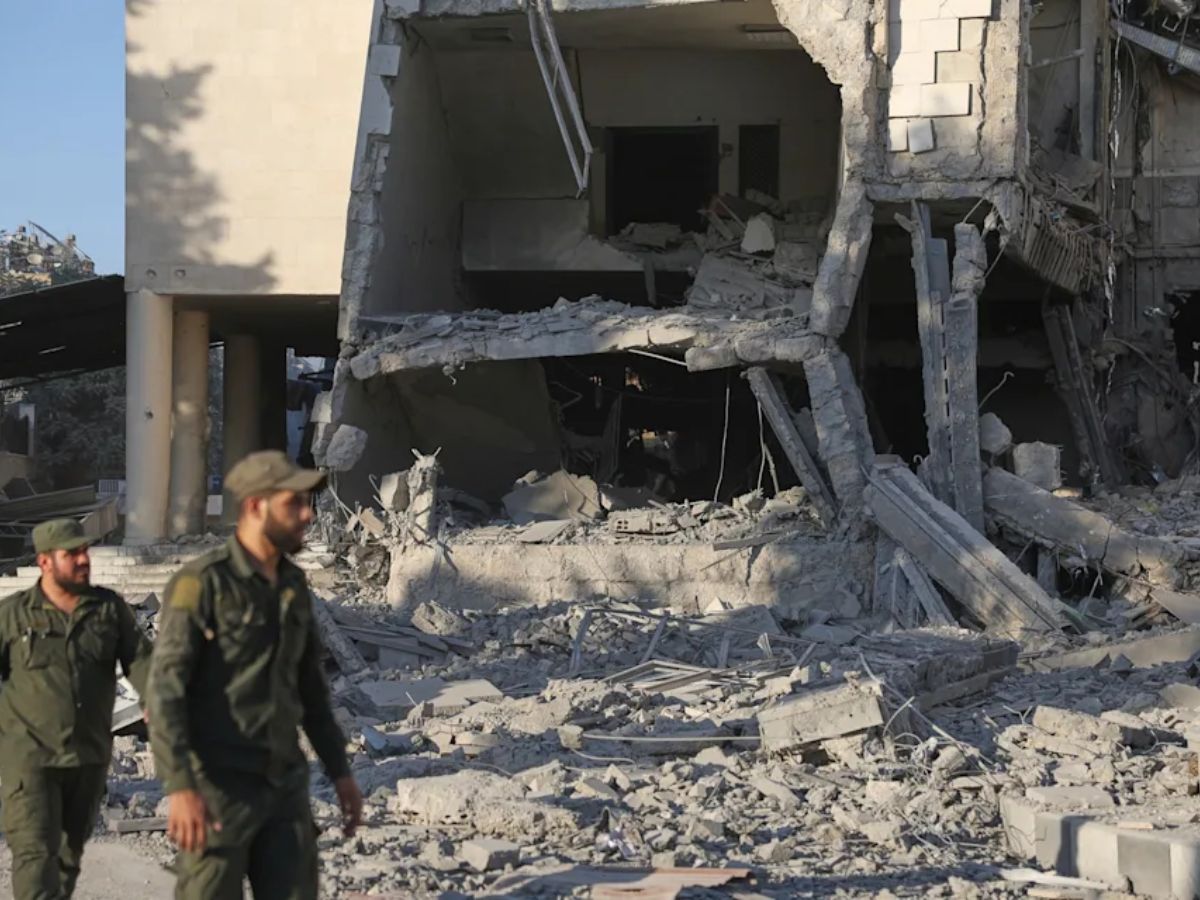
Syria withdraws troops from Druze city Sweida after Israeli strikes and US-brokered ceasefire amid deadly clashes. Photo/X.
The Syrian army has started withdrawing from the violence-hit southern city of Sweida, the country’s defence ministry announced on Wednesday. The move comes after a wave of Israeli airstrikes on Damascus and rising international calls, particularly from the United States, for Syrian government forces to leave the majority-Druze city.
The United States, a close ally of Israel, said it had helped broker an agreement to ease tensions in Sweida.
“We want it to stop,” US Secretary of State Marco Rubio said, referring to the violence and Israeli bombings. Later, in a post on X, Rubio stated that all sides had “agreed on specific steps that will bring this troubling and horrifying situation to an end.”
He added, “this will require all parties to deliver on the commitments they have made, and this is what we fully expect them to do.”
A State Department spokesperson also called on Syrian forces to pull back, saying Washington had urged Syria to “withdraw their military in order to enable all sides to de-escalate.”
The Syrian government announced a new ceasefire in Sweida on Wednesday. According to a statement from the interior ministry, there will be a “total and immediate halt to all military operations.” A committee of government representatives and Druze spiritual leaders will supervise the ceasefire’s implementation.
Earlier, the Syrian defence ministry said the army had “begun withdrawing from the city of Sweida in implementation of the terms of the adopted agreement, after the end of the sweep of the city for outlaw groups.”
The statement did not clarify whether other government security forces, who had deployed to Sweida on Tuesday, would also withdraw. These forces were initially sent to oversee a previous truce agreed upon with Druze leaders after days of deadly clashes with local Bedouin tribes.
Despite the earlier ceasefire, witnesses reported that Syrian government forces joined Bedouin fighters in attacking Druze fighters and civilians. The Syrian Observatory for Human Rights said more than 300 people have died since Sunday, including government forces, local fighters, and 27 Druze civilians killed in “summary executions.”
The Syrian presidency promised to investigate the “heinous acts” in Sweida and vowed to punish “all those proven to be involved.”
Israel, which has its own Druze population, has positioned itself as a protector of Syria’s Druze community. However, analysts suggest Israel’s main objective is to push Syrian government forces away from the Israeli frontier.
Following the collapse of Bashar al-Assad’s government in December, Israel took control of the UN-monitored demilitarised zone in the Golan Heights and has since launched hundreds of strikes on Syrian military targets.
Earlier this week, Israel struck Sweida province, claiming it was defending the Druze community. On Wednesday, Israeli forces expanded their operations with a series of airstrikes on Damascus.
Israel said it had also targeted a “military site” near the presidential palace. A Syrian interior ministry source confirmed strikes near the Mazzeh military airport, just outside Damascus.
Israeli Defence Minister Israel Katz warned Damascus to “leave the Druze in Sweida alone” and threatened “painful blows” until Syrian government forces withdrew.
In response, Syria’s foreign ministry condemned the attacks as a “dangerous escalation.” Israel’s military chief defended the strikes, claiming Israeli forces were “acting with responsibility, restraint and sound judgment.”
The Syrian health ministry reported that at least three people were killed and 34 wounded in the Israeli strikes on Damascus.
The recent violence is the worst Syria has seen since April and May, when government forces battled Druze fighters in Sweida province and near Damascus, leaving over 100 people dead.
Sweida has long been under the control of local Druze fighters rather than the central government. One of the points of the new agreement announced on Wednesday includes “the full integration of the province” of Sweida into the Syrian state. Sheikh Youssef Jarboua, one of Syria’s main Druze spiritual leaders, read out the 10 points of the accord on state television.
The initial clashes that triggered the recent government deployment were sparked by the kidnapping of a Druze vegetable merchant, according to the Syrian Observatory for Human Rights. Tensions between the Druze and local Bedouin tribes have simmered for decades.
Also Read: World News Live Updates: US Brokers Ceasefire Plan in Suweida; Syria Welcomes Effort, Israel Silent
Zubair Amin is a Senior Journalist at NewsX with over seven years of experience in reporting and editorial work. He has written for leading national and international publications, including Foreign Policy Magazine, Al Jazeera, The Economic Times, The Indian Express, The Wire, Article 14, Mongabay, News9, among others. His primary focus is on international affairs, with a strong interest in US politics and policy. He also writes on West Asia, Indian polity, and constitutional issues. Zubair tweets at zubaiyr.amin
US President Donald Trump ruled out a ceasefire with Iran, emphasizing military priorities. He outlined…
Raymond Group Chairman Gautam Singhania suffered minor injuries in a Maldives speedboat accident on March…
A U.S. military operation in the Eastern Pacific on March 19, 2026, destroyed a suspected…
