
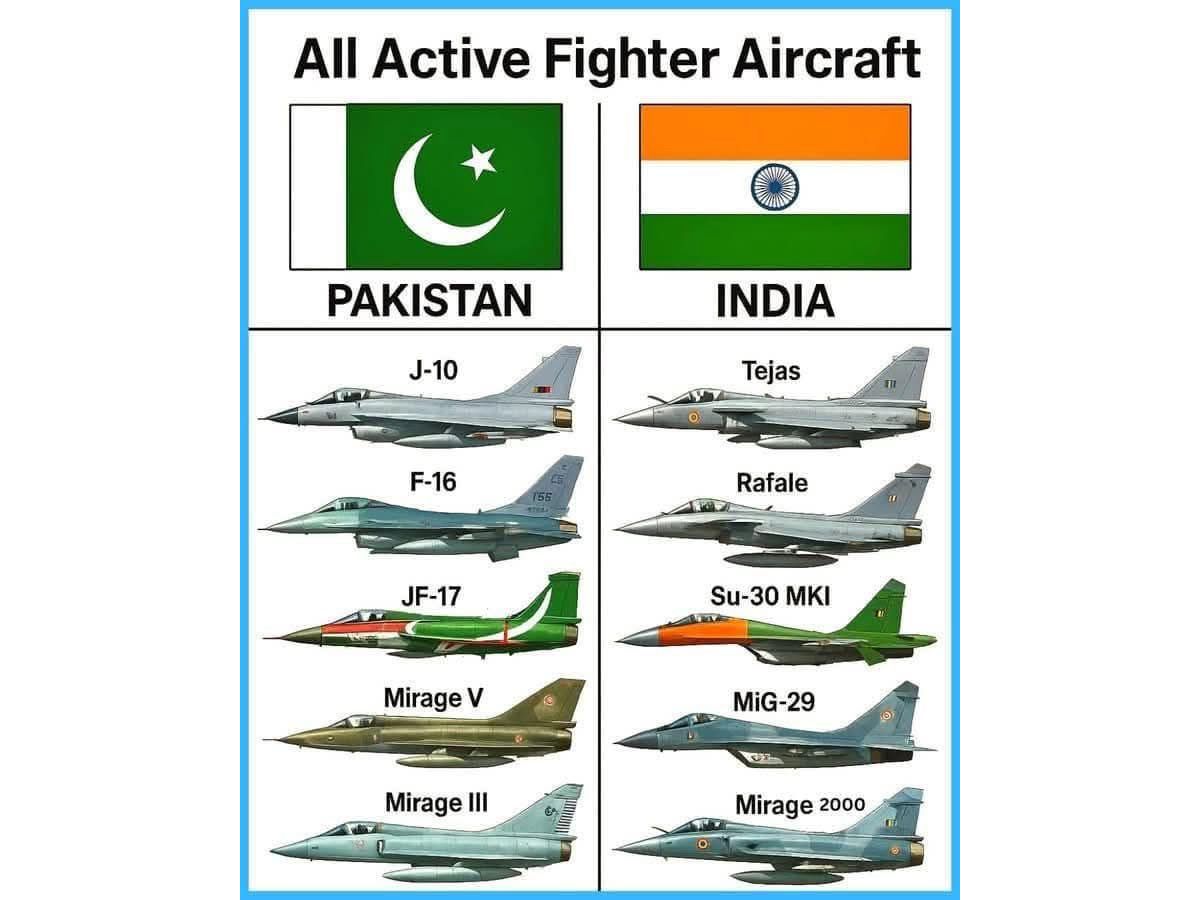

India and Pakistan, having a long history of rivalry in the South Asia region, both have extensive Air Forces to help protect their skies. This image provides an overview of the operational fighter aircraft of both countries that highlights key aspects of their operational strategy, technological capabilities, and partnership programs.
Pakistan’s Active Fighter Jets
Pakistan Air Force (PAF) relies on a mix of American, Chinese, and French-origin aircraft:
-
J-10: Modern Chinese multirole jet, presenting advanced combat empowerment for PAF.
-
F-16 Fighting Falcon: U.S.-supplied, and is extremely reliable and tested in combat and operational capabilities.
-
JF-17 Thunder: Developed together with China, a cost-effective platform and the backbone of PAF.
-
Mirage V: Old French design, still capable, used in an upgraded strike role.
-
Mirage III: Fleet is aging, used primarily for secondary missions.
India’s Active Fighter Jets
The Indian Air Force (IAF) fields a diverse, technologically advanced fleet from multiple global partners:
-
Tejas LCA: Homegrown fighter jet represents India’s quest for self-sufficiency.
-
Rafale: French multi-role aircraft, with advanced avionics and long-range strike capabilities.
-
Su-30 MKI: Russian origin fighter, core platform of the IAF, versatile fighter.
-
MiG-29: Soviet origin fighter, modern electronic upgrade.
-
Mirage 2000: A Proven French jet, participated in many operations, including the Balakot operation earlier in 2019.
Key Takeaways
-
Pakistan’s approach has been heavily reliant on Chinese and American support.
-
India’s approach is technological diversification, modernization, and self-reliance through indigenous projects.
-
When comparing the balance of power, while India retains technological superiority (Rafale, Tejas) over Pakistan’s ability to assemble an aircraft, Pakistan retains cost and a quick turnaround ability with the JF-17.
-
Overall, Pakistan is focused on an affordable and strong relationship with China, while India maintains a balance between imports and indigenous capability.
The comparison of aircraft represents variables well beyond the prosecution of war and military strategy. These variables incorporate the values and priorities of both nations regarding defence and technology.
Shubhi is a seasoned content writer with 6 years of experience in digital media. Specializing in news, lifestyle, health, sports, space, optical illusions, and trending topics, she crafts engaging, SEO-friendly content that informs and captivates readers. Passionate about storytelling, Shubhi blends accuracy with creativity to deliver impactful articles across diverse domains.




