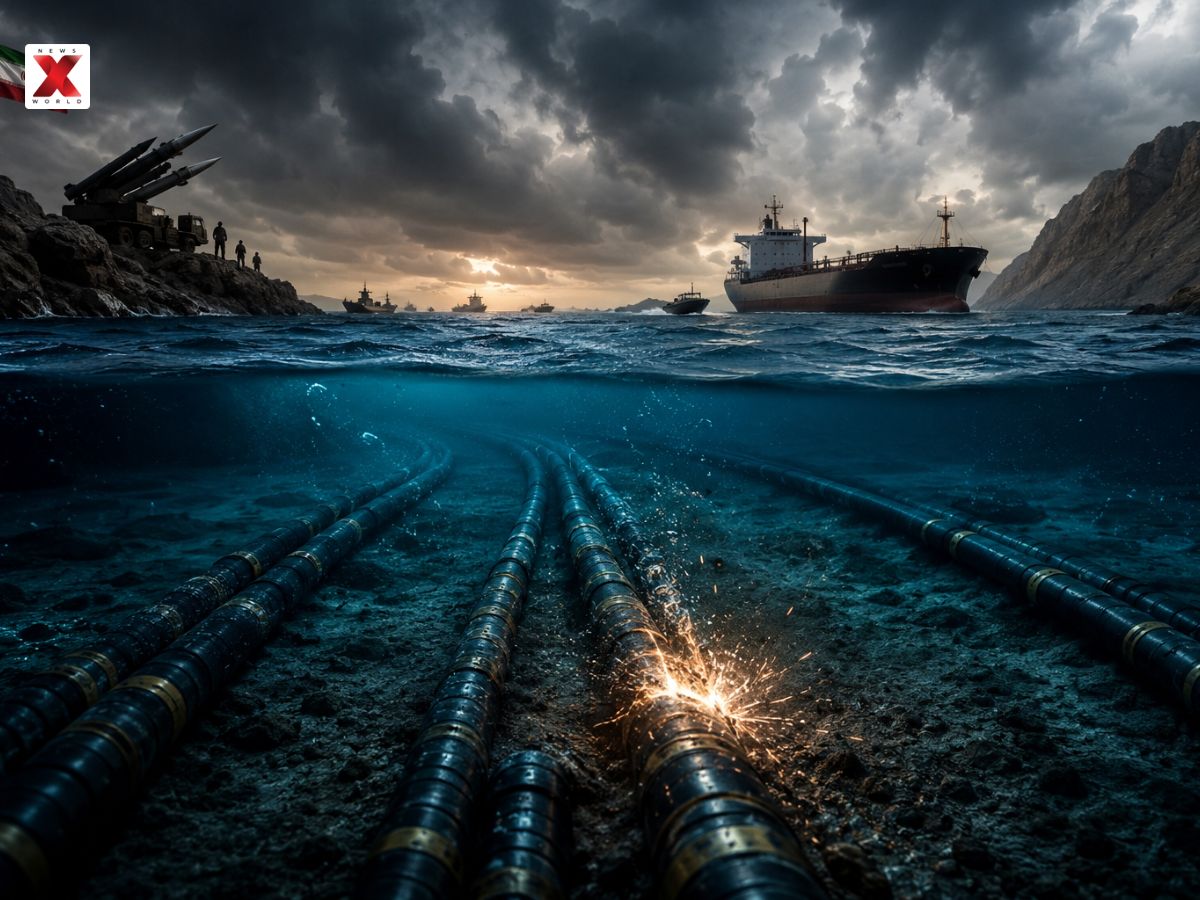
Why Iran Is Threatening the Subsea Cables Beneath the Strait of Hormuz. Photo:AI
After reportedly shutting down the Strait of Hormuz, Iran is now said to be looking at the critical undersea cables that run beneath the key waterway passage amid the rising tensions with the United States and the still ongoing conflict across the Middle East. These underwater lines are especially important because they move internet services, financial payments, military messaging, AI-related information, and even routine digital traffic that links Europe, Asia and the Gulf region. Some reports even claim that Tehran is trying to gain more control and influence over these vital communication lines.
Iranian military spokesperson Ebrahim Zolfaghari recently said on X that Iran intends to start charging fees on internet cables that run through the Strait of Hormuz in which Iranian state media added that big tech firms like Google, Microsoft, Meta, and Amazon should end up following Iranian laws too.
In the version being floated, companies that manage these underwater lines might be made to pay licensing costs to Iran and if there is any need for repair and maintenance work that would only be permitted if Iranian firms do it which sounds simple but is messy in practice.
Iranian lawmakers apparently talked about the idea just last week but it is still not clear how workable or how enforceable it would really be. With US sanctions in place many American companies can’t easily send payments to Iran so some experts think these statements could be more like a political reminder than a fully official program.
Still, concerns don’t fully go away because Iranian state-linked outlets also mentioned potential harms to the cables even if that was left pretty vague.
Subsea cables are a very important part of the global internet machine. Most of the world’s online information, banking transactions, streaming services, financial networks, and cross border communications travel through these hidden lines put deep under the sea.
Many major international cables also go through the Strait of Hormuz.
Because of security concerns, most cable operators try to avoid Iranian waters so they route their cables through a tight section near Oman.
However, according to TeleGeography research director Alan Mauldin, two cables including Falcon and Gulf Bridge International, keep on passing through Iranian territorial waters.
Also Read: Donald Trump Spotted With Naked Alien? US President Shares Bizarre Images, Leaves Internet Stunned
Manisha Chauhan is a passionate journalist with 3 years of experience in the media industry, covering everything from trending entertainment buzz and celebrity spotlights to thought-provoking book reviews and practical health tips. Known for blending fresh perspectives with reader-friendly writing, she creates content that informs, entertains, and inspires. When she’s not chasing the next viral story, you’ll find her diving into a good book or exploring new wellness trends.
Today’s Weather Forecast (18-05-2026): See weather forecast for Delhi, Noida, Gurugram, Ghaziabad, and Faridabad, including…
From India to the World: Naman Gosalia and AnginaX Are Taking Cardiovascular Prevention to the…
VD Satheesan Takes Oath As Keralam CM, Congress-Led UDF Returns To Power After 10 Years
Veteran Congress leader VD Satheesan on Monday took oath as the new Chief Minister of…
