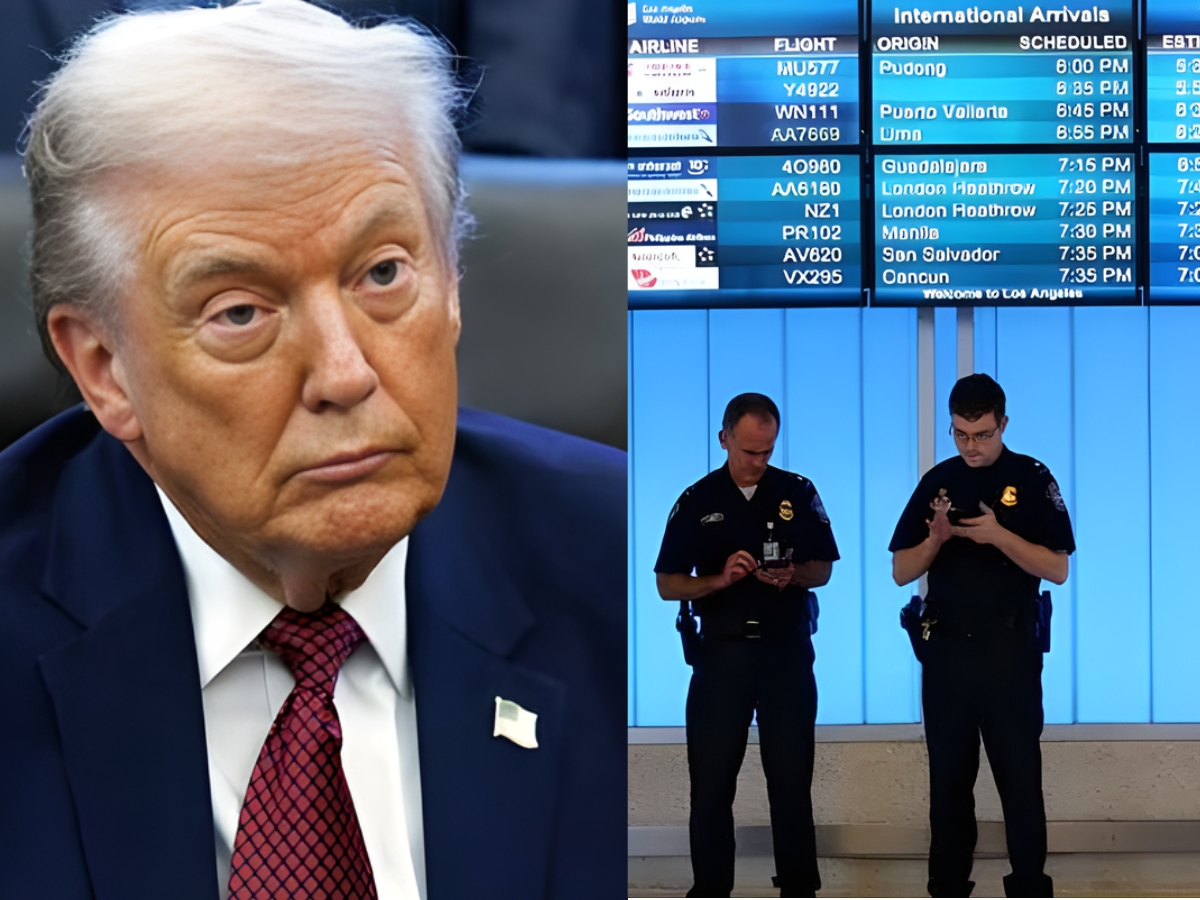
Donald Trump expands US travel ban to 39 countries, adding new full and partial restrictions citing security, vetting failures. Photos: X.
President Donald Trump on Tuesday signed a proclamation significantly expanding US travel restrictions, increasing the number of affected countries from 19 to 39, according to the White House. It is one of the broadest immigration-related actions of Trump’s presidency, introducing both full and partial bans on foreign nationals seeking entry into the United States.
Under the new proclamation, seven additional countries have been placed under a full travel ban: Laos, Sierra Leone, Burkina Faso, Mali, Niger, South Sudan and Syria. Laos and Sierra Leone were previously subject to partial restrictions but have now been moved to the full ban category.
Nationals from countries facing full bans are largely barred from entering the United States, subject to specific exemptions outlined in the order.
Also Read: Brown University Shooting: FBI Releases ‘Enhanced Video’ Of Person Of Interest | WATCH
The proclamation also expands the list of countries subject to partial travel restrictions by adding 15 new nations. These are Angola, Antigua and Barbuda, Benin, Cote d’Ivoire, Dominica, Gabon, The Gambia, Malawi, Mauritania, Nigeria, Senegal, Tanzania, Tonga, Zambia and Zimbabwe.
Partial restrictions typically limit access to certain visa categories or impose additional screening requirements rather than a complete prohibition on entry.
Explaining the decision, the White House said the affected countries exhibit “severe deficiencies in screening, vetting, and information-sharing,” which it said pose risks to US national security.
In a separate statement, the administration said vetting nationals from several of these countries is difficult due to “widespread corruption, fraudulent or unreliable civil documents and criminal records.” The White House also cited high rates of visa overstays and instances where countries have refused to accept the return of their citizens.
The proclamation further imposes travel limitations on individuals holding Palestinian Authority-issued travel documents.
At the same time, it lifts a ban on nonimmigrant visas for citizens of Turkmenistan, though the administration said it would still maintain “suspended entry for Turkmen nationals.”
The order includes several exemptions. Lawful permanent residents, individuals who already hold valid visas, and people falling under specific visa categories, including diplomats and athletes, are not subject to the restrictions.
The proclamation also allows entry for individuals whose travel is deemed to serve US national interests.
The expansion comes as Trump has intensified his immigration crackdown, citing a recent shooting in Washington, DC, that killed one National Guard member and critically wounded another.
The suspect in the shooting, Rahmanullah Lakanwal, is an Afghan national who previously worked with the United States in Afghanistan. He resettled in Washington state under the Biden administration and was later granted asylum during the Trump administration.
Following the incident, Trump has stopped or significantly tightened nearly all forms of legal and illegal foreign entry into the US. His broader immigration agenda includes an ongoing mass deportation campaign, a pause on asylum decisions, a review of cases approved under the Biden administration, and a “reexamination” of certain green-card holders.
During his first term, Trump barred travelers from seven majority-Muslim nations, a policy that faced multiple legal challenges. The Supreme Court ultimately upheld the third version of that ban in 2017, which imposed varying levels of restrictions on Iran, North Korea, Syria, Libya, Yemen, Somalia and Venezuela.
President Joe Biden repealed the policy in 2021 shortly after taking office.
With Tuesday’s proclamation, the countries facing full or partial US travel restrictions are:
Afghanistan, Burma, Chad, Republic of the Congo, Equatorial Guinea, Eritrea, Haiti, Iran, Libya, Somalia, Sudan, Yemen, Burundi, Cuba, Laos, Sierra Leone, Togo, Turkmenistan, Venezuela, Burkina Faso, Mali, Niger, South Sudan, Syria, Angola, Antigua and Barbuda, Benin, Cote d’Ivoire, Dominica, Gabon, The Gambia, Malawi, Mauritania, Nigeria, Senegal, Tanzania, Tonga, Zambia and Zimbabwe.
The restrictions apply to both short-term visitors, such as tourists, students and business travelers, and individuals seeking to immigrate to the United States.
Those already holding valid visas, lawful permanent residents, and individuals in specific exempt categories remain unaffected. People whose entry is considered beneficial to US interests are also exempt.
The government said the expanded travel restrictions will take effect on January 1, 2026.
Zubair Amin is a Senior Journalist at NewsX with over seven years of experience in reporting and editorial work. He has written for leading national and international publications, including Foreign Policy Magazine, Al Jazeera, The Economic Times, The Indian Express, The Wire, Article 14, Mongabay, News9, among others. His primary focus is on international affairs, with a strong interest in US politics and policy. He also writes on West Asia, Indian polity, and constitutional issues. Zubair tweets at zubaiyr.amin
Gates calls Epstein files’ “Russian girls” claims absurd and false, says drafts show Epstein tried…
Iran warns its nuclear expertise can’t be erased as Trump sends a “massive armada,” raising…
At least 15 security personnel and 37 militants were killed after ethnic Baloch separatists launched…
