
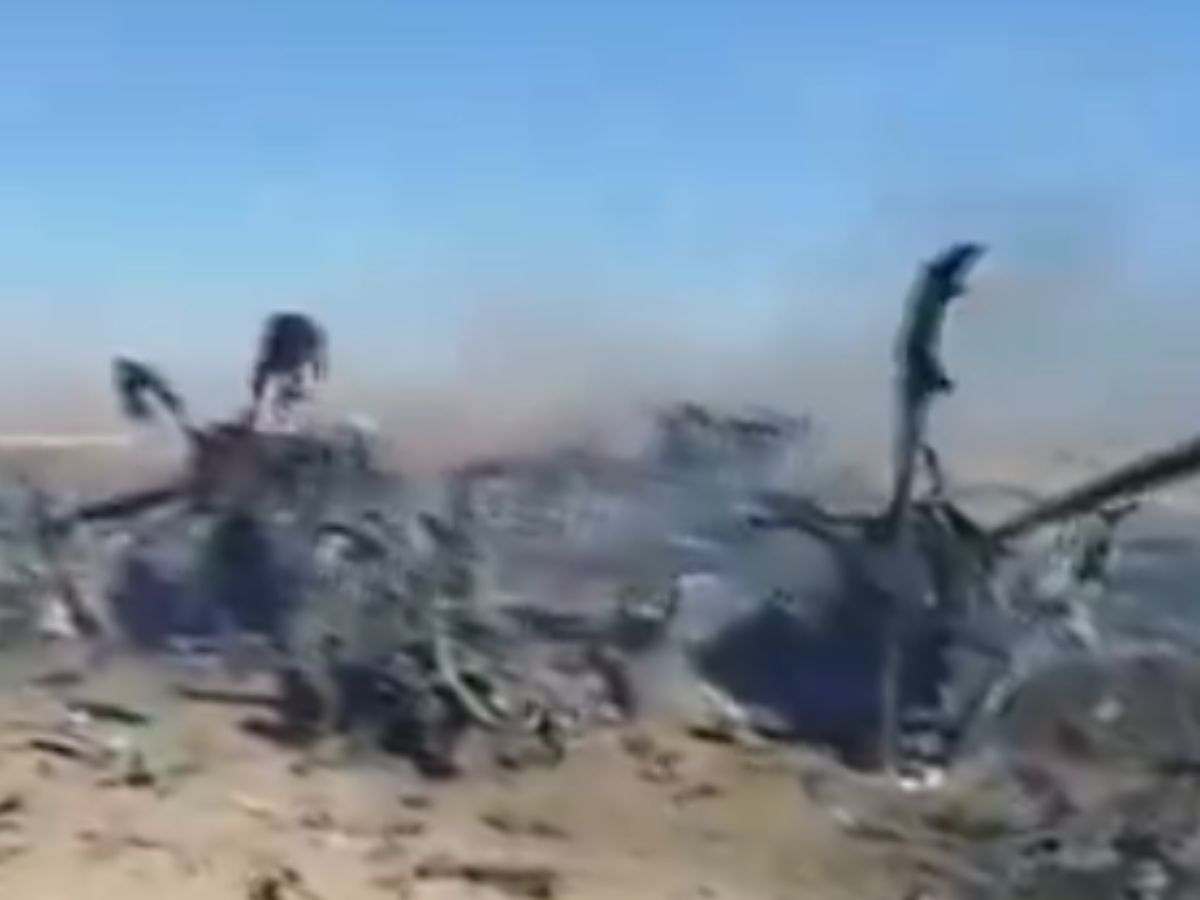

A rescue mission of great risk and at a high degree of drama has captivated the world due to the survival of a US pilot who spent almost 48 hours behind enemy lines before being rescued. Authorities described the rescue as one of the most daring operations in modern military history.
The US F-15E Strike Eagle airman was a weapons systems officer (a pilot responsible for targeting and weapon systems) on board the downed aircraft when it was hit by hostile fire. One of the crewmembers was rescued earlier in the operation, but the second officer was abandoned behind enemy lines with injuries, alone and evading Iranian forces that had launched a manhunt for him.
US Pilot: All alone, injured, and hunted in an enemy environment
According to reports, following his ejection from the F-15E, the airman landed in a mountainous, wilderness area of Iran, relying on survival techniques he had previously learned to help him remain alive. The airman had very limited survival equipment on him outside of a firearm (pistol) and had to evade capture while armed Iranian soldiers and local citizens actively searched for him.
Former US Air Force Brigadier General Houston Cantwell explained how such survival works in real situations. He said, “Your best view of where you may want to go or where you may want to avoid is while you’re coming down in your parachute.” He also stressed that once on the ground, the focus shifts to hiding and staying alive: “Try to avoid enemy capture, as long as you can.”
Through the use of a beacon signal and climbing a mountain in his quest for survival, it has been reported that the officer sent out an emergency beacon signal and stayed in constant communication with the United States military in order to be able to be tracked. However, his quest for survival would not be easy because of the terrain in which he had to navigate. Although it was reported that he had to navigate carefully as well as climb to at least 7,000 feet in an attempt to find a better place to hide and/or to create a better chance of being rescued, ultimately he made good decisions about how to survive, thereby allowing him to be successfully rescued.
As explained by experts regarding survival training programs such as SERE (Survival, Evasion, Resistance, Escape), pilots are trained to perform an initial assessment of injuries once they land, which is a decision made based on what injuries were suffered. Cantwell explained that the first thing to do is, “Take an inventory of yourself to see… do I have any way to move?” Subsequently, you should search for water, conceal yourself, and avoid as much as possible open movement during the daytime.
US Pilot: Massive rescue mission planned in real time
Reports say that back in command centres, a massive rescue operation was being planned. According to officials, hundreds of special operations troops, aircraft, drones, and intelligence teams were involved in tracking and extracting the airman.
President Donald Trump described the mission as “one of the most daring Search and Rescue Operations in U.S. history.” He said the officer was “a highly respected colonel” and confirmed that “he sustained injuries, but he will be just fine.”
US Pilot: Firefight, extraction and safe return
As rescue teams reached the location, the mission turned even more dangerous. Reports said there was a direct engagement between US forces and Iranian troops, leading to a firefight during the extraction. Despite this, the team successfully secured the airman and evacuated him from Iranian territory.
Trump later announced the success of the mission with a strong message: “WE GOT HIM!” He added that the airman was “SAFE and SOUND” after being “behind enemy lines in the treacherous mountains of Iran, being hunted down by our enemies.”
A mission that emphasizes modern warfare perils
An operation has explicitly demonstrated the hazards associated with contemporary combat, as well as the amount of pre-planned effort taken to rescue personnel from difficult situations. Monitoring of all operations is performed through the use of drones, signals intelligence (SIGINT) and close co-operation across both ground and air teams using real-time communication.
Scott Fales, an expert in rescue operations, stated that teams consider the following points when considering an operation: “What is the current level of threat? How long do we have available to extract an individual?” In addition, sometimes the team must choose to treat injuries on the scene or just grab and go based on the threat level of the situation.
Khalid Qasid is a media enthusiast with a strong interest in documentary filmmaking. He holds a Master’s degree in Convergent Journalism from AJK MCRC. He has also written extensively on esports at Sportsdunia. Currently, he covers world and general news at NewsX Digital.




