
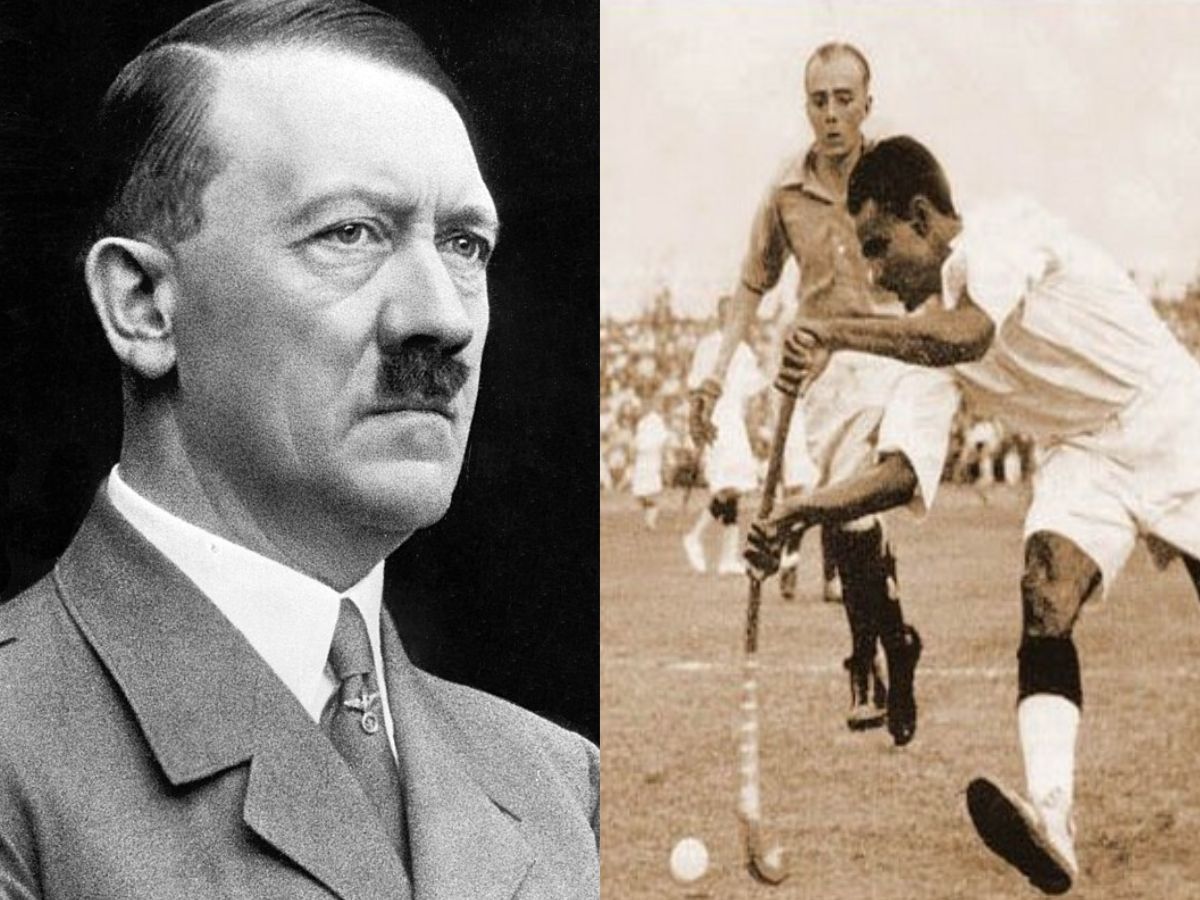

At the opening ceremony of the 1936 Berlin Olympics, Indian athletes made a strong statement with political implications, they did not give the Nazi ‘Heil/Hail Hitler’ salute. They and the American delegation were the only ones who publicly protested the German regime’s symbolic demand.
What happened during 1936 Berlin Olympics?
At that moment, most of the press was focused on the Americans, and their fears that they would show support for Nazi ideology. Journalists latched onto their refusal to dip the flag or remove their headwear while passing the podium under the shadow of the anti Semitic policies. Nevertheless, the Indian protest received very little attention. In India, loyalist newspapers were careful in their reporting, and did not glorify their athletes’ actions in the sports section, instead relegating it to the political pages. The political backdrop was significant. For example, the Calcutta Statesman chose to report on the athletes’ actions in its political pages as well as in the sports section. An Indian official accompanying the athletes, GD Sondhi, steeped in nationalist thought, would later play a key role in evolving the Asian Games concept, which tied sport with political objectives.
Indian Independence and Nazi Germany
The silence concealed deeper ideological roots. The British policy of appeasement towards Hitler was quite different from the behaviours displayed by Indian leaders such as Jawaharlal Nehru and Mahatma Gandhi who had been strongly opposing both fascist and imperialist ideologies. As early as the 1920s, Gandhi had been on the record opposing fascism, viewing it as another face of Western imperialism. His opposition to Hitler escalated in 1938 when he opposed him in his newspaper Harijan and even went so far as to write a letter to him condemning violent oppression. The Indian National Congress took a step forward in 1939 by officially declaring their intention to ‘keep aloof from both imperialism and fascism’.
A moment of courage and resistance
While no explicit orders have been found linking Indian officials with nationalist planning, the choice made by Indian sports persons to refrain from saluting is surely a political choice, one that was bold and courageous. It boldly rejected the Nazi iconography and stood against the British colonial regime. It was a clear message that Indian identity and nationalism was far more significant than the sphere of sports. In short, the Indian team’s snub of Hitler at Berlin was not a sports moment snub, rather, it was an act of quiet defiance against fascist and colonial rule, a greater assertion of national pride. It is a reminder of the weight political sport gestures carry.




